Building a Truly Eco-Friendly Hotel: A Practical Guide for Resort Owners
 Apr, 24 2026
Eco-Hotel ROI & Sustainability Estimator
Projected Outcomes
Key Takeaways for Sustainable Hospitality
- Prioritize passive design to slash heating and cooling costs.
- Switch to a closed-loop waste system to eliminate landfill contributions.
- Source 80% of food and materials from within a 50-mile radius.
- Implement smart energy monitoring to identify and stop invisible leaks.
- Focus on social sustainability by hiring and training local talent.
Designing for the Earth First
The most sustainable building is one that doesn't fight its surroundings. When you're planning a eco-friendly resort is a commercial lodging establishment designed to minimize its environmental impact through sustainable architecture, resource efficiency, and ecological preservation., you have to start with the land. If you build a glass box in a tropical climate, you're essentially building a greenhouse that requires massive amounts of air conditioning to keep guests comfortable. That's a losing battle.
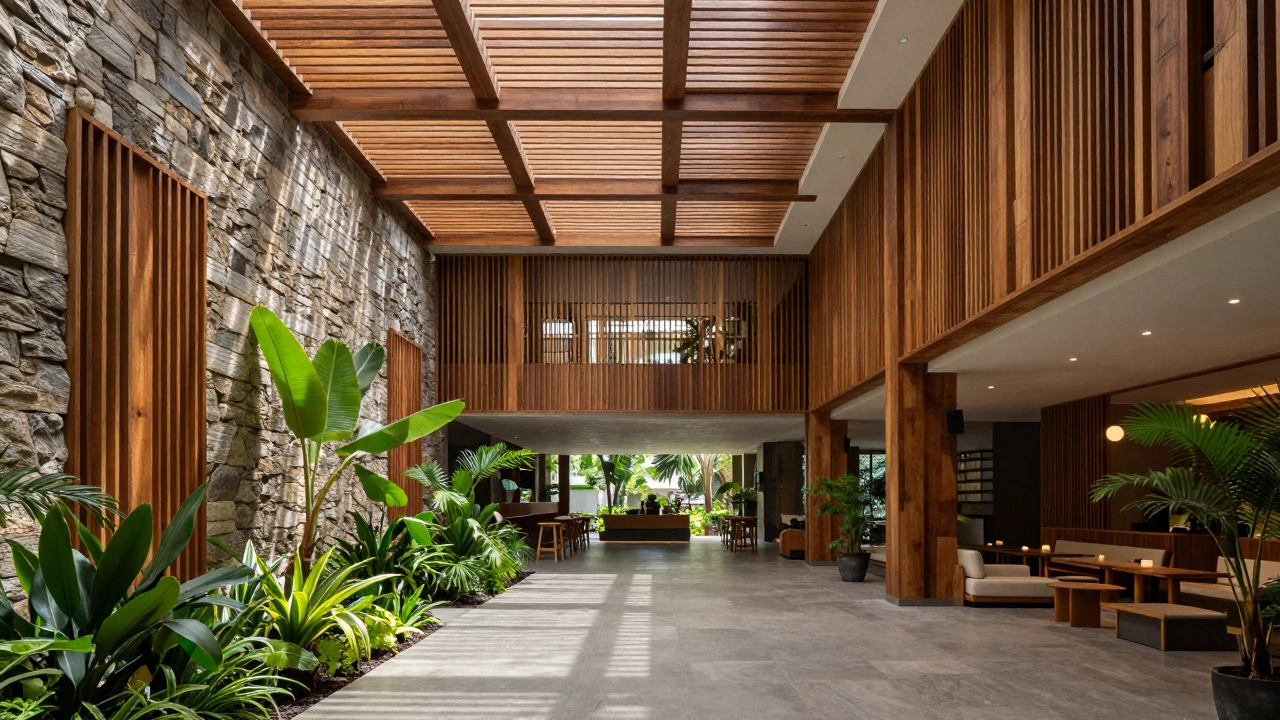
Instead, look at passive design. This means orienting your buildings to catch the breeze and using the sun's path to heat rooms naturally in winter. For example, a resort in the Mediterranean might use thick stone walls and small windows to keep heat out, while a mountain retreat in the Alps would use large south-facing windows to trap solar warmth. By using Thermal Mass-materials like concrete, brick, or stone that absorb and release heat slowly-you can keep indoor temperatures stable without cranking the HVAC system.
Materials matter just as much as placement. Skip the imported marble and synthetic carpets. Go for Bamboo, which grows incredibly fast and absorbs more CO2 than most trees, or reclaimed wood from old local barns. Using local materials doesn't just look better; it drastically cuts the carbon footprint associated with shipping heavy goods across the globe.
Powering Your Property with Clean Energy
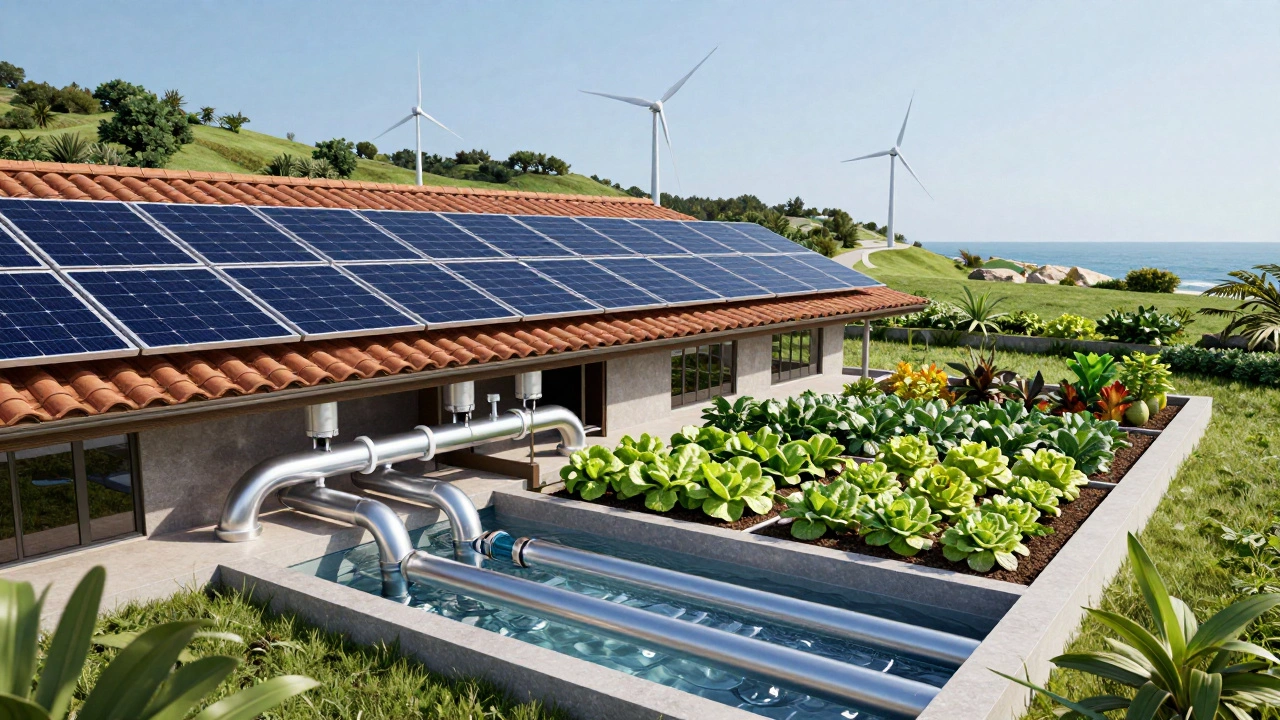
Energy is usually the biggest overhead for any hotel. Moving away from a grid dependent on coal or gas is the quickest way to prove your commitment to the planet. The goal should be a hybrid system that maximizes whatever the local environment provides. If you have a sunny rooftop, Photovoltaic Panels are a no-brainer. In some luxury eco-resorts, solar arrays provide 100% of the electricity for guest rooms and common areas.
But electricity is only half the battle; you also need to heat your water. Solar Thermal Systems use the sun's heat directly to warm water, which is far more efficient than using electric heaters. For resorts in windy coastal areas, a few small-scale wind turbines can provide a steady baseline of power during the night when solar is offline. To manage all this, install a Smart Energy Management System (EMS) that automatically dims lights in empty hallways and adjusts thermostats when guests check out.
| Energy Source | Initial Cost | Long-term Savings | Best Environment |
|---|---|---|---|
| Solar PV | High | Very High | Sunny/Open areas |
| Wind Turbines | Moderate | High | Coastal/Ridgelines |
| Geothermal | Very High | Highest | Volcanic/Thermal regions |
| Biomass | Low | Moderate | Forest/Agricultural areas |
The War on Waste: Moving Toward Zero
Hotels are notoriously wasteful. From tiny plastic shampoo bottles to mountains of buffet leftovers, the waste stream is staggering. To fix this, you need to move toward a circular economy. This means nothing leaves the property as "trash"; everything becomes a resource for something else.
Start with the easy wins. Eliminate all single-use plastics. Replace those tiny toiletry bottles with high-quality wall-mounted dispensers. Switch from plastic straws and coffee pods to compostable or reusable alternatives. But the real challenge is the kitchen. Food waste is a massive environmental burden. By implementing an on-site Composting System, you turn old vegetable peels and coffee grounds into rich soil for your own organic gardens.
Water is another critical resource. In many resorts, guests use water recklessly because they aren't paying the bill. Install low-flow showerheads and dual-flush toilets. More importantly, look into Greywater Recycling. This is where water from sinks and showers is filtered and reused for irrigation or toilet flushing. A well-designed greywater system can reduce a resort's freshwater demand by up to 40%.
Sourcing Sustainably: The Hyper-Local Approach
A truly eco-friendly resort doesn't just protect the land; it supports the people on it. The most sustainable food is the food that didn't have to travel. Create a "farm-to-table" pipeline by building your own organic garden or partnering with local farmers. When you serve a dish made with ingredients grown within ten miles, you're not only reducing transport emissions but also providing a unique, authentic experience for the guest.
This philosophy extends to everything in the hotel. Instead of buying mass-produced furniture from a global catalog, hire local artisans to create custom pieces. This keeps money in the local economy and ensures the aesthetic of the hotel feels connected to its location. When guests see a hand-carved wooden headboard made by a craftsman from the village next door, they feel a deeper connection to the place they're visiting.
Be careful about what you promote. If you're an eco-resort, don't offer "elephant rides" or other exploitative animal activities. True sustainability includes the ethical treatment of all living creatures. Instead, offer guided nature walks with local experts who can teach guests about the Biodiversity of the region without disturbing the wildlife.

Certification and Avoiding Greenwashing
Anyone can put a green leaf on their logo and call themselves "eco-friendly." Guests are getting smarter, and they can smell greenwashing from a mile away. If you want to be taken seriously, get a third-party certification. This provides an objective set of standards that you must meet and maintain.
Look into certifications like LEED (Leadership in Energy and Environmental Design) for the building's construction or Green Globe for the actual operation of the resort. These audits check everything from your energy bills to your laundry chemicals. While the process can be tedious and expensive, the badge of honor it gives you is a powerful marketing tool that attracts a higher-paying, more conscious demographic of travelers.
Transparency is your best friend here. Don't just say you're sustainable; show the data. Put a small chalkboard in the lobby showing how much water was recycled yesterday or how many kilograms of plastic were diverted from the landfill this month. When guests see the real-time impact of their stay, they're more likely to support your efforts and encourage others to do the same.
Is it more expensive to build an eco-friendly hotel?
The initial investment is often 5% to 15% higher due to the cost of sustainable materials and advanced energy systems like solar or geothermal. However, these costs are usually recouped within 3 to 7 years through drastically lower utility bills and the ability to charge a premium for a sustainable experience.
Can an existing hotel become eco-friendly without a full rebuild?
Absolutely. You can start with "low-hanging fruit" like installing LED lighting, low-flow faucets, and removing single-use plastics. From there, you can phase in larger upgrades like solar panels, composting systems, and smart thermostats. The key is to create a phased transition plan rather than trying to do everything overnight.
How do I convince guests to participate in sustainability efforts?
Avoid sounding like a lecture. Instead of saying "Please save water for the planet," try "Our greywater system helps us preserve the local river-thanks for being part of it." Reward guests who opt-out of daily towel changes with a free drink at the bar or a discount on a local tour. Positive reinforcement works better than guilt.
What are the best materials for sustainable hotel flooring?
Bamboo and cork are excellent choices because they are renewable and durable. Polished concrete is also a great option for high-traffic areas as it's long-lasting and doesn't require the chemical cleaners that carpets do. For outdoor areas, use permeable pavers that allow rainwater to soak back into the ground instead of running off into drains.
Does being 'eco-friendly' mean sacrificing luxury?
Actually, it often enhances it. Luxury is moving away from gold faucets and toward "authentic luxury"-organic linens, farm-fresh food, and a deep connection to nature. A quiet, naturally ventilated room with a stunning view of a preserved forest is far more luxurious to a modern traveler than a generic five-star hotel room in a city.
Next Steps for Your Sustainable Journey
If you're just starting out, don't try to solve every environmental problem at once. Start with a Sustainability Audit. Track every kilowatt of power and every liter of water for a month to find your biggest waste points. Once you have the data, prioritize the changes that offer the fastest return on investment-usually lighting and water efficiency.
For those who have already mastered the basics, look into Regenerative Tourism. This goes beyond "doing no harm" and aims to actually improve the environment. This could mean planting native trees on your property to create a wildlife corridor or funding a local coral reef restoration project. When your resort's presence actually makes the local ecosystem healthier than it was before you arrived, you've reached the gold standard of hospitality.