How to Avoid Delhi Belly: Essential Tips for Budget Travelers in India
 Mar, 17 2026
Street Food Safety Checker
Check Your Street Food Safety
Use this tool to evaluate if street food is safe to eat based on the article's guidelines. Select the conditions that match your food vendor.
If you’ve ever dreamed of exploring India on a budget-eating street food in Delhi, hopping on overnight trains, sleeping in hostels-you’ve probably heard the warning: Delhi belly. It’s not just a joke. It’s real. And it can turn your dream trip into a miserable, toilet-bound nightmare. But here’s the truth: you don’t have to avoid Indian food to stay safe. You just need to know what to look for-and what to skip.
What exactly is Delhi belly?
Delhi belly isn’t a specific disease. It’s a catch-all term for traveler’s diarrhea, usually caused by bacteria like Escherichia coli, Salmonella, or Giardia. These germs hide in water, unpeeled fruit, undercooked meat, and food handled by someone with dirty hands. In India, where hygiene standards vary wildly from fancy restaurants to roadside stalls, your gut is on high alert.
Most cases last 3-5 days. Symptoms? Belly cramps, nausea, watery diarrhea, bloating, and sometimes fever. It’s not usually life-threatening-but it can ruin a week of travel. And if you’re on a tight budget, a medical bill or missed train isn’t just inconvenient. It’s expensive.
What you can eat (and what to skip)
Street food isn’t the enemy. In fact, some of the best meals in India come from a cart with no name. The trick? Know the signs of safe food.
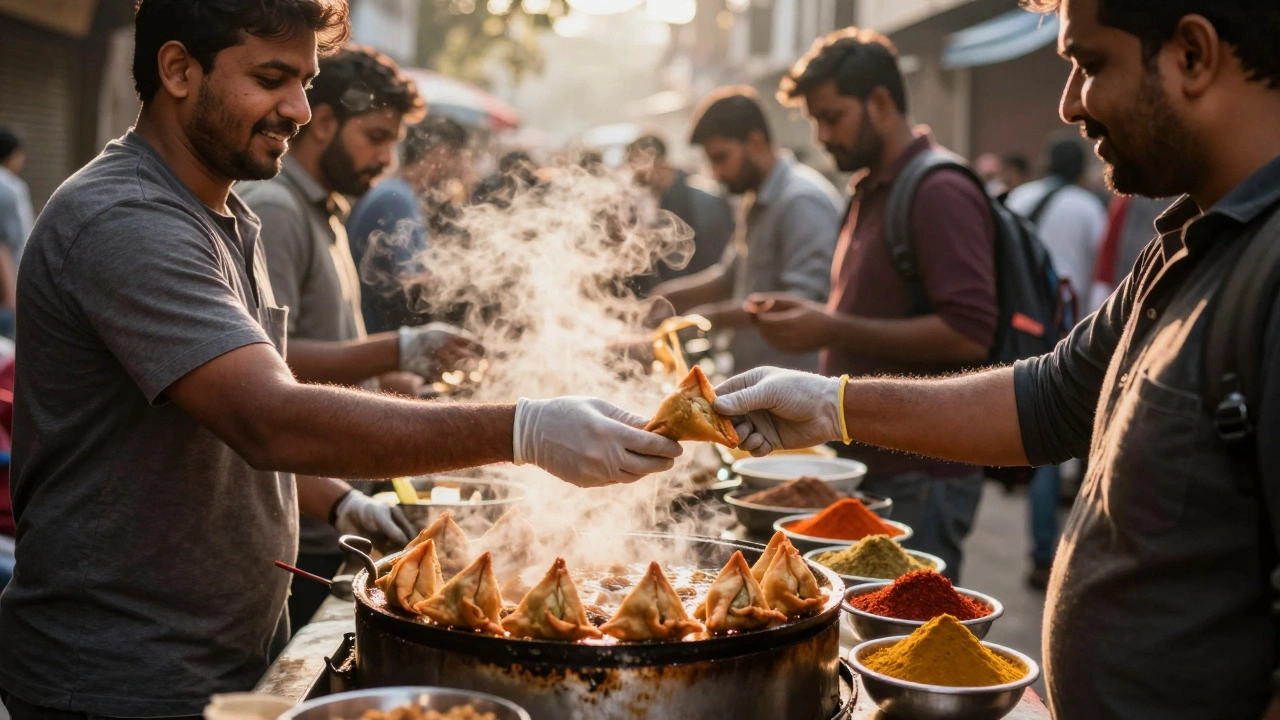
- Go for hot, fresh, and piping hot. If the food is served steaming, the heat killed most germs. A samosa that’s been sitting under a cloth? Skip it. One fresh out of the fryer? Go for it.
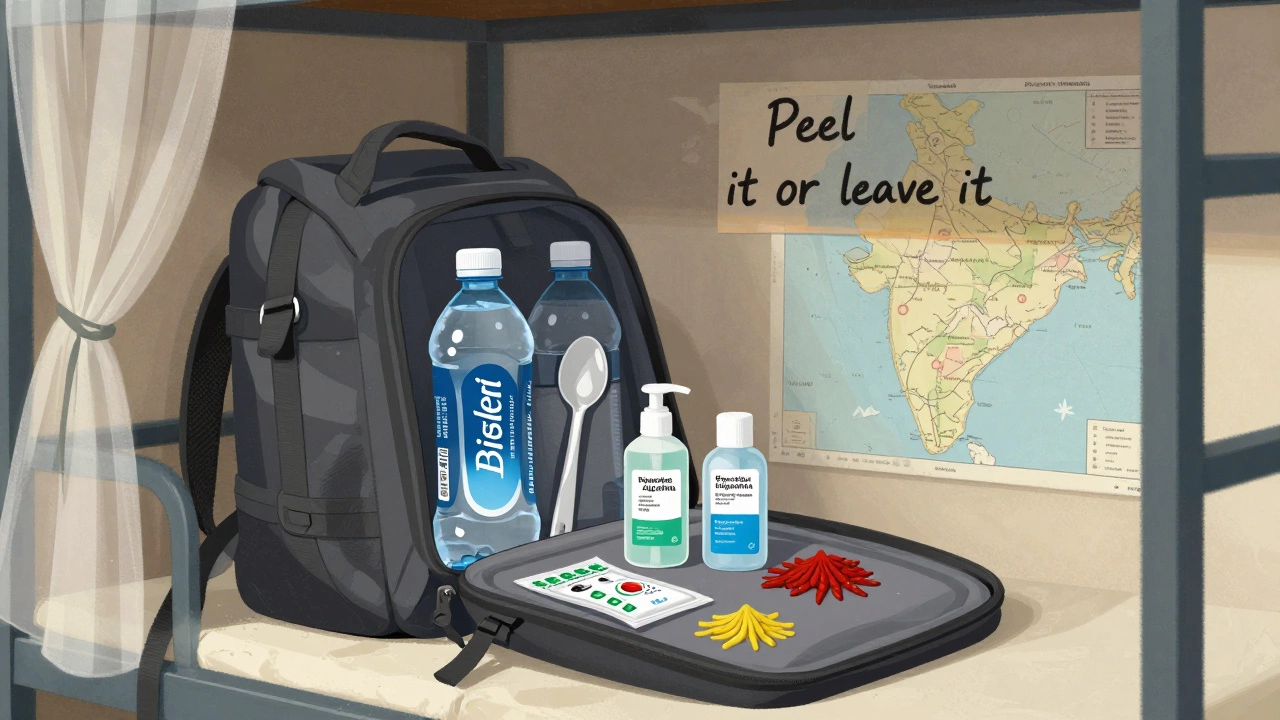
- Watch the water. Never drink tap water. Not even for brushing your teeth. Bottled water is cheap-₹20-₹40 ($0.25-$0.50). Look for sealed, branded bottles like Bisleri or Aquafina. If you’re unsure, ask: "Kya yeh bottled water hai?" (Is this bottled water?)
- Peel it or leave it. Fruits like bananas, oranges, and mangoes are fine if you peel them yourself. Avoid pre-cut fruit, salads, or smoothies unless you’re sure they were washed in purified water. A vendor handing you a pre-peeled apple? Politely say no.
- Avoid raw dairy. Ice cream, lassi, and milk-based drinks from unregulated vendors can carry bacteria. Stick to packaged milk or yogurt from big brands like Amul.
- Choose busy stalls. A vendor with a line of locals? That’s your best bet. High turnover means fresh food, not leftovers. No line? Walk away.
Hygiene habits that make a difference
It’s not just about what you eat. It’s about what you touch.
- Carry hand sanitizer. Use it before every meal, even if you’re using utensils. Alcohol-based gel (at least 60% alcohol) works best. Keep a small bottle in your pocket or daypack.
- Don’t touch your face. Your eyes, nose, and mouth are the easiest entry points for germs. If you scratch your head, then eat? That’s a recipe for trouble.
- Use bottled water for washing. Even if you’re washing your hands, don’t use tap water unless you’re sure it’s filtered. Wet wipes with sanitizer work great for quick cleanups.
- Bring your own utensils. A lightweight, foldable spoon or chopsticks cost less than ₹100. It’s one less thing you have to trust someone else to clean.
Water, ice, and drinks
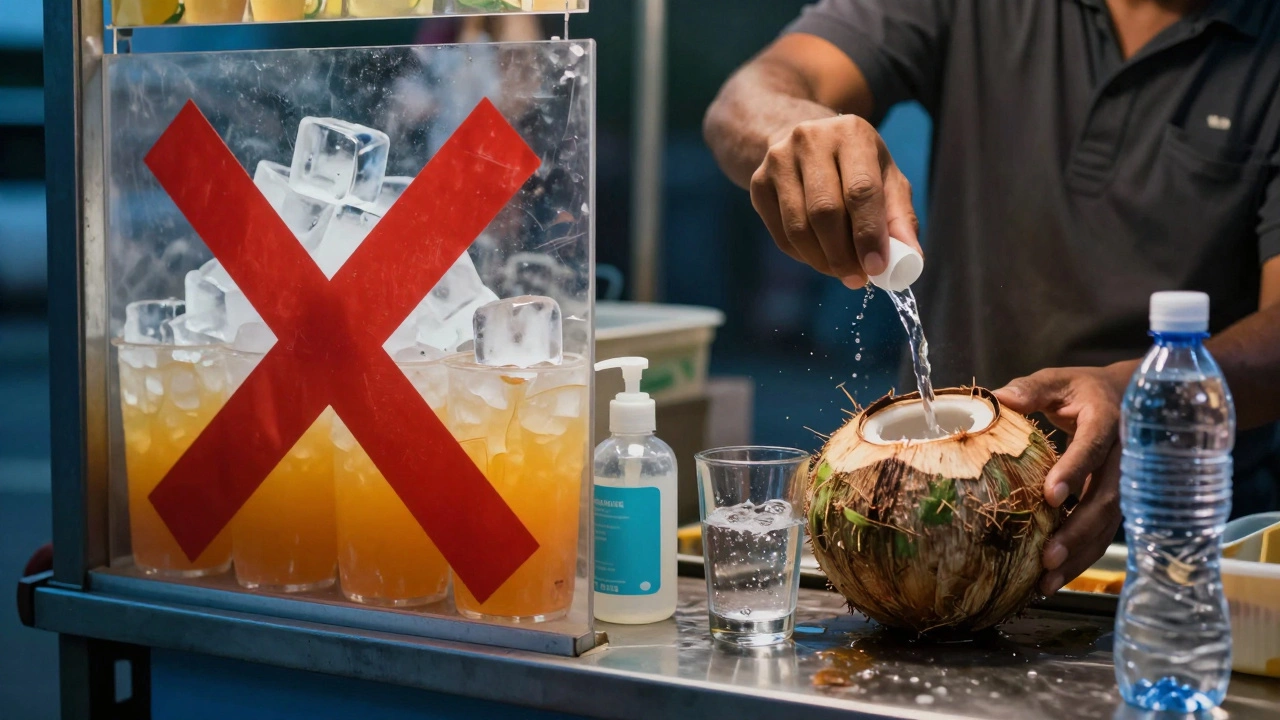
Here’s the cold truth: ice in your drink? It’s probably made from tap water. Same goes for fountain sodas or juice from a machine. Even if the bottle says "100% juice," the machine might’ve been rinsed with tap water.
Stick to:
- Bottled water (sealed)
- Canned or sealed soda
- Hot tea or coffee (boiled water)
- Coconut water from a fresh coconut (ask them to open it in front of you)
Avoid:
- Ice cubes
- Unsealed juice or smoothies
- Tap water in hotels-even "filtered" taps aren’t always safe
What to pack for peace of mind
You don’t need a full pharmacy, but a few simple items can save your trip:
- Oral rehydration salts (ORS): ₹50-₹100 per pack. Mix with bottled water if you get diarrhea. It prevents dehydration better than sports drinks.
- Anti-diarrhea pills: Loperamide (Imodium) is available over the counter in India. Take one tablet after the first loose stool, but don’t use it if you have a fever or bloody stool.
- Probiotics: Some travelers swear by daily probiotics (like Culturelle or VSL#3) to keep gut flora balanced. Start taking them a week before you go.
- Activated charcoal: Used in some countries to absorb toxins. Evidence is mixed, but some travelers find it helps with bloating and gas.
Don’t pack antibiotics unless prescribed. Self-medicating with antibiotics can make things worse and create drug-resistant bugs.
Real traveler stories
One backpacker I met in Varanasi skipped street food for three days, ate only boiled rice and bananas, and still got sick. Why? He used tap water to brush his teeth. Another ate dal-chawal from a tiny shop with no name, watched the cook fry onions in oil, and never had a problem. The difference? He watched the process.
Most cases of Delhi belly happen because people assume "it won’t happen to me." It can. But it doesn’t have to.
What to do if you get sick
If you get diarrhea:
- Drink fluids-water, ORS, coconut water. Dehydration is the real danger.
- Rest. Don’t push yourself to travel or sightsee.
- Stick to bland food: rice, toast, boiled potatoes, bananas.
- Use loperamide only for short-term relief. Don’t suppress it for more than 24 hours.
- If you have fever, blood in stool, or vomiting for more than 24 hours, see a doctor. Many clinics in Delhi, Jaipur, and Agra cater to tourists and accept credit cards.
Pharmacies are everywhere. Look for "Apollo Pharmacy" or "MedPlus." They’ll have what you need. No prescription required for most over-the-counter meds.
Myth vs. Reality
- Myth: Only foreigners get Delhi belly.
- Reality: Locals have strong gut immunity, but even they get sick from unfamiliar food or bad water. You’re not weak-you’re just not used to the microbes.
- Myth: Spicy food causes it.
- Reality: Spices like chili and turmeric have antibacterial properties. It’s not the heat-it’s the contamination.
- Myth: You can’t enjoy street food.
- Reality: With smart choices, street food is safe-and unforgettable.
Final advice: Trust your gut
Here’s the simplest rule: if something looks or smells off, don’t eat it. If the vendor doesn’t wash their hands, walk away. If the ice is cloudy or the water bottle isn’t sealed, pick another one.
India’s food is some of the most vibrant, flavorful, and affordable in the world. You don’t have to give it up. You just have to be smart. A little caution goes a long way. Stay hydrated. Stay clean. Stay curious. And enjoy every bite-safely.