Mumbai vs Bangalore: Which City Is Better for Travelers?
 Feb, 24 2026
City Matchmaker
Which City Suits You Best?
Answer a few questions about your travel preferences to get a personalized recommendation between Mumbai and Bangalore.
When people ask which is better, Mumbai or Bangalore, they’re not just comparing two cities-they’re trying to figure out where they’ll feel most at home for a few days, weeks, or even longer. One’s a coastal giant buzzing with energy, the other’s a tech-driven hub with green spaces and a relaxed rhythm. Neither is ‘better’ for everyone. But if you know what you’re looking for, the choice gets a lot easier.
Mumbai: The City That Never Sleeps
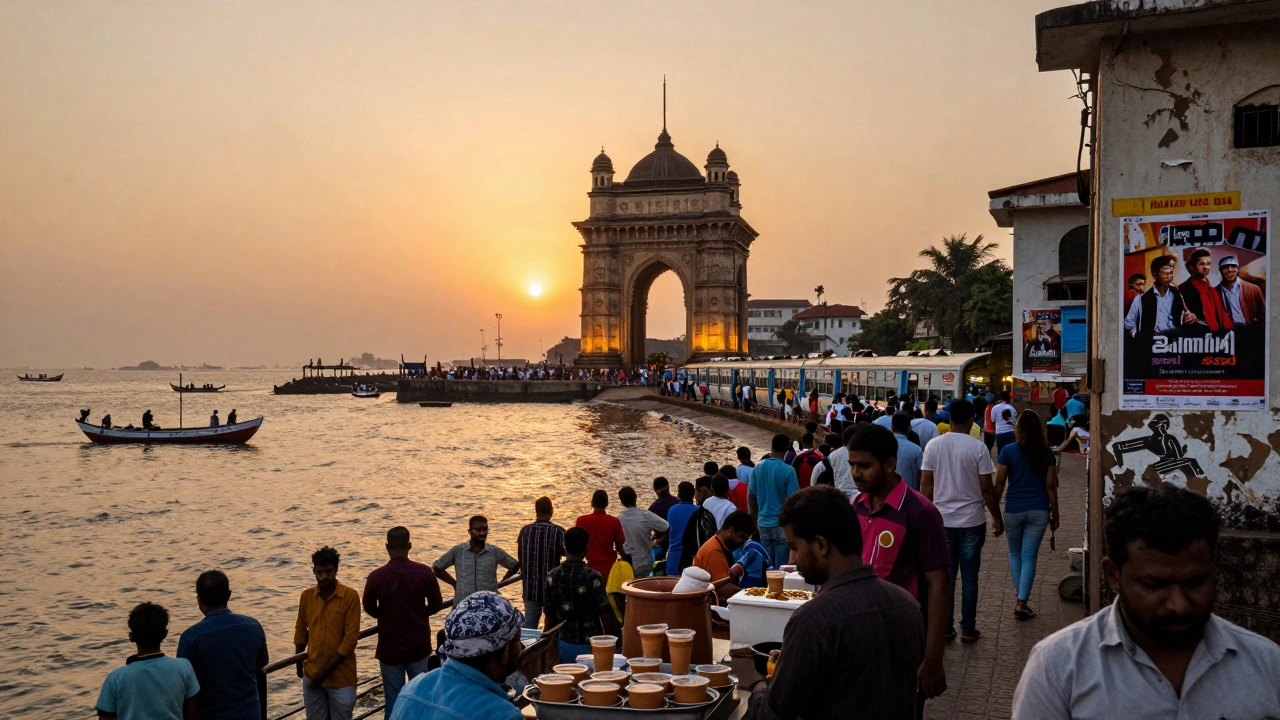
Mumbai isn’t just a city. It’s a force. Over 20 million people live here, and every day feels like a movie scene. The streets are packed with street vendors selling chai, Bollywood stars walk out of studios in Bandra, and the Gateway of India glows at sunset. This is India’s financial capital, yes, but it’s also its cultural heartbeat.
Public transport here is intense. The local trains carry 7.5 million passengers daily-some of the most crowded in the world. If you’ve never stood shoulder-to-shoulder in a train car with 150 people, you haven’t really experienced Mumbai. But it works. Buses, autos, and app-based cabs fill the gaps. You’ll get places fast, even if it’s chaotic.
Food? Unmatched. You can eat a butter chicken wrap from a street cart for 80 rupees, then sip a cappuccino in a rooftop café in Colaba. The street food scene is legendary-vada pav, pav bhaji, sev puri. And if you’re into seafood, head to Juhu Beach. Fresh crab, prawns, and fish grilled over charcoal taste like nothing you’ve had elsewhere.
History is everywhere. The Chhatrapati Shivaji Terminus, a UNESCO site, looks like a Victorian cathedral built for trains. The Elephanta Caves, reachable by a 1-hour ferry, hold 1,500-year-old Hindu carvings. And then there’s Dharavi-Asia’s largest slum-where you can take guided tours and see how recycled plastic becomes toys, and scrap metal turns into kitchenware.
Bangalore: The Silicon Valley of India
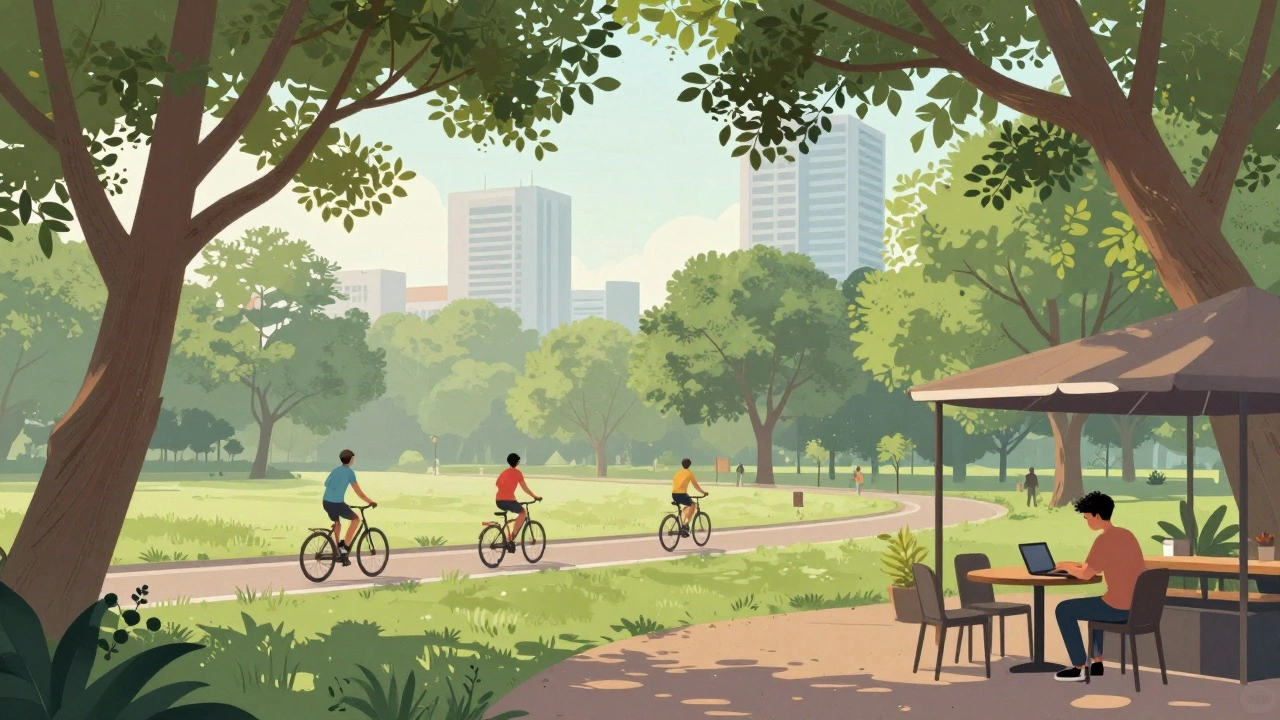
Bangalore, or Bengaluru as locals call it, is quieter, greener, and calmer. It sits on a plateau at 750 meters above sea level, which means the weather is mild year-round. You won’t sweat through your shirt walking to a café, like you do in Mumbai. The city’s nickname, ‘Garden City,’ isn’t marketing-it’s true. Lal Bagh, Cubbon Park, and Bannerghatta National Park are all within easy reach.
This is India’s tech capital. Over 400,000 people work in IT here. Companies like Infosys, Wipro, and startups with names you’ve never heard of fill office towers in Whitefield and Koramangala. But don’t assume it’s all suits and screens. The vibe is surprisingly laid-back. You’ll see young people working on laptops in coffee shops, not because they’re remote workers, but because it’s just how life here works.
Food here is different. You’ll find more South Indian staples-masala dosa, idli sambar, filter coffee. But Bangalore also has one of India’s most diverse food scenes. You can eat Ethiopian stew, Korean bibimbap, or artisanal pizza-all in the same neighborhood. The city’s café culture is real. Places like Blue Tokai and Third Wave Coffee Roasters serve single-origin beans you won’t find in Mumbai.
Weekends? Head to Nandi Hills for sunrise hikes, or spend the day at Wonderla, an amusement park with water slides and roller coasters. If you’re into history, visit Tipu Sultan’s Summer Palace or the ancient ISKCON temple. And unlike Mumbai, you can actually walk around neighborhoods like Indiranagar or Jayanagar without dodging traffic.
Cost of Living: Who Wins?
Let’s talk money. Rent in Mumbai is brutal. A one-bedroom apartment in Bandra or Andheri costs between ₹35,000 and ₹60,000 per month. In Bangalore, the same space in Koramangala or Indiranagar runs ₹25,000 to ₹40,000. Groceries? Similar. A liter of milk is ₹80 in both. But electricity and water bills? Bangalore is cheaper. The city has better infrastructure for water supply and power backups.
Transportation costs are lower in Bangalore. A monthly metro pass is ₹1,200. In Mumbai, you’ll spend ₹1,500 just on local trains, not counting autos or cabs. And if you drive? Bangalore’s roads are wider, traffic is less dense, and parking is easier to find.
Who Should Choose Mumbai?
Mumbai is for people who thrive on energy. If you want to see a live Bollywood shoot, eat fresh seafood at midnight, or catch a concert at the National Centre for the Performing Arts, this is your city. It’s also the best place in India to experience street culture-every corner has a story, a smell, a sound.
It’s ideal if you’re into:
- Fast-paced urban life
- History and heritage sites
- Seafood and street food
- Shopping at Linking Road or Colaba Causeway
- Watching the sunset over the Arabian Sea
Who Should Choose Bangalore?
Bangalore suits people who want balance. You can work hard during the day and relax in a park by evening. It’s the best city in India for digital nomads, expats, and anyone who values quiet mornings and good coffee. The air is cleaner, the pace is slower, and the people are more open to outsiders.
It’s ideal if you’re into:
- Relaxed weekends and green spaces
- Café culture and specialty coffee
- Tech startups and innovation hubs
- South Indian food with modern twists
- Easy access to hill stations like Coorg and Ooty
What You Won’t Find in Either City
Don’t expect perfect cleanliness. Mumbai’s sidewalks are littered, and Bangalore’s drains often overflow during monsoons. Neither city is easy for wheelchair users. Public restrooms? Rare and often unclean. Both have pollution issues-Mumbai with its traffic, Bangalore with its construction dust.
And while both have airports, Mumbai’s Chhatrapati Shivaji Maharaj International handles 18 million passengers a year. Bangalore’s Kempegowda International is newer and cleaner, but has fewer international flights.
The Verdict
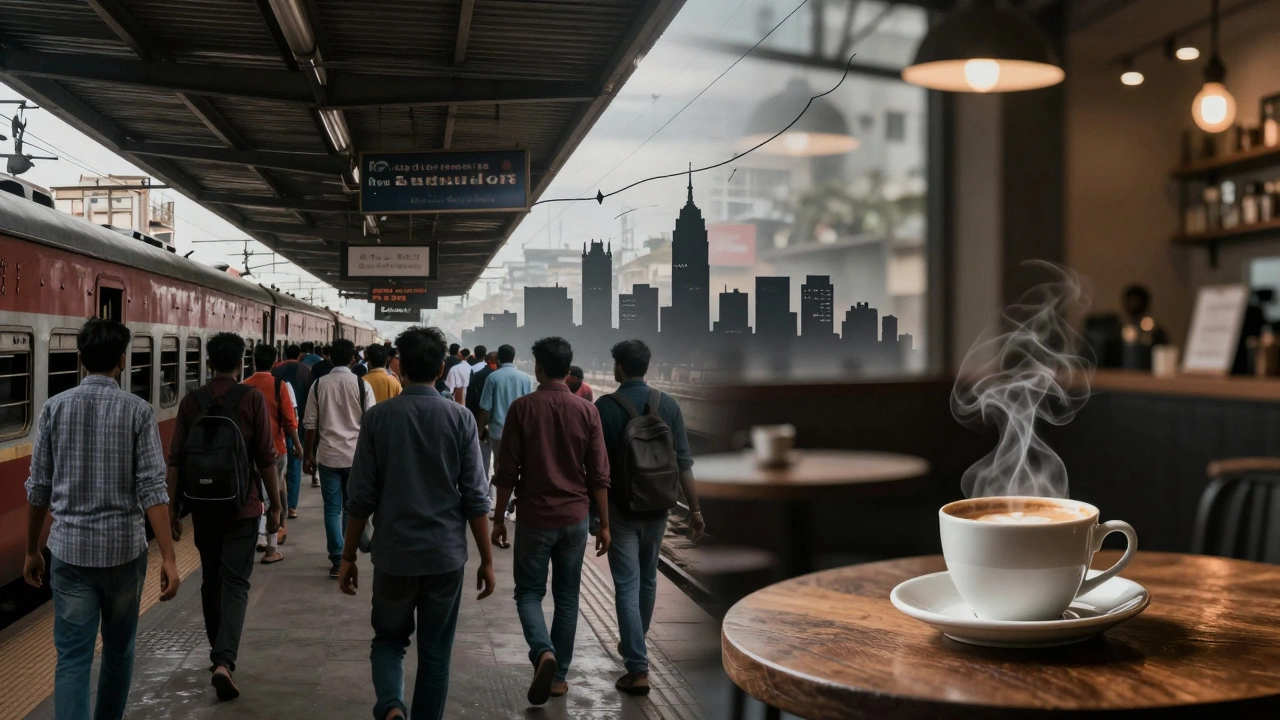
There’s no right answer. Mumbai gives you intensity. Bangalore gives you balance. If you want to feel alive in a crowd, pick Mumbai. If you want to recharge while still being in a major city, pick Bangalore.
Here’s a quick rule: If you’re visiting for less than 5 days, go to Mumbai. You’ll pack more into a short trip. If you’re staying longer-two weeks or more-Bangalore lets you breathe. You’ll leave feeling calmer, not drained.
And if you’re still stuck? Try both. Fly into Mumbai, spend 3 days there, then take a 2-hour flight to Bangalore. You’ll get the full picture of modern India in one trip.
Is Mumbai safer than Bangalore for solo travelers?
Both cities are generally safe for solo travelers, but they feel different. Mumbai has more people around at all hours, which can make it feel safer at night. Bangalore has lower crime rates overall, especially in residential areas. The key is staying aware. Avoid poorly lit streets after midnight in both cities. Use trusted apps like Ola or Uber, and never accept rides from strangers.
Which city has better public transportation?
Mumbai has the most extensive network-local trains, buses, and suburban rail cover nearly every corner. But it’s overcrowded. Bangalore’s metro is newer, cleaner, and expanding fast. It covers key areas like the airport, IT hubs, and shopping zones. For short trips, Bangalore’s autos and app cabs are easier to use. For long commutes, Mumbai’s trains are unmatched-if you can handle the crowds.
Which city is better for food lovers?
It depends on what kind of food you love. Mumbai wins for street food and seafood. You’ll find the best vada pav, pav bhaji, and grilled fish here. Bangalore wins for variety and innovation. You can eat Ethiopian, Japanese, vegan, or fusion food that’s hard to find elsewhere in India. If you want authenticity, go Mumbai. If you want creativity, go Bangalore.
Can I visit both cities in one trip?
Absolutely. The flight between Mumbai and Bangalore takes just under 2 hours. Many travelers do a 5-day circuit: 3 days in Mumbai, 2 in Bangalore. You’ll get the full contrast of coastal energy and tech-driven calm. It’s one of the most rewarding short trips in India.
Which city has better weather?
Bangalore wins by a mile. Its elevation keeps temperatures between 15°C and 30°C year-round. Mumbai is hot and humid most of the year, with monsoon rains from June to September. If you hate sweat and sticky air, Bangalore is the clear choice. If you don’t mind humidity, Mumbai’s winter months (November-February) are quite pleasant.
If you’re planning a trip, don’t just pick based on hype. Think about what kind of energy you need. Do you want to be pushed by the crowd? Or do you want to unwind while still being in the middle of it all? That’s the real difference between Mumbai and Bangalore.