Where Do Most Foreigners Visit in India? Top Destinations Revealed
 Mar, 20 2026
Every year, millions of foreigners land in India-not just for the temples or the spices, but because the country offers something no other place can. From the snow-capped peaks of the Himalayas to the golden deserts of Rajasthan, India pulls travelers in with raw authenticity. But where do most of them actually go? If you’ve ever wondered why so many international visitors keep coming back to the same few places, the answer isn’t just about famous landmarks. It’s about experience, accessibility, and the kind of magic you can’t plan for.
Delhi: The Gateway with Depth
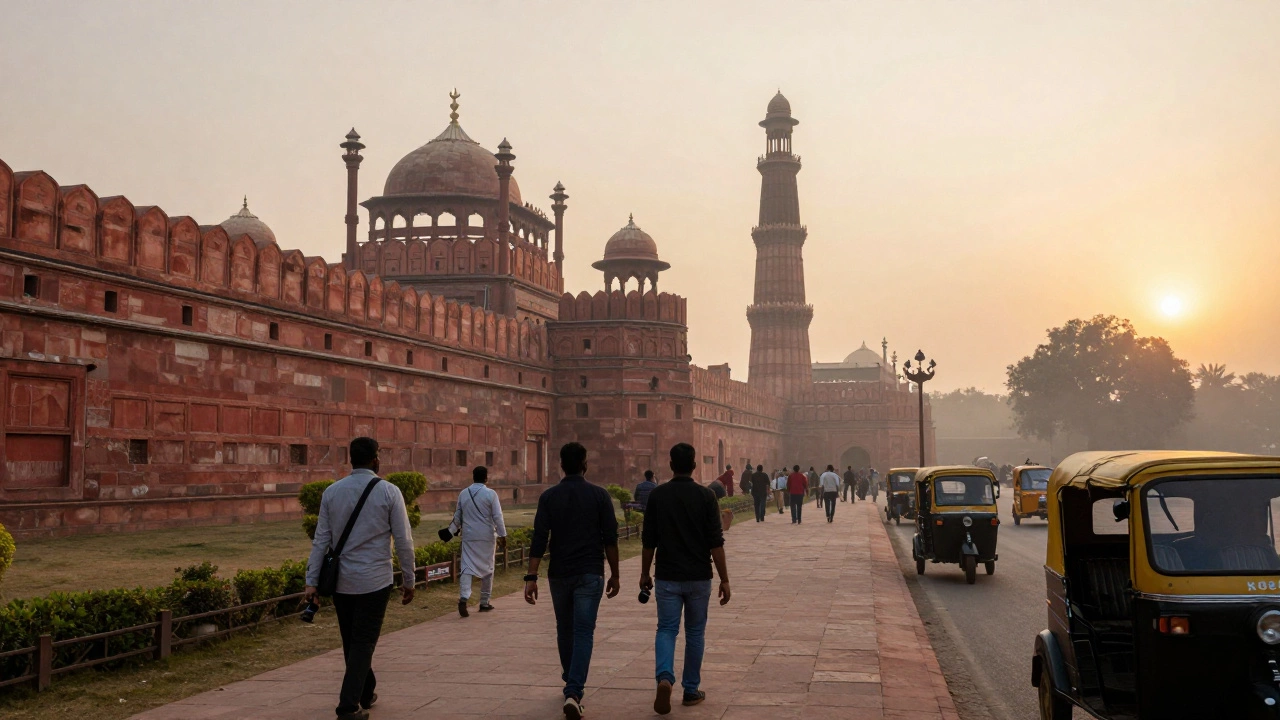
Most foreigners start their India journey in Delhi. It’s not just the capital-it’s the entry point for over 60% of international arrivals. Why? Because it’s easy. Direct flights from Europe, North America, and Southeast Asia land here. But beyond convenience, Delhi packs centuries into one city. The Red Fort, built by Mughal emperors, still stands as a symbol of imperial power. Nearby, the Qutub Minar rises over 73 meters, its inscriptions whispering 800 years of history. And then there’s Humayun’s Tomb, the grand ancestor of the Taj Mahal, with its symmetrical gardens and marble domes.
But Delhi isn’t just about monuments. The streets of Chandni Chowk buzz with the smell of parathas and the clatter of silverware from old tea stalls. Foreigners walk away not just with photos, but with stories-like the time they haggled for a hand-painted jutka or got lost in the labyrinth of Dariba Kalan, where silver jewelry has been made the same way since the 1600s.
Agra: The Taj That Changes Everything
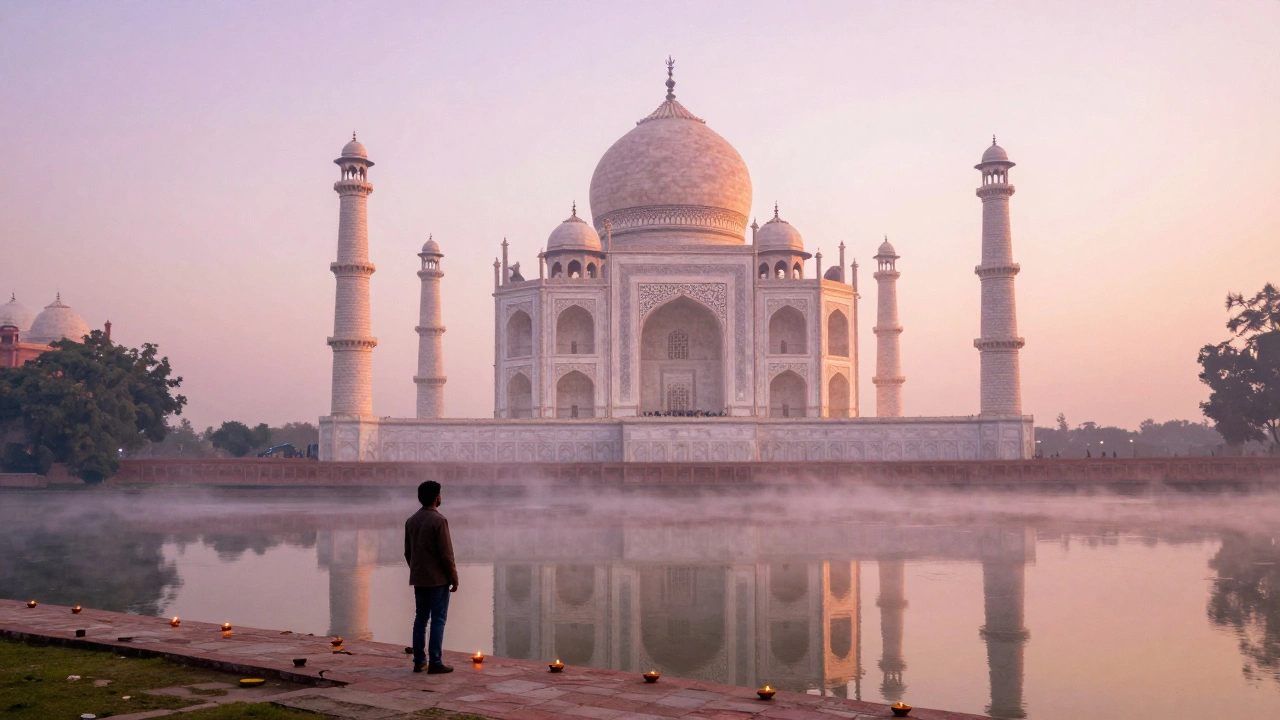
If Delhi is the entry, Agra is the moment everything shifts. The Taj Mahal doesn’t just attract visitors-it transforms them. Over 7 million people visit it every year, and nearly 80% of them are foreigners. No photo prepares you. No guidebook explains how the marble changes color at sunrise, from pale pink to blinding white. The way the reflection shimmers in the Yamuna River, the silence inside the main chamber, the sheer scale of a monument built for love-it hits differently in person.
Most tourists spend just a few hours here, but those who stay longer find Agra’s hidden layers. The Agra Fort, with its red sandstone walls and echoing courtyards, feels like stepping into a Mughal court. And then there’s Mehtab Bagh, the moonlight garden across the river, where locals and foreigners sit together at sunset, watching the Taj glow in the fading light. It’s not a tourist trap. It’s a pilgrimage.
Jaipur: The Pink City That Feels Like a Living Museum
Jaipur, the capital of Rajasthan, is where history turns into spectacle-and it works. Foreigners love it because it’s colorful, organized, and packed with things to do. The City Palace, with its blend of Rajput and Mughal architecture, still houses royalty. The Jantar Mantar observatory? It’s the largest stone astronomical instrument in the world, built in 1738. You can stand beside a sundial that tells time to the second, and no one explains it in English-you just feel it.
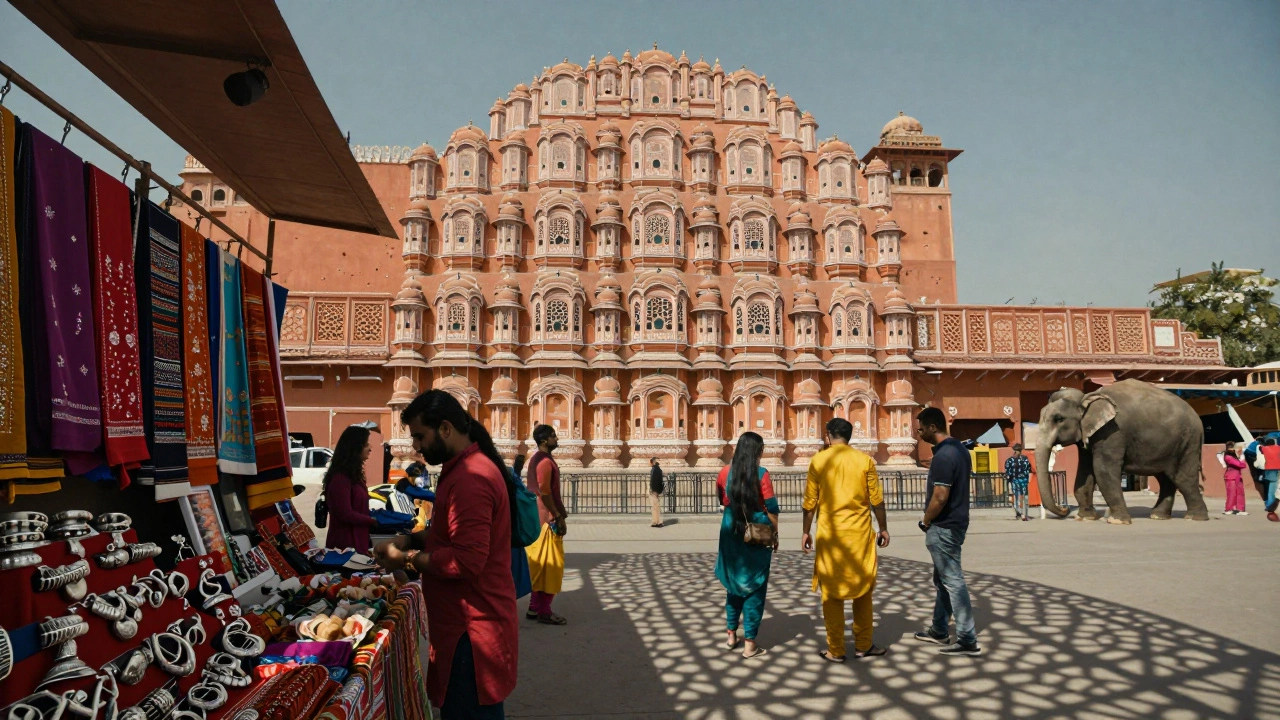
Then there’s Hawa Mahal, the Palace of Winds. Its 953 windows weren’t just for decoration-they let royal women watch street festivals without being seen. Today, tourists climb to the top for panoramic views of the old city. And the bazaars? Amber Fort’s elephant ride is controversial, but the market for block-printed fabrics, gemstones, and handmade lac bangles? That’s where people spend hours, sometimes days.
Jaipur doesn’t just show you India’s past. It lets you touch it.
Varanasi: Where Life and Death Intertwine
Not every foreigner comes to India for the sights. Some come for the soul. Varanasi, on the banks of the Ganges, is one of the oldest continuously inhabited cities on Earth. Over 500,000 foreigners visit each year, drawn by the ghats-stone steps leading down to the river where rituals unfold daily.
At dawn, you’ll see priests chanting Sanskrit hymns as bodies burn on funeral pyres. At dusk, the Ganga Aarti ceremony lights up the water with hundreds of oil lamps. Foreigners sit on the steps, silent, often crying. No one tells them what to feel. They just feel it.
It’s not a typical tourist spot. There’s no gift shop selling ‘Varanasi’ t-shirts. Instead, there are monks in saffron robes, boatmen who’ve rowed the same stretch for generations, and women washing clothes with the same rhythm their grandmothers used. It’s raw. It’s real. And it changes how people see life.
Amber Fort and the Golden Triangle Route
Most foreigners don’t visit these places separately. They follow the Golden Triangle: Delhi → Agra → Jaipur. It’s the most traveled path in India for a reason. The distances are short-Delhi to Agra is just 200 kilometers. Agra to Jaipur is another 250. Trains are clean, reliable, and cheap. Private drivers are easy to hire. The infrastructure is built for tourists, but the soul isn’t.
Over 80% of foreign tourists stick to this loop. Why? Because it gives you the full spectrum. Delhi for history, Agra for wonder, Jaipur for color. And if you have a few extra days, you can add Ranthambore National Park for tiger sightings, or push into Udaipur for lakes and palaces. But the Triangle? That’s the core.
Why These Places Dominate
It’s not luck. It’s design. These cities have been shaped by decades of tourism infrastructure. English is widely spoken in hotels and heritage sites. Visa-on-arrival policies make entry simple. Tour operators offer guided walks with local historians. And social media? It’s been a massive driver. Instagram photos of the Taj at sunrise, Jaipur’s Hawa Mahal framed against the desert sky, Varanasi’s ghats glowing at dusk-they’re everywhere.
But here’s what most travel blogs miss: foreigners don’t come for the checklist. They come because these places make them feel something. They don’t just see history. They touch it. Smell it. Hear it. In Delhi, it’s the call to prayer echoing over ancient ruins. In Agra, it’s the silence inside the Taj’s chamber. In Jaipur, it’s the weight of a hand-painted saree in your hands. In Varanasi, it’s the smell of incense and smoke mixed with river water.
India doesn’t sell itself with ads. It sells itself with moments.
What Foreigners Skip (And Why)
Most foreigners never make it to Kerala’s backwaters. Or to the temples of Tamil Nadu. Or to the remote monasteries of Ladakh. Why? Because they’re harder to reach. Fewer flights. Less English. Less infrastructure. And most first-time visitors don’t have the time-or the nerve.
That’s not a flaw. It’s a pattern. First-time travelers want safety, clarity, and impact. The Golden Triangle delivers all three. It’s not the whole of India. But it’s the part that leaves the deepest mark.
What You Should Do If You’re Going
- Stay at least 3 nights in each city. Rushing through means missing the small moments.
- Book a local guide in Agra. A good one will explain the Taj’s hidden symbolism, not just its history.
- Try to visit the Taj at sunrise. It’s crowded, but the light is unforgettable.
- In Varanasi, take a boat ride at dawn. Don’t take photos unless asked. Just sit and watch.
- Don’t expect everything to be clean or quiet. India doesn’t perform for tourists. It lives.
Most foreigners leave India with more questions than answers. And that’s the point. They didn’t come to check boxes. They came to find something they couldn’t name. And they did.
Why do most foreigners visit Delhi, Agra, and Jaipur?
These three cities form the Golden Triangle, the most popular tourist route in India. They’re connected by short, easy train rides, have well-developed tourist infrastructure, and offer a powerful mix of history, culture, and visual impact. Delhi gives you imperial power, Agra gives you the Taj Mahal, and Jaipur gives you vibrant royal heritage-all within a 500-kilometer loop.
Is Varanasi safe for first-time foreign visitors?
Yes, but it’s different. Varanasi isn’t a typical tourist destination. The ghats are busy, the streets are chaotic, and the spiritual intensity can be overwhelming. But thousands of foreigners visit safely every year. Stick to well-known areas, hire a local guide for your first day, avoid going alone at night, and respect local customs-like not pointing at funeral pyres. The city is safe if you approach it with openness, not fear.
Do I need a guide for the Taj Mahal?
You don’t need one, but you’ll get more from it if you do. The Taj isn’t just a building-it’s a poem in marble. A good guide will explain the symbolism: the four minarets leaning slightly outward to protect the main dome, the inlay of 28 different semi-precious stones, the fact that the entire structure is perfectly aligned with the cardinal directions. Most tourists walk away after 30 minutes. With a guide, you walk away with a new understanding of love, loss, and art.
Can I visit all three cities in a week?
Yes, but you’ll be rushed. You can do Delhi (2 days), Agra (1 day), Jaipur (2 days), and travel between them by train in 3-4 hours each. But you’ll miss the quiet moments-the early morning mist over the Yamuna, the sound of temple bells at dusk, the taste of a roadside lassi made with real rose petals. If you want to truly experience these places, give yourself 10-12 days. Slow travel in India isn’t a luxury. It’s the only way to understand it.
What’s the best time of year to visit these places?
October to March is ideal. The weather is cool and dry-perfect for walking ancient forts and sitting on ghats. April to June is scorching hot, especially in Rajasthan. July to September brings monsoon rains, which can make travel difficult. If you’re going to Varanasi, avoid the peak of summer. The heat and humidity make the spiritual experience harder to bear.