Why Is India So Cultural? The Roots of a Living Heritage
 Mar, 6 2026
India Cultural Diversity Explorer
Discover India's Rich Cultural Tapestry
India speaks 22 official languages and over 19,500 dialects. Each region has its own unique traditions, festivals, and cultural practices that have evolved over thousands of years.
Did you know? A single festival like Diwali is celebrated differently across India with regional variations in foods, rituals, and traditions.
Regional Cultural Snapshot
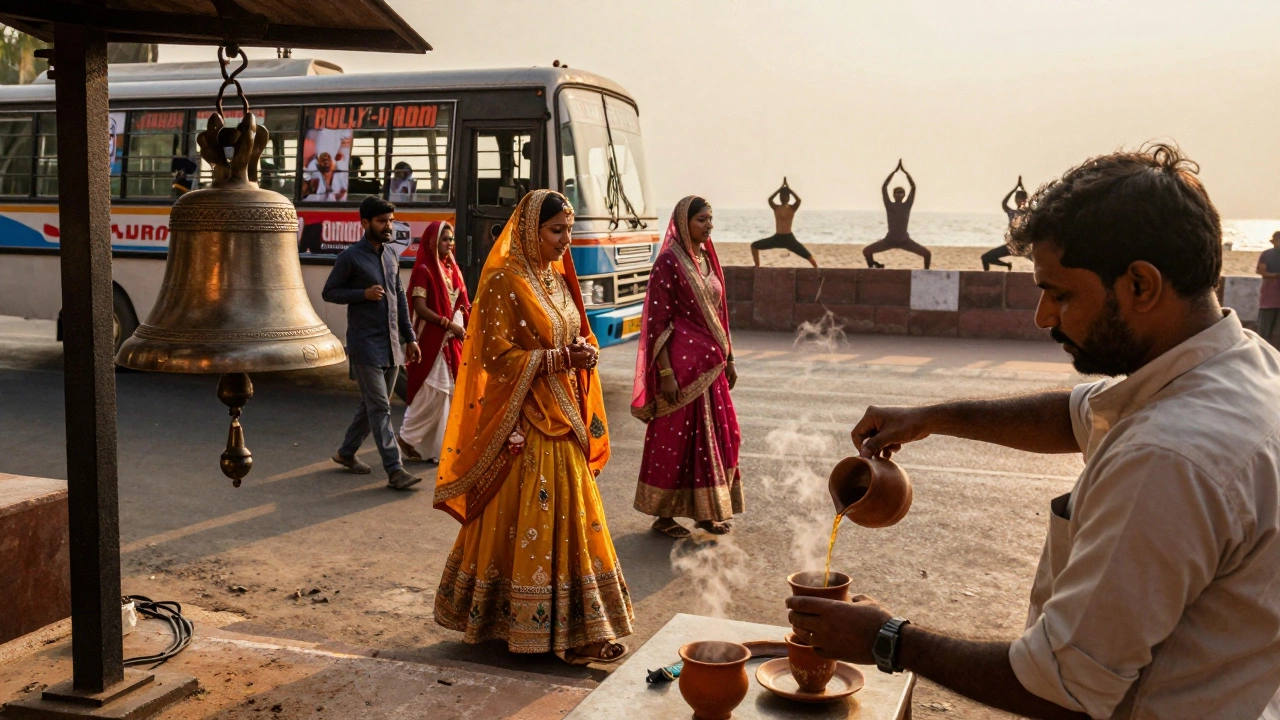
Walk through any Indian city and you’ll see it immediately: a temple bell ringing beside a street vendor selling chai, a wedding procession in silk and gold passing a bus covered in Bollywood posters, a yoga class on the beach as the sun sets over the Arabian Sea. India doesn’t just have culture-it breathes it. Every corner, every language, every meal, every festival tells a story older than most nations. But why is India so cultural? The answer isn’t one thing. It’s layers. Decades. Centuries. Millions of lives lived differently, yet together.
More Than 22 Official Languages, Countless Ways of Life
India doesn’t speak one language. It speaks 22 officially recognized ones, and over 19,500 dialects. In Tamil Nadu, people greet each other with Namaskaram and eat rice with sambar. In Punjab, Sat Sri Akal is common, and the table is full of buttery makki di roti and sarson ka saag. In Kashmir, tea is brewed with cardamom and almonds, while in Assam, it’s drunk strong and milky, straight from the tea gardens that supply half the world’s tea.
This isn’t just linguistic variety-it’s cultural DNA. Each language carries its own proverbs, songs, rhythms of daily life, and ways of thinking. A person in Kerala might celebrate Onam with a 12-course feast called sadya, while someone in Bihar marks Chhath Puja by standing in river water for hours, offering prayers to the sun. These aren’t tourist shows. They’re lived rituals, passed down through generations without a single textbook.
Religions That Grew Together, Not Apart
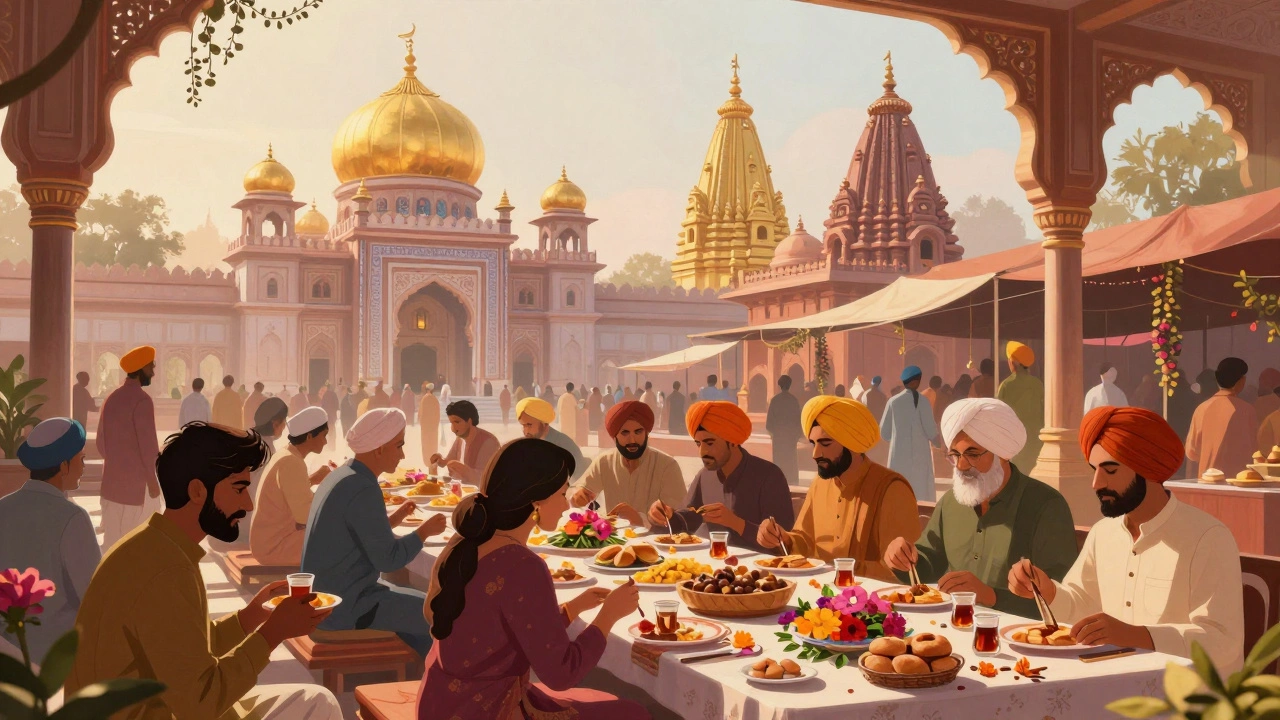
India is home to the world’s largest Hindu population, but also the third-largest Muslim population, the largest Sikh community, and ancient roots of Jainism, Buddhism, and Zoroastrianism. Unlike places where one religion dominated and others were pushed out, India’s history is full of coexistence. The Sufi shrines in Ajmer draw Hindus and Muslims alike. The Golden Temple in Amritsar serves free meals to 100,000 people daily-regardless of faith. In Goa, Catholic churches stand beside Hindu temples, and Christmas is celebrated with mangoes and feni, not just eggnog.
This isn’t tolerance. It’s entanglement. Hindu deities appear in Buddhist art. Sufi poets wrote in Sanskrit. Sikh gurus studied the Quran. The result? A culture where rituals borrow from each other. A child in Rajasthan might wear a black thread for protection (a Hindu practice) while also reciting a verse from the Quran (a Muslim custom). There’s no contradiction here. There’s just life.
Heritage Sites That Aren’t Just Stone and Mortar
India has 43 UNESCO World Heritage Sites. But most of them aren’t frozen in time. The Taj Mahal? Still visited by lovers who leave flowers. The Khajuraho temples? Still covered in morning dew as locals walk past them to market. The Hampi ruins? Still echo with the sound of temple bells and children playing among the pillars.
What makes these sites cultural, not just historical, is that they’re still part of living communities. In Varanasi, priests perform daily aartis on the ghats while boatmen shout prices for river rides. In Madurai, the Meenakshi Temple isn’t just a monument-it’s the heartbeat of the city. Shops open at dawn to sell jasmine garlands. Women in silk saris come to pray. Musicians play classical ragas in the courtyards. The temple doesn’t sit on a hill. It sits in the middle of life.
Compare this to European cathedrals, often turned into museums. In India, the heritage isn’t behind glass. It’s in the hands of the people who cook, sing, pray, and argue under its arches.
The Festival Machine: 500+ Celebrations a Year
India doesn’t have a calendar. It has a festival calendar. Holi, Diwali, Eid, Pongal, Durga Puja, Ganesh Chaturthi, Baisakhi, Navratri, Onam, Christmas-each one is more than a day. It’s a season. A transformation. A city-wide party that rewrites the rules.
In Mumbai, during Ganesh Chaturthi, entire neighborhoods build clay idols taller than buildings. Streets close. Music blasts. People dance until 3 a.m. Then, on the final day, they carry the idol into the sea-not as a ritual of ending, but as a return. The idol dissolves. The water takes it. The community breathes together.
These aren’t events scheduled by tourism boards. They’re organic. They grow from family traditions, agricultural cycles, and spiritual beliefs. A farmer in Odisha might celebrate Raja Parba-the three-day festival honoring Mother Earth-by not working the land, dressing in red, and eating special sweets. No one told them to. They’ve done it for 500 years.
Food as Identity, Not Just Flavor
Ask an Indian what defines their culture, and nine times out of ten, they’ll say food. Not because it’s tasty (though it is), but because it carries memory. A Bengali might cry thinking of the smell of panta bhat (fermented rice) on a monsoon morning. A Punjabi might describe the ache of missing makki di roti with ghee. A Keralite will tell you their mother’s coconut curry tastes like childhood.
There’s no single Indian cuisine. There are 30 regional cuisines, each shaped by geography, climate, and history. The coastal south uses coconut, tamarind, and seafood. The north relies on dairy, wheat, and slow-cooked meats. The northeast ferments, smokes, and uses bamboo shoots. The desert west uses millet and dried lentils because water is scarce.
And every dish has a story. Biryani didn’t just come from Persia-it was adapted by Mughal cooks who used local spices, then refined by Hyderabadi chefs, then carried to Kolkata by servants, where it became a community dish. No one owns biryani. Everyone does.
Why This Matters Beyond Borders
India’s culture isn’t a museum exhibit. It’s a living, breathing, arguing, singing, cooking, dancing system that’s been running for 5,000 years. It doesn’t need to be preserved. It’s already being lived.
When you visit a heritage site in India, you’re not just seeing architecture. You’re stepping into a system where history isn’t behind a rope. It’s in the hands of the woman selling incense, the boy playing cricket near the temple steps, the old man chanting hymns as he sweeps the courtyard.
That’s why India feels so cultural. Not because it has ancient ruins. But because those ruins still have people living in their shadows-and still singing, eating, and praying as their ancestors did.
Is India’s culture just about religion?
No. While religion plays a big role, Indian culture is shaped by language, food, festivals, art, family structures, and even how people greet each other. A farmer in Bihar and a software engineer in Bangalore may pray differently, but both celebrate Diwali, eat rice with curry, and respect elders. Culture here is a web of everyday practices, not just rituals.
Why do so many Indian traditions survive despite modernization?
Because they’re woven into daily life, not just celebrated once a year. You don’t need a holiday to wear a mangalsutra, serve tea to guests, or bow to elders. These aren’t customs you "do"-they’re habits you live. Even when people move to cities or abroad, they carry them. A young Indian in London still makes chai the way their grandmother did. Tradition survives because it’s practical, emotional, and personal.
Are Indian heritage sites crowded because they’re tourist traps?
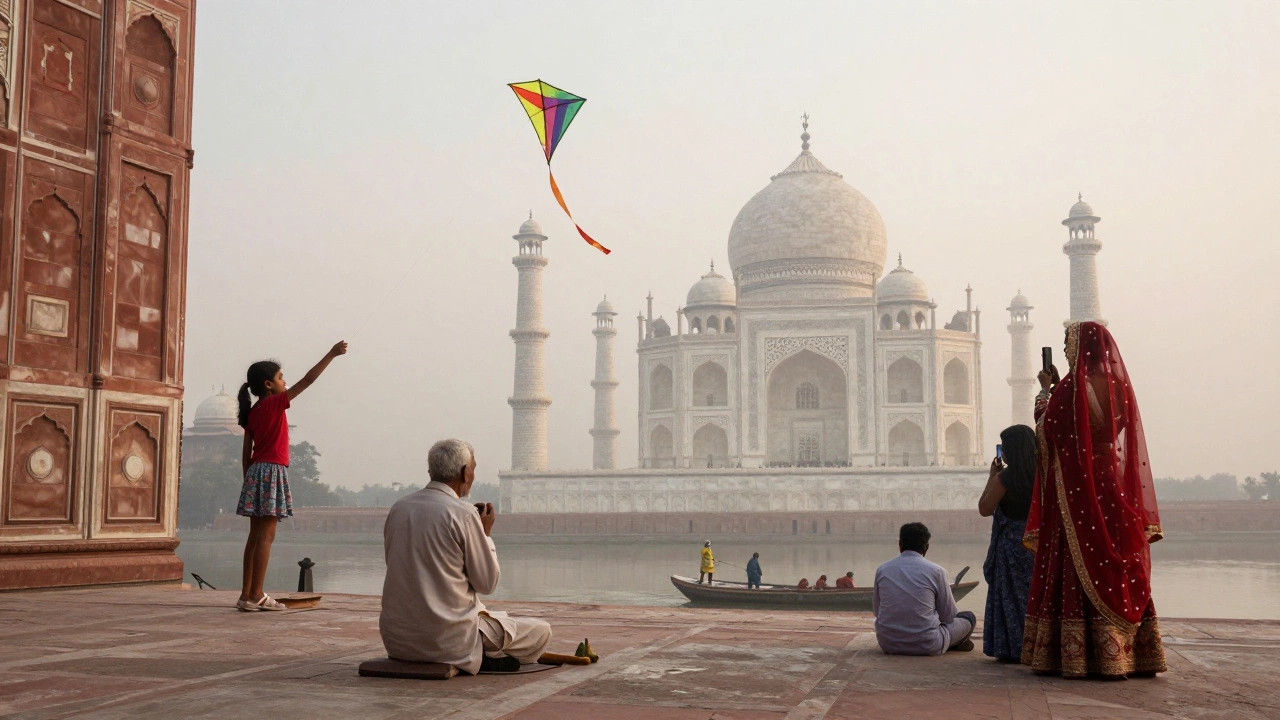
Not really. Sites like the Taj Mahal or Khajuraho are busy because they’re still part of local life. Tourists come, yes-but so do brides taking wedding photos, students sketching carvings, priests offering prayers, and children flying kites on the lawns. The crowds aren’t just visitors. They’re part of the living ecosystem of these places. That’s why they’re not "preserved" in silence-they’re kept alive.
How does India’s diversity not lead to conflict?
It does, sometimes. But over centuries, India developed a culture of coexistence not by ignoring differences, but by making space for them. You don’t have to believe the same thing to share a street, a market, or a meal. The key is in the small things: sharing water during a festival, respecting a neighbor’s prayer time, or eating the same dish with different spices. Conflict exists, but so does a deep, quiet understanding: we’re different, and that’s okay.
Can you really understand Indian culture by visiting?
You can get close. But full understanding? That takes time. A week-long trip will show you temples and food. A year living there will show you why people wake up before sunrise to clean their doorsteps, why they save money for a daughter’s wedding, why they cry when a classical musician plays a raga at dusk. Culture isn’t seen. It’s felt-through silence, routine, and small acts of kindness that have no name.