Highest Adventure Sports Honour in India: The Tenzing Norgay Award Explained
 Feb, 13 2026
Tenzing Norgay Award Eligibility Checker
Check Your Nomination Eligibility
This tool helps you determine if your adventure achievement might qualify for the Tenzing Norgay Award based on official criteria.
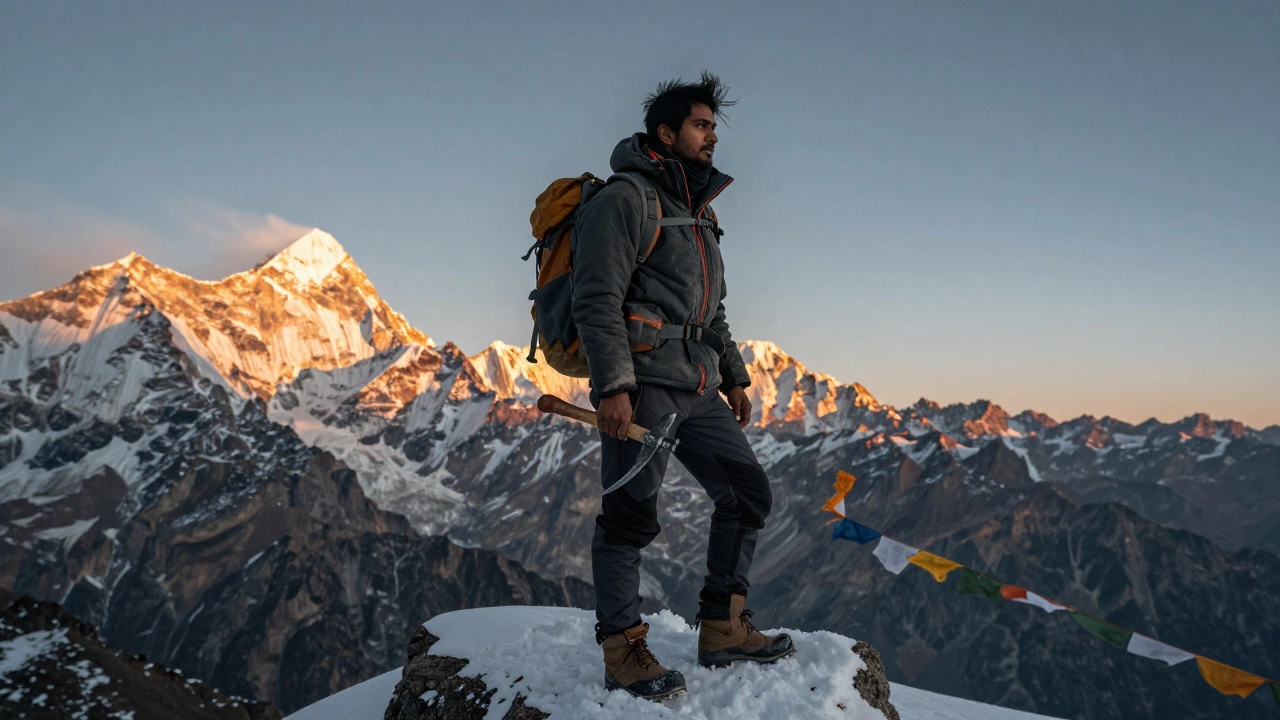
When you think of adventure sports in India, you picture paragliding over Manali, white-water rafting in Rishikesh, or trekking to Everest Base Camp. But behind every athlete pushing their limits, there’s a quiet, powerful recognition - the Tenzing Norgay Award. It’s not just another medal. It’s India’s highest honor for adventure sports, and it’s given to only a handful of people each year.
What Is the Tenzing Norgay Award?
The Tenzing Norgay Award is the top national recognition for outstanding achievement in adventure sports in India. It’s named after Tenzing Norgay, the Sherpa mountaineer who, along with Sir Edmund Hillary, became the first person to summit Mount Everest in 1953. The award was instituted in 1994 by the Ministry of Youth Affairs and Sports, Government of India, to honor individuals who’ve demonstrated exceptional courage, endurance, and skill in extreme environments.
Unlike generic sports awards, this one doesn’t go to athletes based on medals won in competitions. It’s given for real-world feats - climbs, expeditions, rescues, and pioneering journeys that push the boundaries of what’s possible in India’s toughest terrains.
Who Gets It?
The award is open to Indian citizens who’ve made significant contributions in one or more of these adventure disciplines:
- Mountaineering
- Rock climbing
- Paragliding
- White-water rafting
- Scuba diving
- Desert crossing
- Long-distance trekking
- Expeditionary exploration
Recipients aren’t chosen by popularity or media coverage. A committee of retired military officers, veteran mountaineers, and sports administrators reviews nominations submitted by state governments, national sports federations, and recognized adventure clubs. The criteria are strict: the feat must be original, documented, and have had a measurable impact - whether it’s opening a new route, saving lives, or inspiring public interest in adventure sports.
What Does the Award Include?
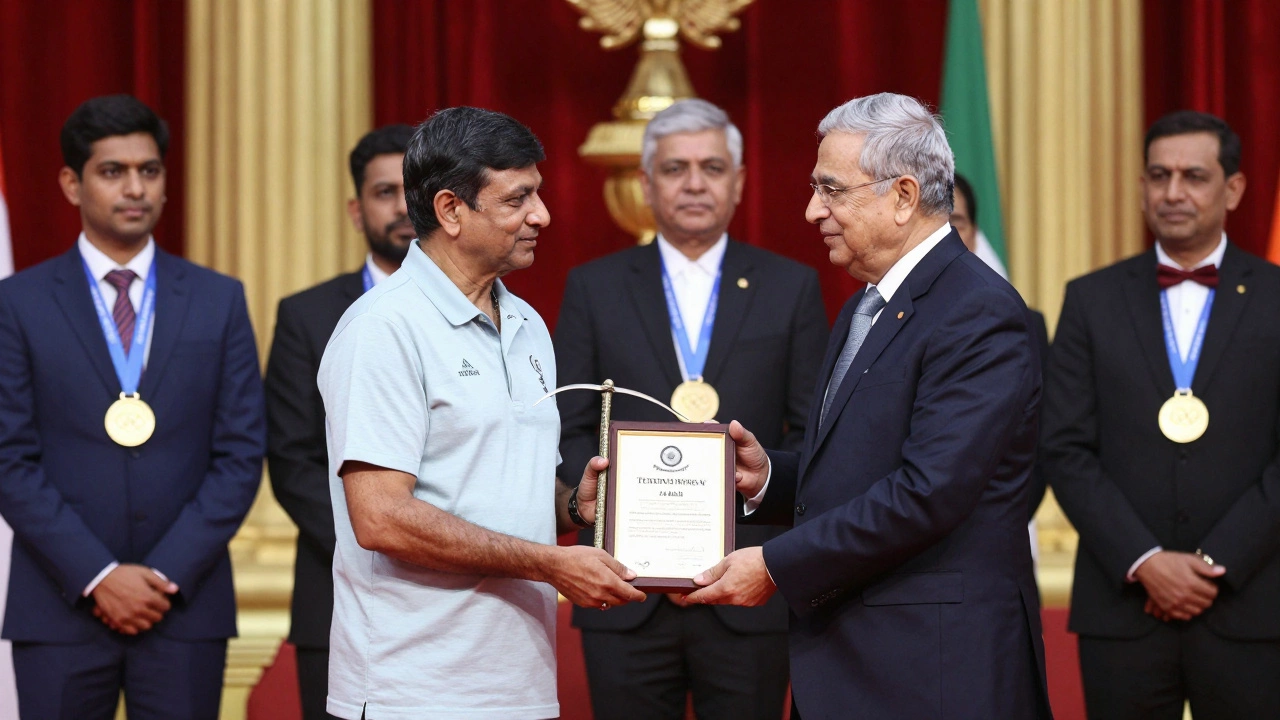
The Tenzing Norgay Award comes with a cash prize of ₹5 lakh (around $6,000 USD), a citation, and a replica of a Himalayan ice axe. But the real value lies in the prestige. Winners are invited to the National Sports Awards ceremony in New Delhi, held every year on August 29 - National Sports Day - alongside Olympic medalists and national icons.
It’s not uncommon for awardees to be from remote villages with no access to proper training facilities. In 2022, a 24-year-old woman from a tribal hamlet in Jharkhand won the award for completing a solo 7-day trek across the Similipal Tiger Reserve with no support team - a first for any woman in India.
Notable Recipients
Some of the most inspiring winners include:
- Arjun Vajpai (2011) - Youngest Indian to summit Everest at age 16. He later led expeditions to K2 and Antarctica.
- Deepika Singh (2018) - First Indian woman to complete the ‘Seven Summits’ challenge - climbing the highest peak on every continent.
- Col. (Retd.) P. R. S. Chaudhary (2020) - Led a 45-day expedition across the Siachen Glacier, mapping uncharted routes and rescuing stranded soldiers.
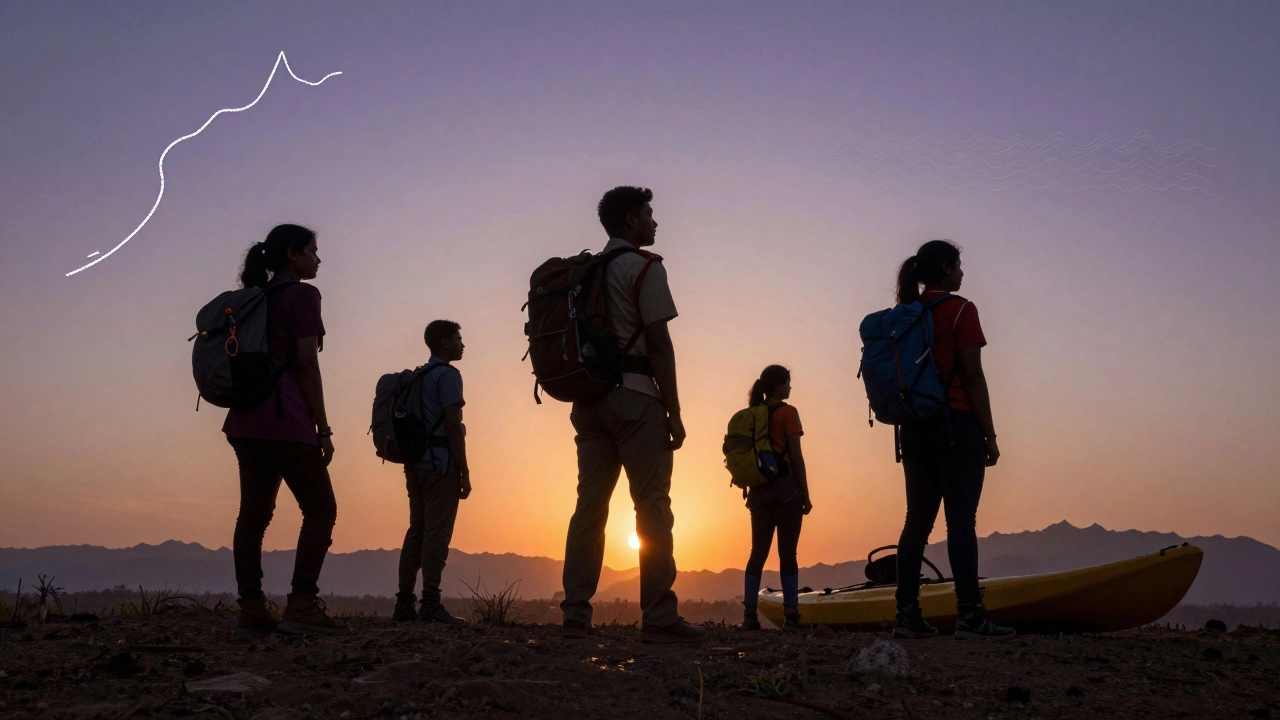
- Shreya Bajpai (2023) - Completed a 1,200 km solo kayak journey from Goa to Mumbai through rough monsoon seas, raising awareness about coastal pollution.
Each of these stories isn’t just about physical strength. It’s about resilience, planning, and often, changing how people see what’s possible.
Why It Matters
India’s geography is one of the most extreme on Earth - from the Himalayas to the Thar Desert, from the Western Ghats to the Andaman Islands. But for decades, adventure sports were seen as niche, risky, or even reckless. The Tenzing Norgay Award changed that.
It gave legitimacy to climbers, kayakers, and paragliders who were once dismissed as thrill-seekers. It showed the government and public that adventure isn’t just about danger - it’s about discipline, science, and deep respect for nature.
Since 2015, the number of registered adventure sports clubs in India has grown by over 300%. More schools now include outdoor expeditions in their curriculum. State governments have started funding local adventure training centers. All of this traces back to the visibility and respect the Tenzing Norgay Award brought to the field.
How to Get Nominated
If you’re an adventurer in India, here’s how the nomination process works:
- Your achievement must be completed and documented with photographs, GPS logs, and witness statements.
- You need to be nominated by a recognized body - like the Indian Mountaineering Foundation, the National Institute of Water Sports, or a state sports department.
- The nomination is submitted by March 31 each year to the Ministry of Youth Affairs and Sports.
- A panel reviews all entries between April and July.
- Winners are announced on August 29.
There’s no application form you can fill online. It’s not about who shouts the loudest - it’s about who did something real, quiet, and extraordinary.
Common Misconceptions
Many think the Tenzing Norgay Award is given for summiting Everest. It’s not. Hundreds have climbed Everest. Only a few have been awarded. Why? Because the award isn’t about height - it’s about impact.
Some assume it’s only for mountaineers. Not true. A scuba diver who mapped coral reefs in the Lakshadweep, or a paraglider who flew across the Thar Desert to study wind patterns, has also won it.
And no, it’s not given posthumously. The award is only for living individuals. That’s intentional - it’s meant to inspire others to follow in their footsteps.
What’s Next for Adventure Sports in India?
The Tenzing Norgay Award has become a catalyst. More universities now offer adventure sports degrees. Private companies are funding expeditions. Women athletes are breaking records in record numbers. In 2025, for the first time, the Ministry announced a new sub-award - the Tenzing Norgay Youth Trailblazer Award - for under-18 adventurers who’ve completed major expeditions.
India’s adventure scene is no longer about outliers. It’s becoming a movement. And the Tenzing Norgay Award? It’s the compass guiding it.
Is the Tenzing Norgay Award only for mountaineers?
No. While mountaineering is a major category, the award covers all recognized adventure sports in India - including paragliding, scuba diving, white-water rafting, desert crossing, and long-distance trekking. The key is the significance and originality of the achievement, not the sport itself.
Can foreigners win the Tenzing Norgay Award?
No. The award is only open to Indian citizens. It was created to recognize Indians who’ve made extraordinary contributions to adventure sports within India’s challenging landscapes. Foreigners can be nominated for their work in India, but only if they’ve taken Indian citizenship.
How many people receive the award each year?
There’s no fixed number. On average, 2-4 people receive it annually. Some years have no winners if no nominations meet the strict criteria. In 2021, no award was given because the selection committee felt none of the nominations met the required standard of impact and originality.
Is there a monetary prize attached to the award?
Yes. The current cash prize is ₹5 lakh (approximately $6,000 USD), along with a citation and a replica of a Himalayan ice axe. The prize amount has remained unchanged since 2015, though there have been discussions to increase it in line with other national sports awards.
Can someone win the award more than once?
No. The rules state that the Tenzing Norgay Award can only be received once in a lifetime. This ensures the honor remains exclusive and meaningful. However, awardees often go on to mentor others, lead expeditions, or help shape national adventure policies - extending their impact far beyond the award itself.