Maldives vs Thailand: Which Is More Expensive for Your Trip?
 Sep, 18 2026
Maldives vs. Thailand Trip Cost Estimator
🇹🇭 Thailand
$0Daily Rate:
- Accommodation:
- Food & Drink:
- Activities:
- Local Transport:
🇲🇻 Maldives
$0Daily Rate:
- Accommodation:
- Food & Drink:
- Activities:
- Transfer (One-way avg):
The Verdict:
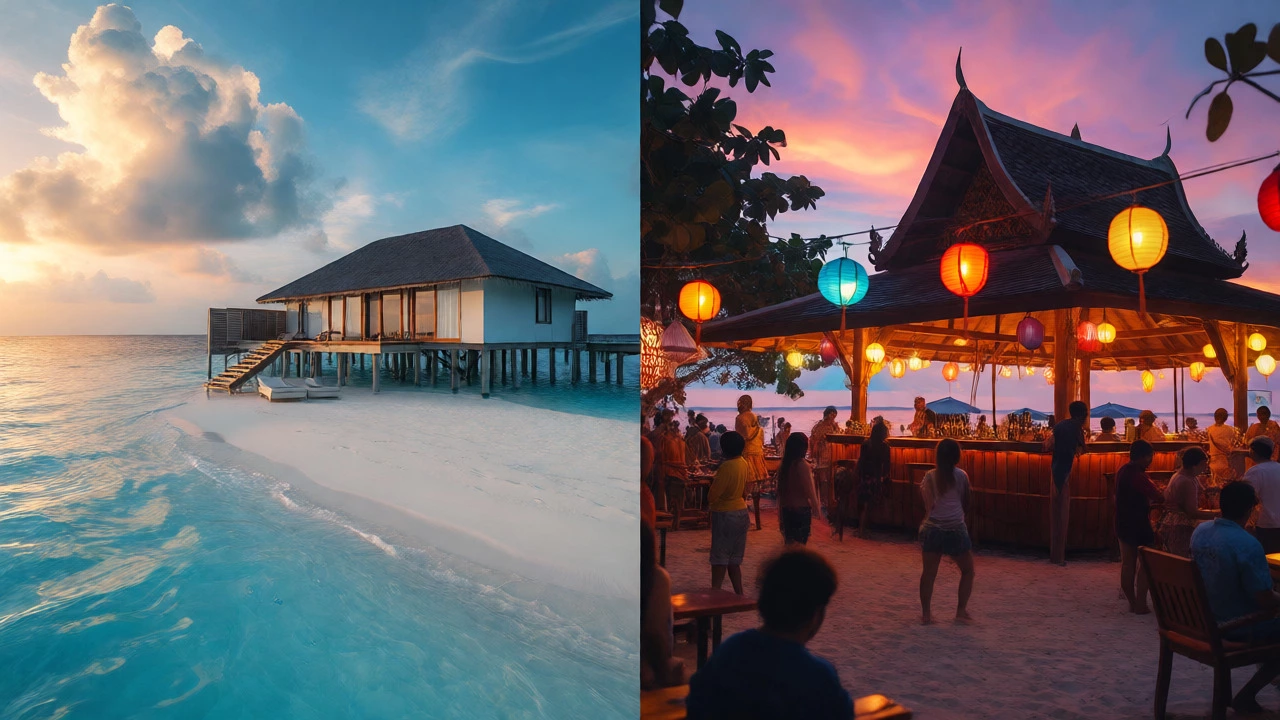
You’re staring at two tabs in your browser. One shows a white-sand villa in the Maldives, where you step out of your room directly into turquoise water. The other shows a bustling beach bar in Thailand, where a cold beer costs less than a bottle of water back home. You want paradise, but your bank account has limits. So, which one actually drains your wallet faster?
The short answer? Maldives is significantly more expensive than Thailand for almost every category except luxury all-inclusive packages. But that’s not the whole story. If you know how to hack the Maldives with local islands, or if you plan to party on Koh Phangan, the gap narrows. Let’s break down exactly what you’ll pay for flights, food, accommodation, and activities in both places so you can pick the right destination for your specific budget.
The Big Picture: Budget Tiers Compared
Before we look at line items, let’s look at the daily burn rate. This is the amount of money you need to survive comfortably per person, per day, excluding international flights.
| Traveler Type | Thailand (per day) | Maldives (per day) | Verdict |
|---|---|---|---|
| Backpacker | $30 - $50 | $80 - $120 | Thailand wins easily |
| Mid-Range | $70 - $120 | $200 - $400 | Thailand is half the price |
| Luxury | $200 - $500 | $600 - $2,000+ | Both are high, but Maldives scales higher |
See that jump in the mid-range column? That’s the reality check. In Thailand, $100 buys you a nice hotel, street food, and a couple of drinks. In the Maldives, $100 barely covers a transfer boat ticket and a lunch on a resort island. The structural difference is simple: Thailand has a robust local economy with competitive pricing. The Maldives relies heavily on imported goods and exclusive resort zones, driving up costs.
Flights: Getting There
Let’s start with the biggest variable: airfare. If you’re flying from Europe or North America, the flight cost to Malé International Airport (MLE) is often similar to flying into Bangkok Suvarnabhumi Airport (BKK). Both are major hubs with plenty of competition.
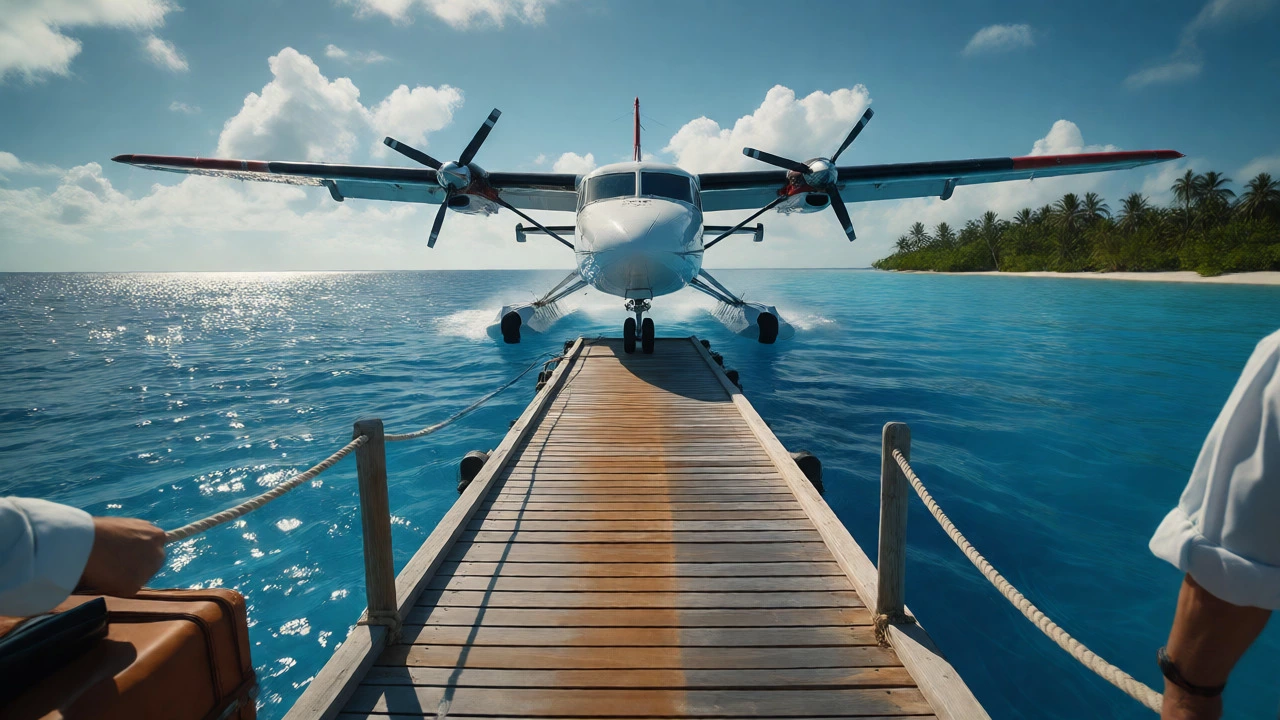
However, here is the hidden trap in the Maldives. Once you land in Malé, you aren’t at your hotel. Most resorts are on private islands. You need a seaplane or a speedboat transfer. A round-trip seaplane transfer can cost between $300 and $500 per person. Speedboats are cheaper ($100-$200), but they only go to nearby atolls. If you choose a local island like Maafushi, you can take a public ferry for under $5. In Thailand, once you land in Bangkok, Phuket, or Krabi, you’re basically there. Grab a taxi or a bus, and you’re done. No extra $400 surprise bill waiting for you.
Accommodation: Where You Sleep Matters
This is where the divergence gets wild. In Thailand, you have infinite options. You can sleep in a clean, air-conditioned guesthouse for $15 a night in Chiang Mai or even on the islands. Want something nicer? A boutique hotel with a pool might cost $60-$80. Luxury five-star resorts exist, but they compete with each other, keeping prices reasonable compared to global standards.
In the Maldives, the model is different. It’s either "resort" or "local island." Resort islands are self-contained ecosystems. They import everything-food, water, staff, electricity. This markup is passed to you. A standard four-star resort room rarely drops below $300 a night, even in low season. Five-star overwater villas often start at $800 and go up to $3,000+ per night.
Can you do it cheaper? Yes. Local islands allow guesthouses. You can stay in Maafushi or Thulusdhoo for $40-$70 a night. But remember, alcohol is banned on these local islands. If you want a cocktail by the pool, you have to book a resort. If you don’t mind dry holidays, local islands make the Maldives surprisingly affordable.
Food and Drink: Street Food vs. Resort Dining
If you love eating, Thailand is a dream. You can eat incredibly well for pennies. Pad Thai from a street cart costs $1.50. A mango sticky rice dessert is $1. Even in tourist areas, a meal at a decent restaurant won’t break the bank unless you’re ordering lobster. Alcohol is also cheap. A large Chang beer costs about $1.50 at a 7-Eleven and maybe $3-$4 at a beach bar.
The Maldives is tough on food budgets. On resort islands, a basic burger might cost $25. A pizza could be $30. Why? Because the chef, the ingredients, and the kitchen staff were likely flown in or imported. Add a 10% service charge and 12% tax, and that $25 burger becomes $30. Alcohol is even pricier because it’s taxed heavily. A cocktail can easily hit $18-$25. If you’re on a local island, food is much cheaper-similar to India or Sri Lanka-but again, no alcohol.
Activities and Experiences
What do you want to do? If you’re into snorkeling, diving, and spa treatments, the costs differ dramatically.
In Thailand, a full-day scuba diving trip with tanks and weights costs around $50-$70. A massage in Phuket is $10-$15 an hour. Island hopping tours via longtail boat are cheap if you share them. The infrastructure supports budget tourism. You can rent a scooter for $5 a day and explore on your own.
In the Maldives, most activities are organized by the resort. A guided snorkeling tour to see manta rays might cost $100-$150 per person. Diving trips are similarly priced due to boat fuel and guide fees. Spa treatments reflect the luxury positioning; a one-hour massage starts at $100+. However, if you stay on a local island, you can arrange shared boats for excursions, bringing costs down closer to Thai levels, though still higher due to smaller group sizes.
The "Hidden" Costs Nobody Talks About
When people say "Maldives is expensive," they often forget the small stuff. In Thailand, tipping is optional and usually rounded up. In the Maldives, service charges are mandatory (10%) plus government tax (12%). These add up fast on a $1,000 weekly bill.
Also, consider the vibe. Thailand offers variety. Bored of beaches? Take a train to Chiang Mai for temples and mountains. Fly to Bangkok for shopping. The Maldives is singular: ocean, sand, sun. If you get cabin fever, you’re stuck paying for resort amenities to stay entertained. Thailand lets you pivot your trip without changing destinations entirely.
Which Should You Choose?
Pick Thailand if:
- You have a strict budget (under $1,500 total for a week).
- You want nightlife, diverse food, and cultural sites.
- You enjoy negotiating prices and exploring independently.
- You don’t mind crowds and hustle.
Pick Maldives if:
- You have a flexible budget ($2,500+ for a comfortable week).
- You prioritize privacy, relaxation, and pristine water clarity.
- You want an all-inclusive experience where you never leave the resort.
- You are willing to trade activity variety for absolute tranquility.
How to Save Money in the Maldives
Don’t write off the Maldives just because of the price tag. You can hack it. First, avoid peak season (December to April). Go in May or October when prices drop by 30-50%. Second, consider a "half-board" package (breakfast and dinner included) rather than paying à la carte. Third, if you don’t need overwater villas, book a beach villa on a resort island-it’s often 40% cheaper. Finally, use credit cards with no foreign transaction fees to avoid losing another 3% on exchange rates.
Final Verdict
Is Maldives more expensive than Thailand? Absolutely. For a comparable level of comfort, expect to pay 3x to 5x more in the Maldives. But value isn’t just about price. If you value exclusivity and silence, the Maldives delivers something Thailand cannot replicate at any price point. If you value freedom, flavor, and affordability, Thailand remains the king of Southeast Asia.
Is the Maldives safe for solo female travelers?
Yes, the Maldives is very safe, especially on resort islands which are gated communities. On local islands, dress codes apply (cover shoulders/knees), but crime rates are extremely low. Thailand is also generally safe, though petty theft can occur in busy tourist areas.
Can I drink alcohol in the Maldives?
Alcohol is prohibited on local inhabited islands. You can only drink alcohol on resort islands, liveaboard boats, and in designated tourist zones in Malé. If you stay on a local island guesthouse, you cannot bring alcohol in or buy it locally.
Which is better for honeymooners?
The Maldives is traditionally seen as the ultimate honeymoon destination due to its privacy and romantic overwater villas. However, Thailand offers more variety for couples who want adventure mixed with relaxation, such as combining beach time with jungle trekking or city visits.
Do I need a visa for both countries?
Most nationalities get a free 30-day visa on arrival for the Maldives. Thailand recently extended visa-free entry for many countries, including India, China, and several European nations, typically for 30 days. Always check current regulations before booking.
Is tipping required in the Maldives?
A 10% service charge is usually added automatically to bills in resorts. While additional tipping is not mandatory, it is appreciated for exceptional service. In Thailand, tipping is becoming more common in tourist areas but is not strictly expected in local establishments.