Most Famous Heritage Place in India: Taj Mahal and Why It Stands Out
 Dec, 9 2025
Taj Mahal Light Calculator
How Light Transforms the Taj Mahal
The Taj Mahal's marble changes color throughout the day due to intentional architectural design. Select the time to see how sunlight affects its appearance.
Why this happens: The marble's surface and angle were designed so sunlight hits it differently throughout the day. The changing color is intentional - not pollution or aging.
The Taj Mahal isn’t just the most famous heritage place in India-it’s one of the most recognized buildings on the planet. More than 7 million people visit it every year. That’s more than the population of New Zealand. It’s not just a monument. It’s a symbol. A love story carved in marble, lit by the sun, and reflected in still water. And yet, most people don’t know why it’s so much more than a pretty picture.
Why the Taj Mahal is the definitive heritage site of India
India has over 40 UNESCO World Heritage Sites. There’s the ancient rock-cut temples of Ellora. The massive forts of Jaipur. The ruins of Hampi. The sacred city of Varanasi. But none of them have the global recognition of the Taj Mahal. Why? Because it’s not just architecture. It’s emotion made permanent.
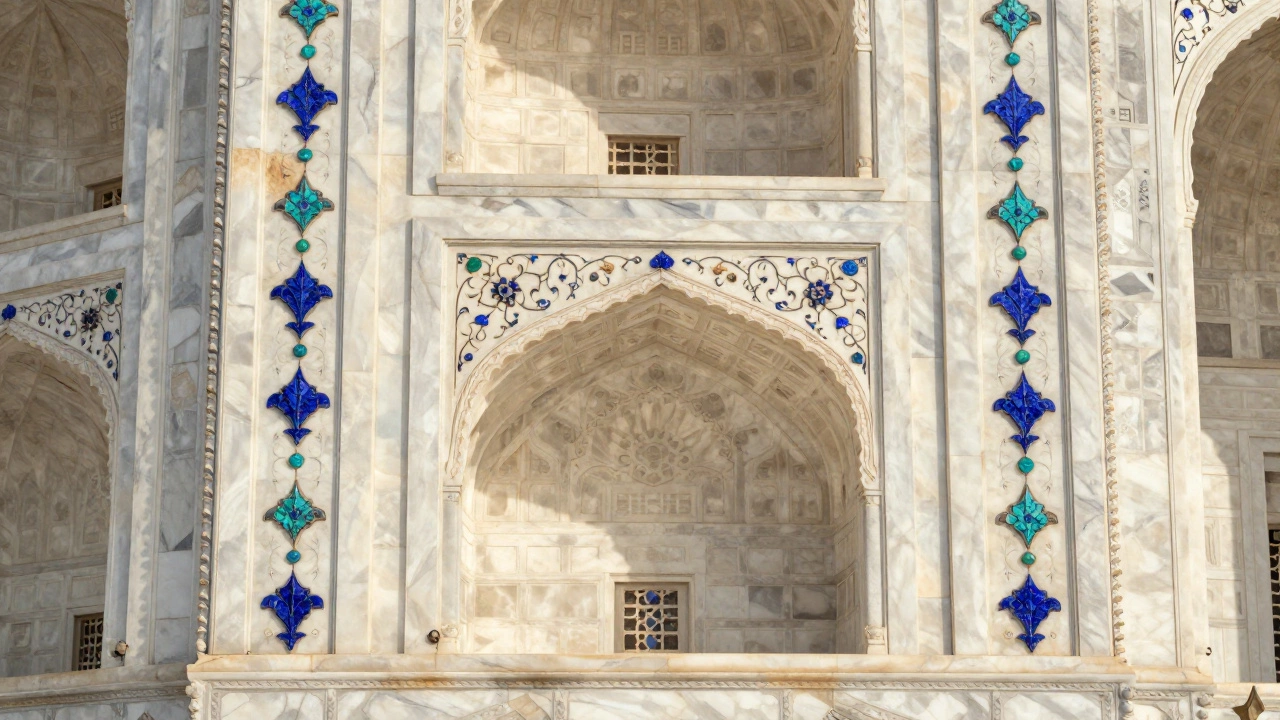
Emperor Shah Jahan built it in 1632 after his wife Mumtaz Mahal died giving birth to their 14th child. He didn’t just want a tomb. He wanted a monument that would outlast time. He brought in 20,000 workers from across Asia-Persian calligraphers, Central Asian stone carvers, Indian masons, and Turkish dome builders. The marble came from Makrana, over 300 kilometers away. The semi-precious stones for inlay work? Lapis lazuli from Afghanistan, turquoise from Tibet, jade from China. The cost? Estimated at 32 million rupees in 1653. That’s roughly $1 billion today.
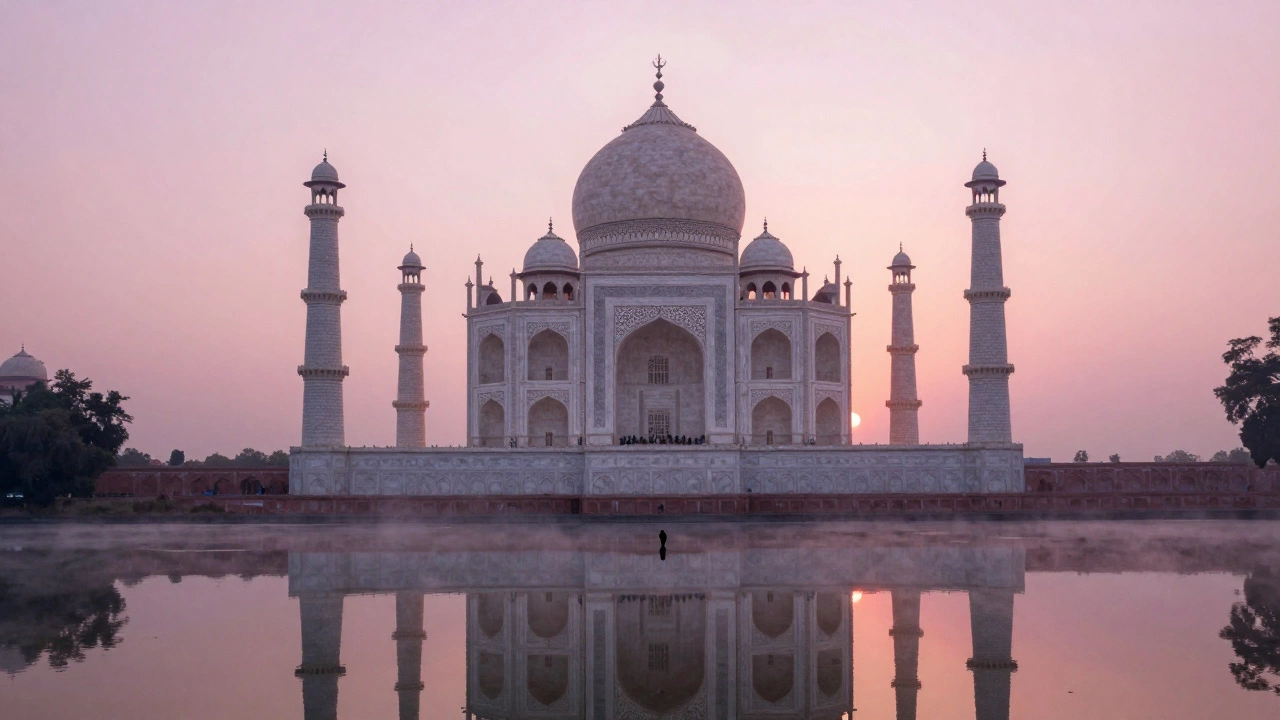
It’s not the size that makes it famous. It’s the precision. Each of the four minarets leans slightly outward so they won’t fall on the tomb if an earthquake hits. The calligraphy on the walls grows larger as it goes higher, so it looks uniform from the ground. The marble changes color with the light: pink at dawn, white at noon, gold at sunset. That’s not luck. That’s design.
How it compares to other major heritage sites in India
Some people argue that the Red Fort in Delhi or the Ajanta Caves are more historically significant. And they’re right-those places shaped empires and religions. But significance doesn’t equal fame. The Taj Mahal has something the others don’t: universal appeal.
Take the Red Fort. Built by the same Mughal emperor, it’s massive. 2.5 kilometers of walls. Palaces inside. Gardens. But it’s a palace complex. You need context to appreciate it. The Taj? You don’t need to know anything about Mughal history. You just feel it.
Compare it to Khajuraho’s temples. The erotic carvings draw crowds. But they’re niche. They spark curiosity, not awe. The Taj doesn’t need to shock. It doesn’t need to explain. It just is.
Even the Great Wall of China, often compared to the Taj, is a defensive structure. It’s long. It’s functional. The Taj? It’s a single, perfect object built for one purpose: to honor a person. That’s why it’s on every postcard, every travel show, every school textbook.
The hidden stories behind the marble
There’s a myth that Shah Jahan cut off the hands of the builders so they could never make another Taj. It’s false. There’s no record of that. In fact, the chief architect, Ustad Ahmad Lahori, went on to design other Mughal projects. The workers were paid well. Many stayed in Agra and became master craftsmen.
Another myth? That the Taj was originally a Hindu temple. No evidence supports that. Archaeological surveys, British colonial records, and Mughal court documents all confirm it was built as a mausoleum. The design is pure Islamic architecture with Persian influences-arches, domes, minarets, gardens laid out in the charbagh style.
Even the gardens are part of the story. The four quadrants represent paradise in Islamic tradition. The central water channel reflects the building, making it look like it’s floating. That’s not decoration. It’s theology in landscape form.
What visitors actually experience today
If you go to the Taj Mahal now, you’ll see crowds. You’ll wait in line. You’ll be told to leave your shoes at the gate. You’ll pass through metal detectors. You won’t be allowed to bring in water bottles, drones, or tripods. But none of that ruins the moment.
Walk through the red sandstone gateway. The first glimpse of the Taj through the arch is still breathtaking. People stop. Some cry. Others just stand still. That’s the power of it. Even after 390 years, it still stops time.
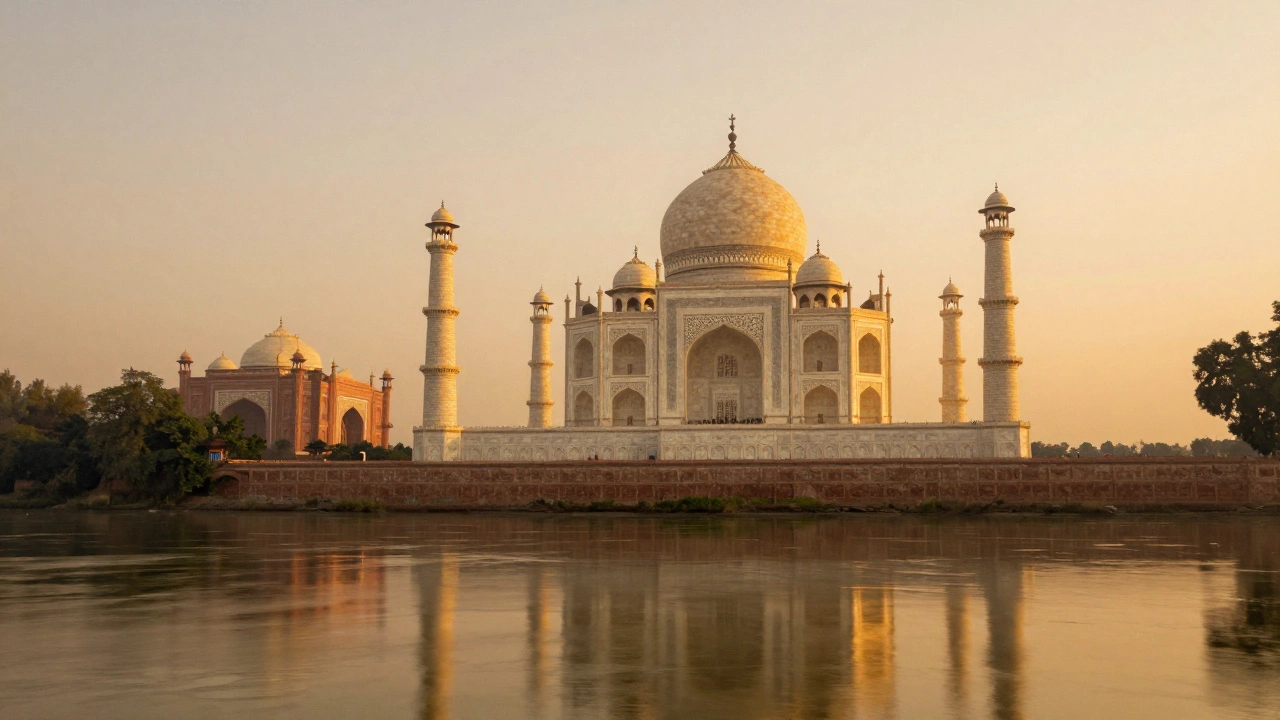
Most tourists take photos from the front. But the best view is from the Yamuna Riverbank, across the water. That’s where Shah Jahan planned his own tomb-on the other side, facing the Taj. He was deposed by his son before he could build it. His body was buried beside Mumtaz. He never got his own monument. But he got something better: his love became immortal.
Why it’s not just about beauty
The Taj Mahal is often called a symbol of love. That’s true. But it’s also a symbol of loss. Of grief turned into art. Of power used not for conquest, but for remembrance.
In a country with 7,000 years of history, where temples rise from ancient forests and palaces crumble under monsoon rains, the Taj stands out because it didn’t just survive. It became sacred. People don’t just visit it. They come to feel something.
It’s not the oldest. It’s not the biggest. It’s not even the most complex. But it’s the one that makes you pause. The one that makes you think about what lasts. And why.
How to visit the Taj Mahal without the crowds
If you want to see the Taj the way Shah Jahan imagined it-quiet, still, glowing-you need to plan.
- Go at sunrise. The gates open at 6 AM. You’ll be among the first 500 people. The light is soft. The air is cool. The crowds haven’t arrived.
- Book tickets online. Walk-in tickets sell out fast. Use the official Archaeological Survey of India website. Same-day tickets are limited.
- Visit in winter. November to February is the best time. Humidity is low. The air is clear. The marble glows.
- Avoid Fridays. The Taj is closed to tourists on Fridays for prayers at the mosque inside the complex.
- Stay overnight in Agra. The city has budget guesthouses near the Taj. You can go back the next day for a second visit, when the light changes.
Don’t rush. Sit on the grass. Watch the shadows move. Listen to the silence. That’s when you understand why it’s the most famous heritage place in India.
What makes it different from other world wonders
The Pyramids were built to last forever. So was the Taj. But the Pyramids were tombs for kings who wanted to be gods. The Taj was built for a woman who was loved. That’s the difference.
It’s not about power. It’s about devotion. It’s not about conquest. It’s about connection. That’s why it resonates across cultures, religions, and languages.
People from Japan, Brazil, Russia, Nigeria-they all know the Taj. They don’t know the Qutub Minar. They don’t know the Konark Sun Temple. But they know the Taj. Because it speaks a language deeper than history. It speaks of love.
Is the Taj Mahal the only UNESCO site in India?
No. India has 41 UNESCO World Heritage Sites as of 2025. That includes the Ajanta and Ellora Caves, the Hill Stations of India like Darjeeling, the Khajuraho Group of Monuments, and the historic city of Jaipur. But the Taj Mahal is the only one that appears on nearly every global list of must-see places.
Why is the Taj Mahal white?
The Taj Mahal is made of white Makrana marble, chosen for its purity and ability to reflect light. The marble was transported from Rajasthan, over 300 kilometers away. Over time, pollution has turned parts of it yellow. A cleaning process using clay packs is done every few years to restore its original glow.
Can you go inside the Taj Mahal?
Yes, but you can’t go into the inner chamber where the actual tombs are. Visitors can walk through the main hall and see the cenotaphs (empty monuments) of Mumtaz Mahal and Shah Jahan. The real graves are in a quiet chamber below, accessible only to researchers and caretakers.
Is the Taj Mahal a mosque?
No. The Taj Mahal is a mausoleum. But the complex includes a mosque on the west side and a guesthouse on the east, both made of red sandstone. The mosque is still used for Friday prayers, but the Taj itself is not a place of worship.
How long did it take to build the Taj Mahal?
It took about 22 years to complete. Construction began in 1632 and was mostly finished by 1653. The main structure was done in 10 years, but the gardens, outbuildings, and intricate inlay work took another 12 years.
Final thought: Why it still matters
In a world of fast-changing trends, the Taj Mahal hasn’t changed. It hasn’t needed to. It doesn’t rely on hashtags or viral videos. It stands because it was built to last-not as a tourist trap, but as a promise.
It’s the most famous heritage place in India because it’s not just about history. It’s about what humans do when they love deeply. When they grieve. When they try to make something beautiful out of pain.
That’s why, no matter where you’re from, you’ll always feel something when you see it.