Currency Conversion India: What You Need to Know Before You Travel
When you travel to India, currency conversion India, the process of exchanging your home currency for Indian rupees. Also known as rupee exchange, it’s one of the first things you’ll deal with after landing — and getting it right saves you money and stress. The Indian rupee (INR) isn’t freely convertible like the dollar or euro, so you can’t just walk into any bank and swap cash anywhere. You’ll need to know where to go, what to avoid, and how to spot the best deals.
Most travelers use ATMs — they’re everywhere in cities and towns, and they usually give you the best exchange rate. Skip the airport exchange counters; they’re the most expensive option. Instead, pull rupees from an ATM at the airport or wait until you’re in the city. Your home bank might charge a fee, but it’s still cheaper than the 5–10% markup you’ll see at tourist traps. If you prefer cash, bring US dollars or euros — they’re the easiest to exchange at authorized money changers in hotels or licensed shops. Avoid street vendors. They’re tempting with their high rates, but they’re often scams or give you fake notes.
Don’t forget to check your card’s foreign transaction fees before you leave. Some banks charge 3% per withdrawal — that adds up fast. Look for cards with no foreign fees, or use a travel-specific card like Revolut or Wise. Also, carry small bills. Many small shops, rickshaw drivers, and temple donations won’t have change for large notes. A 500-rupee note is fine for a meal, but useless for a 20-rupee chai. And yes, credit cards work in hotels and big stores, but cash still rules in markets, local trains, and rural areas.
Exchange rates change daily, but as of 2025, $1 is roughly ₹83, and €1 is about ₹90. That doesn’t sound like much, but it goes far in India. A meal at a local eatery costs ₹150–₹300. A decent hotel room runs ₹2,000–₹4,000. Your dollar stretches here like nowhere else in Asia. That’s why so many budget travelers choose India — it’s not just cheap, it’s currency conversion India that makes it feel like a steal.
Some travelers worry about carrying cash. It’s safe if you’re smart. Use a money belt or hidden pouch. Don’t flash cash in crowded places. And always keep a backup — maybe a second card or a small stash of dollars hidden in your luggage. If you lose your card, most cities have Western Union or money transfer services where you can get emergency cash.
And here’s something most guides don’t tell you: you can’t take Indian rupees out of the country. So if you’ve got leftover cash, spend it on spices, tea, or souvenirs before you leave. Or better yet, use it for a final night in a beach shack or a train ride to a hidden temple. You’ll remember the experience more than the coins in your pocket.
Below, you’ll find real traveler stories and practical tips on managing money in India — from how much a Coke costs to where to find the best exchange rates in South India, and why some cities are cheaper than others. No fluff. Just what works.
- Oct, 21 2025
- 0 Comments
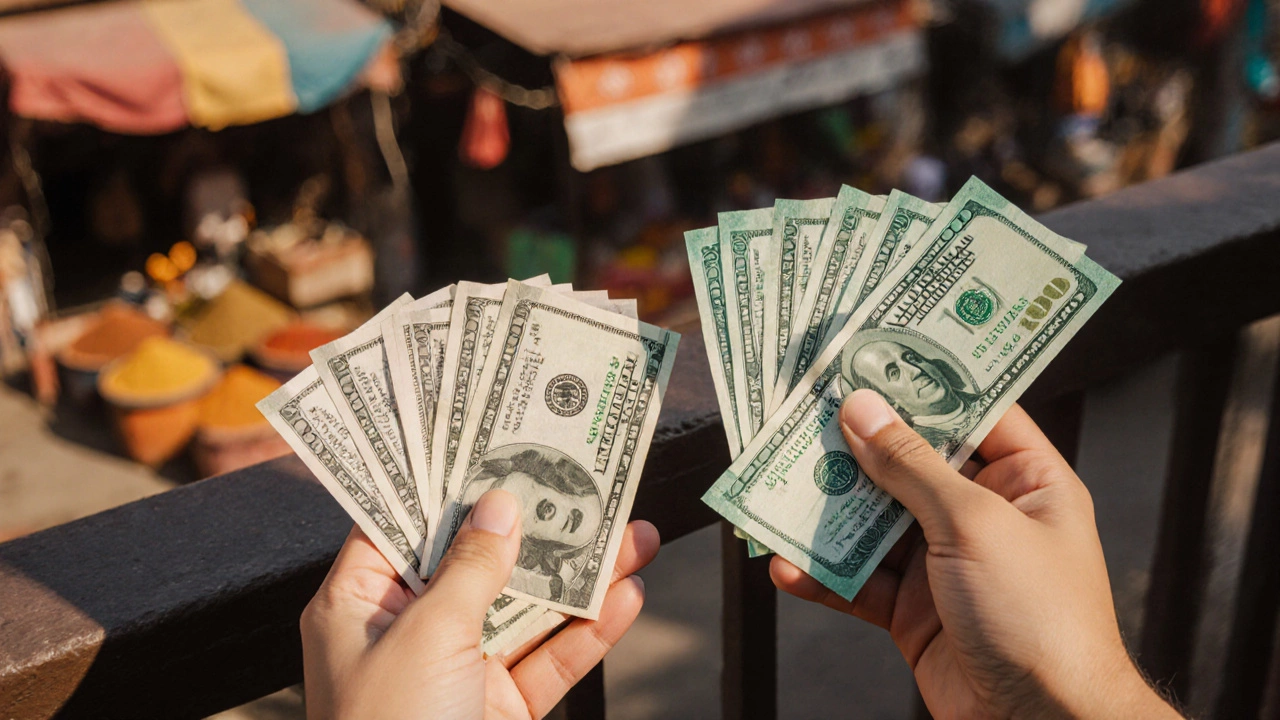
Find out how much $100 US equals in Indian rupees, the best ways to exchange money, hidden fees to avoid, and what that budget can buy you in India.
More