US Dollars in India: What You Need to Know Before You Travel
When you're planning a trip to India, one of the first questions is: US dollars in India, the official currency of the United States, is not accepted as legal tender in India. Also known as USD, it’s useful to carry for exchange, but you won’t be able to pay for a rickshaw ride, a meal, or a temple ticket with it directly. The real money you’ll use is the Indian rupee, the official currency of India, abbreviated as INR. Every shop, hotel, and street vendor expects rupees. Even if you see a price tagged in dollars at a fancy resort, they’ll still charge you in rupees at the current exchange rate.
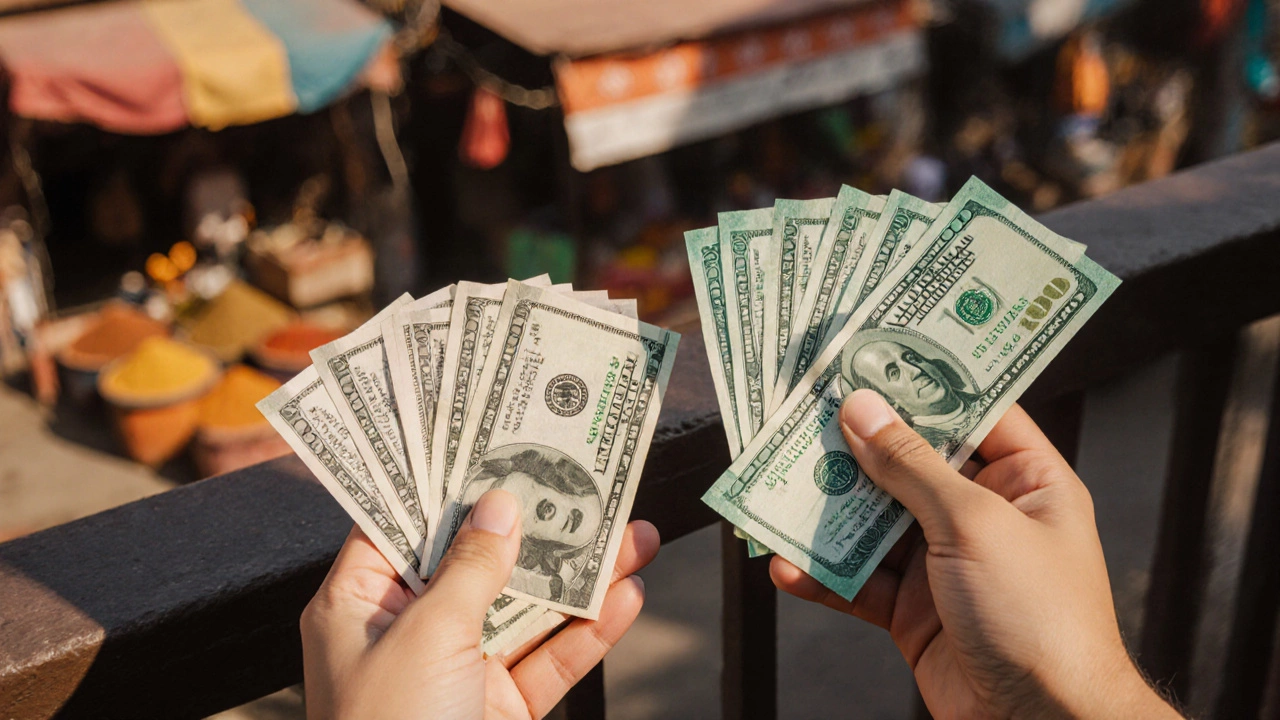
So how do you get rupees? The easiest way is to withdraw them from an ATM using your debit or credit card. Most major airports and cities have ATMs that accept international cards like Visa or Mastercard. Avoid exchanging cash at the airport—rates there are usually worse than in the city. Banks and licensed money changers in places like Delhi, Mumbai, or Goa offer better rates. Always check the exchange rate online before you go. Right now, one US dollar buys about 83 rupees, but that number shifts daily. Carry small bills—$10 and $20 are easier to exchange than $100 notes, which some places refuse because of counterfeiting fears.
Don’t rely on credit cards everywhere. While big hotels and chain restaurants accept them, small shops, street food stalls, and local transport don’t. You’ll need cash for most daily expenses. That’s why carrying some US dollars as backup makes sense—if you run out of rupees or your card gets blocked, you can exchange a few bills at a bank or hotel front desk. But never carry more than you’re comfortable losing. Pickpockets exist, and cash is harder to replace than a card.
Some travelers think they can pay in dollars at tourist spots because it’s convenient. That’s a trap. If someone tells you they’ll accept dollars, they’re either overcharging you or setting up a scam. Always ask for the price in rupees, then confirm the exchange rate they’re using. If they say, "It’s $10," and you hand them a dollar bill, you’re probably paying double. Stick to rupees. It’s the only way to know you’re getting a fair deal.
Travelers often ask: "Should I bring cash or use cards?" The answer? Both. Use cards for bigger purchases like hotel stays or train tickets. Use cash for everything else. ATMs are everywhere, and most banks don’t charge fees for foreign withdrawals anymore. But always tell your bank you’re traveling—otherwise, they might freeze your card thinking it’s fraud.
There’s one exception: if you’re flying into India from the US, some airlines let you buy tickets in dollars. But once you land, you’re in rupee territory. Even if you’re staying at a luxury resort that advertises "US dollar pricing," your final bill will be converted to rupees at checkout. No one in India runs a business on dollars—it’s not legal, and it’s not practical.
What about digital payments? UPI apps like Google Pay and PhonePe are huge in India. But they only work with Indian bank accounts. Tourists can’t use them unless they open a local account—which most don’t. So skip the apps. Stick to cash and cards.
Finally, never trust street money changers. They might offer a great rate, then slip you fake rupees or shortchange you. Stick to banks or authorized exchange counters inside malls or hotels. If you’re unsure, ask your hotel front desk—they’ll point you to a safe place.
Bottom line: bring US dollars to exchange, not to spend. Let them become rupees as soon as you land. That’s the smart, safe, and simple way to handle money in India. The posts below give you real, tested tips on how to stretch your budget, avoid tourist traps, and make the most of every rupee you spend—whether you’re eating street food in Chennai, bargaining in Jaipur, or relaxing on a Goa beach.
- Oct, 21 2025
- 0 Comments
Find out how much $100 US equals in Indian rupees, the best ways to exchange money, hidden fees to avoid, and what that budget can buy you in India.
More