USD to INR: What You Need to Know Before Traveling to India
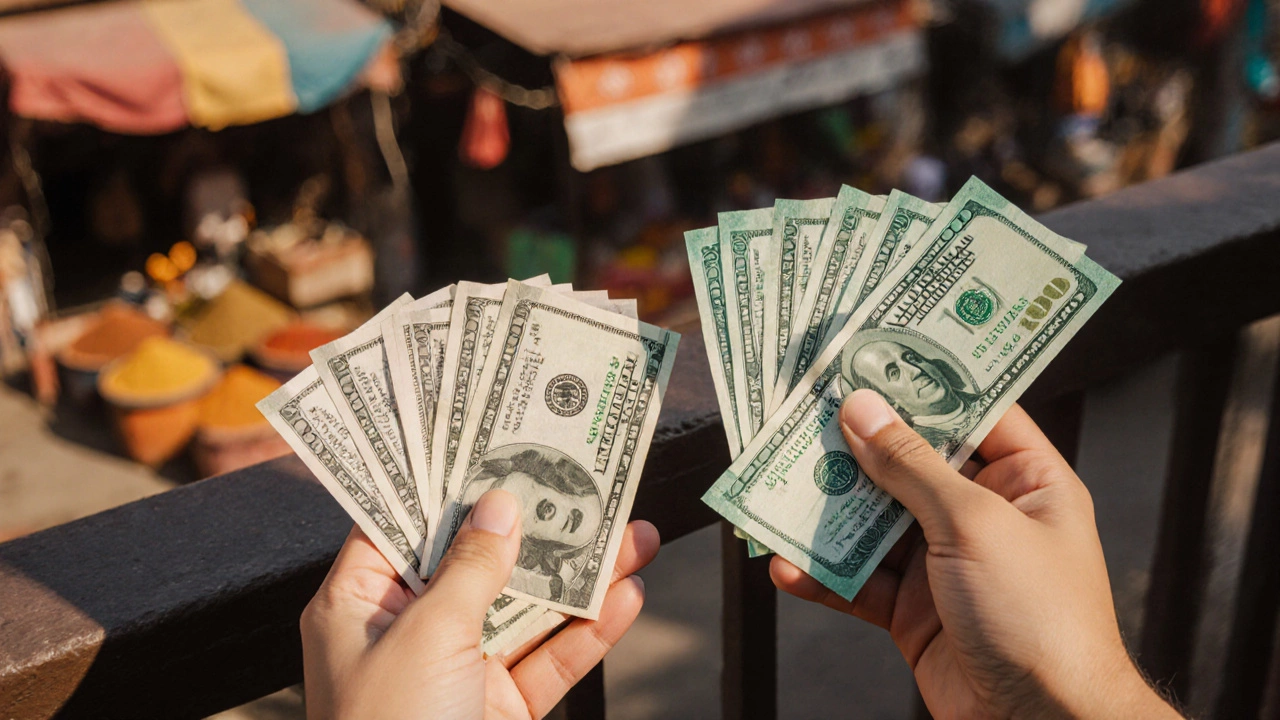
When you're planning a trip to India, the USD to INR, the exchange rate between the United States Dollar and the Indian Rupee. Also known as US dollar to rupee, it's not just a number on a screen—it's the key to your entire budget. Right now, one US dollar buys about 83 Indian rupees, but that number shifts daily. What matters isn’t the exact rate—it’s how it changes your experience on the ground. A $10 meal in the U.S. might cost you less than $1.20 in India. That’s not a guess. That’s what real travelers are paying right now.
That’s why knowing USD to INR isn’t just about math—it’s about power. It tells you whether you can afford a private guide at the Taj Mahal, a night in a heritage hotel in Jaipur, or a week-long train ride across South India. It affects whether you eat at a street stall or a rooftop restaurant. And it’s why so many travelers end up spending less than they planned. You don’t need to be a finance expert. You just need to know that $500 can go much further in India than it does at home.
Related to this are the places where you actually get the best rate. Airports? Avoid them. Hotels? Usually overpriced. Local banks and authorized money changers in city centers? That’s where you’ll get the closest to the real market rate. Many travelers use ATMs with no foreign transaction fees—especially those linked to global networks like Cirrus or Plus. And if you’re heading to Goa, Mysore, or Kerala, you’ll find small shops and guesthouses that accept USD directly, but always ask for the rate before you pay.
Don’t forget the hidden costs. Some credit cards add a 3% foreign transaction fee. Some ATMs charge withdrawal fees. And while you can pay with cards in big cities, cash still rules in smaller towns, temples, and on buses. You’ll need rupees for chai, auto-rickshaws, and tipping. That’s why most travelers carry a mix—some cash, some card, and always a backup.
India’s economy doesn’t move like the U.S. economy. The rupee’s value isn’t just about trade—it’s about tourism, remittances, and seasonal demand. During peak travel months—October to March—the rupee often strengthens slightly because more dollars flow in. That’s when you get the best bang for your buck. In monsoon season, rates might dip a little, but so do hotel prices and flight costs. It’s a trade-off.
And if you’re comparing India to Thailand, the Maldives, or even Bali, the difference isn’t just in attractions—it’s in the numbers. A $100 daily budget in Thailand might feel tight. In India, it’s luxury. That’s the power of the USD to INR, the exchange rate between the United States Dollar and the Indian Rupee. Also known as US dollar to rupee, it working for you.
What you’ll find in the posts below aren’t just articles about travel tips or hidden gems. They’re real-world examples of how this exchange rate shapes every decision—from where to eat, how long to stay, and which cities to prioritize. You’ll see how a $2 Coke in Delhi stretches into a full day of transport. How a $15 hotel room in Hampi becomes a week-long adventure. How travelers stretch their budgets by understanding not just the rate, but the rhythm of spending in India.
- Oct, 21 2025
- 0 Comments
Find out how much $100 US equals in Indian rupees, the best ways to exchange money, hidden fees to avoid, and what that budget can buy you in India.
More