Varanasi: The Only Indian City Recognized as a UNESCO World Heritage Site
 Jun, 20 2026
Varanasi Heritage Visit Planner
When you ask which city in India is a UNESCO World Heritage Site, the answer is singular and specific: Varanasi. While many Indian cities boast ancient monuments or historic districts, Varanasi stands alone as the only entire urban landscape recognized by UNESCO for its continuous cultural significance over millennia. It’s not just a collection of buildings; it is a living city that has served as a spiritual anchor for Hindus, Jains, and Buddhists since at least the 5th century BCE.
This distinction matters because it changes how you experience the place. You aren’t just visiting a museum piece behind ropes. You are walking through a city where daily rituals, architecture, and geography have remained intertwined for thousands of years. Understanding why Varanasi earned this title helps you navigate its chaos with purpose rather than confusion.
Why Varanasi Stands Alone Among Indian Cities
India has thirty-two properties listed on the UNESCO World Heritage list, ranging from the Taj Mahal in Agra to the Sun Temple in Konark. Most of these are individual structures or archaeological sites. Varanasi, inscribed in 2024 under the name "Varanasi: City of Temples, Ghats, and Sacred Geography," breaks that pattern. UNESCO recognized the city’s unique spatial organization-specifically the relationship between the Ganges River, the ghats (steps leading down to the water), and the temples lining the banks-as a complete cultural landscape.
The core reason for this recognition lies in continuity. Unlike other ancient cities that were abandoned and rediscovered, Varanasi has never ceased to be inhabited. The same ghats used for bathing today were described in texts written two thousand years ago. This unbroken thread of human activity makes it an outlier globally, not just in India. When you walk along Dashashwamedh Ghat, you are treading on ground that has hosted religious ceremonies without interruption for centuries.
The Core Elements of the Heritage Landscape
To understand what exactly is protected, you need to look at the three pillars that define Varanasi’s heritage status. These elements work together to create the city’s identity.
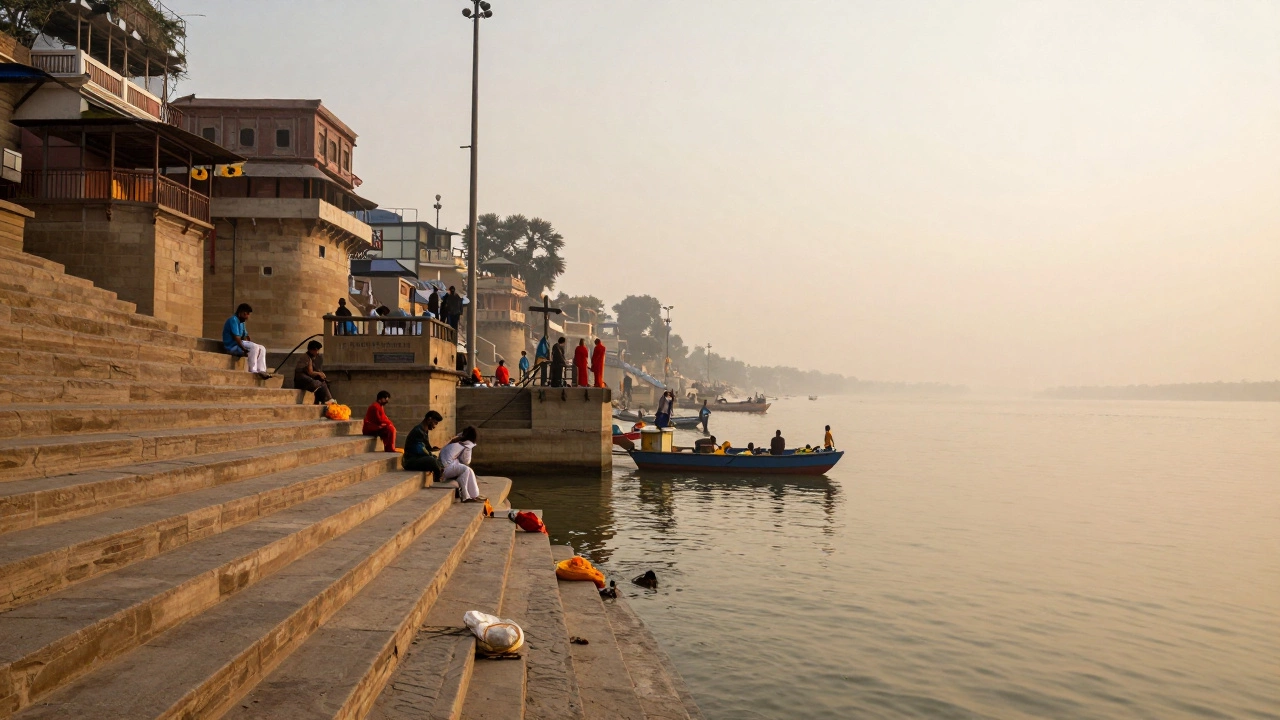
- The Ghats are stone steps descending to the Ganges River, serving as sites for ritual bathing, cremation, and social gathering. There are eighty-four main ghats within the heritage zone, each with a specific function. Some are strictly for purification baths, while others like Manikarnika Ghat are dedicated exclusively to funeral rites.
- The Temples include ancient shrines dedicated to Shiva and other deities, reflecting architectural styles spanning several centuries. The most famous is the Kashi Vishwanath Temple, but the heritage listing also covers smaller shrines like the Durga Temple and Sankat Mochan Hanuman Temple, creating a dense network of sacred spaces.
- Sacred Geography refers to the alignment of streets, rivers, and landmarks according to Hindu cosmological principles. The city layout follows a radial pattern centered on the Kashi Vishwanath Temple, with narrow lanes called *galis* radiating outward toward the river, mirroring the spokes of a wheel.
This combination means that preserving one element requires protecting the others. You cannot save the temples without maintaining the view corridors to the river, and you cannot preserve the riverfront without managing the waste from the millions of visitors who bathe there annually.
Navigating the Spiritual Heartbeat
Visiting Varanasi requires adjusting your expectations. It is loud, crowded, and intense. The heritage status doesn’t mean it’s quiet or pristine. Instead, it validates the authenticity of the experience. Here is how to engage with the city respectfully and effectively.
Start your day before sunrise. The Ganga Aarti at Dashashwamedh Ghat begins around 6:30 AM, depending on the season. Arriving early allows you to secure a spot on the stone platforms where priests perform fire rituals synchronized across multiple altars. This ceremony isn’t a show for tourists; it’s a daily offering to the river goddess Ganga. Watching it from the back rows gives you a sense of scale, while standing closer immerses you in the heat of the flames and the sound of bells.
After the aarti, take a boat ride. This is the best way to see the verticality of the city. From the water, you can see the layers of history stacked against the riverbank. Older ghats are lower and more worn, while newer constructions sit higher up. Look for the ashrams and schools that line the upper terraces-they reveal how education and spirituality coexist here. Many students studying Vedas live in rooms directly above the ghats they use for morning prayers.
Comparing Varanasi to Other Heritage Destinations
| Feature | Varanasi | Agra (Taj Mahal) | Jaipur (Pink City) |
|---|---|---|---|
| UNESCO Status | Entire City Landscape (2024) | Individual Monument (1983) | Historic Urban Area (2019) |
| Primary Focus | Living Rituals & Daily Life | Mughal Architecture & Romance | Rajput Forts & Palaces |
| Visitor Experience | Immersive, Chaotic, Spiritual | Structured, Photogenic, Historical | Cultural, Shopping, Architectural |
| Best Time to Visit | October to March | November to February | October to March |
| Key Constraint | Water Pollution & Crowds | Tourist Overcrowding | Heat & Traffic |
This comparison highlights why Varanasi feels different. In Agra, you visit a monument and leave. In Jaipur, you explore palaces and markets. In Varanasi, you participate in a cycle of life and death that happens every single day. The heritage listing acknowledges that the people themselves are part of the site.
Practical Tips for Responsible Travel
Because Varanasi is a living community, not a theme park, your behavior impacts the locals significantly. Here are concrete ways to travel responsibly.
- Dress modestly. Shoulders and knees should be covered, especially near temples. Women may find it helpful to carry a scarf to cover their heads when entering certain shrines.
- Respect cremation ghats. Manikarnika and Harishchandra Ghats are active funeral grounds. Do not take close-up photos of grieving families or burning bodies. Silence is expected. If you feel uncomfortable, observe from a distance or skip these ghats entirely.
- Support local artisans. Varanasi is famous for silk sarees and brassware. Buy directly from workshops in the old city lanes rather than tourist shops near hotels. This keeps money within the heritage community.
- Avoid plastic. The Ganges suffers from severe pollution. Carry a reusable water bottle and refuse single-use plastics when buying snacks or souvenirs.
- Hire licensed guides. The labyrinthine streets can be disorienting. A local guide can explain the symbolism of carvings and rituals that might otherwise seem chaotic. Look for guides registered with the Uttar Pradesh Tourism Department.
Understanding the Controversies
No discussion of Varanasi’s heritage status is complete without addressing the challenges. The inscription was controversial among some conservationists who argued that the rapid modernization of the city threatens its integrity. High-rise construction near the ghats and inadequate sewage treatment plants remain critical issues.
UNESCO’s decision included strict conditions. The state government must implement a comprehensive master plan to control building heights and improve waste management. As a visitor, you contribute to this pressure simply by being there. Your presence generates waste and demand for resources. Being aware of this tension helps you appreciate the fragility of the site. The heritage label is not a guarantee of preservation; it is a call to action.
Is Varanasi the only city in India with UNESCO World Heritage status?
Yes, Varanasi is currently the only city in India where the entire urban landscape, including its living culture and geography, is recognized as a World Heritage Site. Other cities like Jaipur and Ahmedabad have historic zones listed, but Varanasi’s designation covers the continuous spiritual and physical fabric of the whole city along the Ganges.
When did Varanasi become a UNESCO World Heritage Site?
Varanasi was officially inscribed as a UNESCO World Heritage Site in July 2024 during the 46th session of the World Heritage Committee. It was added under the criteria of cultural significance, specifically recognizing its role as a center of learning and pilgrimage for over 2,500 years.
What is the best time to visit Varanasi?
The ideal time to visit Varanasi is between October and March when the weather is cooler and more comfortable for walking. Avoid the monsoon season (July-September) due to heavy rains and potential flooding, and the peak summer months (April-June) which can be extremely hot and humid.
Can foreigners visit the inner sanctum of Kashi Vishwanath Temple?
Access rules can change, but generally, all visitors regardless of nationality are allowed to enter the temple complex. However, photography is strictly prohibited inside the temple premises. It is advisable to check current guidelines before your visit as security protocols may vary during festivals or special events.
How long should I stay in Varanasi?
A minimum of three days is recommended to fully experience Varanasi. One day for the ghats and boat rides, one day for exploring the old city temples and markets, and a third day for quieter activities like attending a lecture at Banaras Hindu University or visiting nearby Sarnath, where Buddha gave his first sermon.