What is South India Most Famous For? A Guide to Temples, Food & Nature
 Jun, 5 2026
South India Travel Planner
Kerala
Backwaters & Ayurveda
Tamil Nadu
Temples & Culture
Karnataka
Tech & Ruins
Andhra Pradesh
Spicy Cuisine
Telangana
Biryani & History
Puducherry
French Colonial
Your Customized Trip Plan
Estimated Duration
Based on comfortable pacing with transit time included.
Estimated Budget (Per Person)
Includes accommodation, food, local transport & entry fees.
Highlights of Your Selection:
Recommended Culinary Experiences:
Budget Breakdown Visualization
Most people picture the Taj Mahal when they think of India. But if you head south, past the Vindhya Range and into the Deccan Plateau, you find a completely different world. South India is a diverse region comprising six states known for its distinct Dravidian culture, ancient temple architecture, tropical landscapes, and vibrant cuisine. It isn't just one place; it's a collection of Tamil Nadu, Kerala, Karnataka, Andhra Pradesh, Telangana, and Puducherry. Each has its own language, rhythm, and flavor.
If you are asking what makes this part of the country so special, the answer isn't simple. It’s the smell of cardamom in the air, the sight of massive gopurams (towering gateways) piercing the sky, and the taste of rice that actually tastes like something. Here is what South India is truly famous for, broken down by what matters most to travelers.
The Architecture of Gods: Dravidian Temples
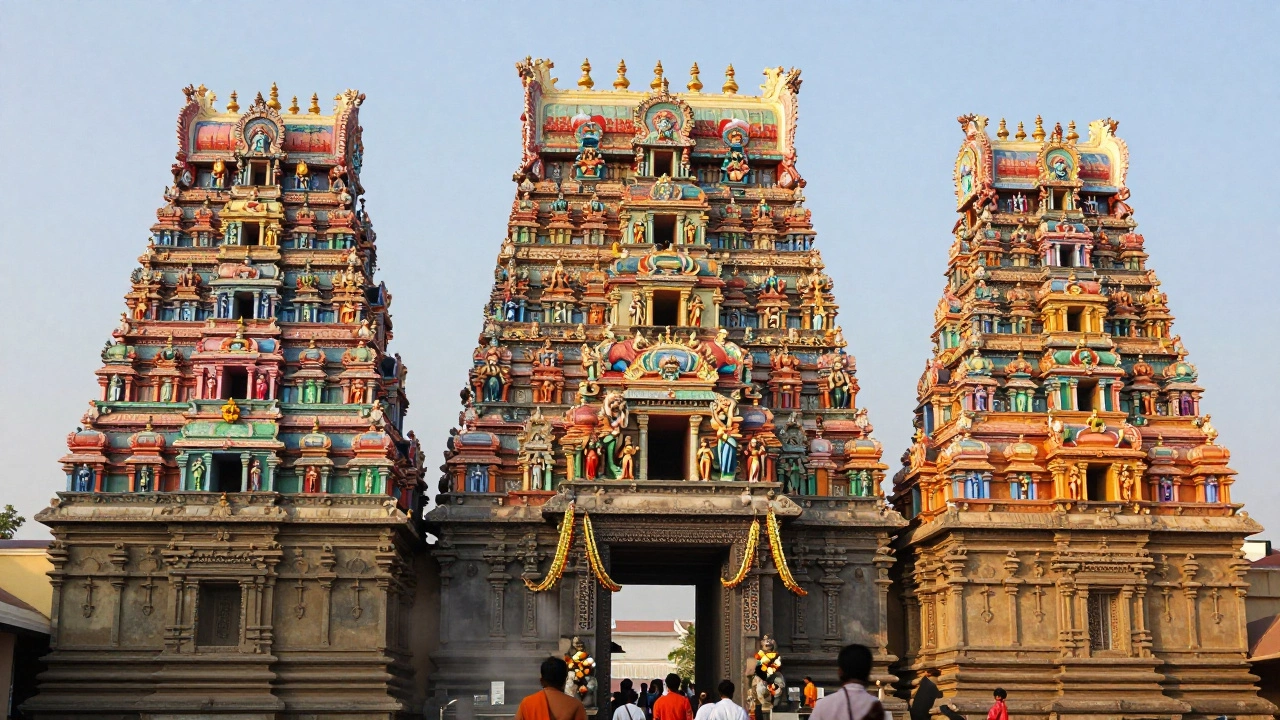
You cannot talk about South India without talking about temples. Unlike the Nagara style of North India, which features curvilinear towers, the south is defined by Dravidian architecture, characterized by pyramid-shaped vimanas and towering rectangular gopurams covered in intricate stone sculptures.
Take the Meenakshi Amman Temple in Madurai. It doesn't just sit there; it dominates the city skyline. The gopurams here can reach up to 170 feet tall, painted in bright colors and decorated with thousands of mythological figures. Walking through those gates feels like entering another dimension. The air changes. The noise of the city fades, replaced by chanting and the scent of jasmine garlands.
Then there is the Brihadeeswarar Temple in Thanjavur. Built in 1010 CE by Rajendra Chola I, this UNESCO World Heritage site features a monolithic capstone weighing over 80 tons at the top of its 216-foot tower. How did they lift that stone without modern cranes? No one knows for sure, but standing under it makes you question everything you thought you knew about engineering. These aren't just religious sites; they are living museums of art, music, and dance. Every wall tells a story from the Ramayana or Mahabharata, carved in high relief.
A Culinary Revolution: Spices, Rice, and Fermentation
Food is not just fuel in South India; it is an identity. If you have only eaten North Indian butter chicken and naan, you haven't really tasted India yet. Southern cuisine revolves around rice, lentils, coconut, tamarind, and curry leaves. It is lighter, tangier, and often vegetarian by default, though non-veg options are fiery and bold.
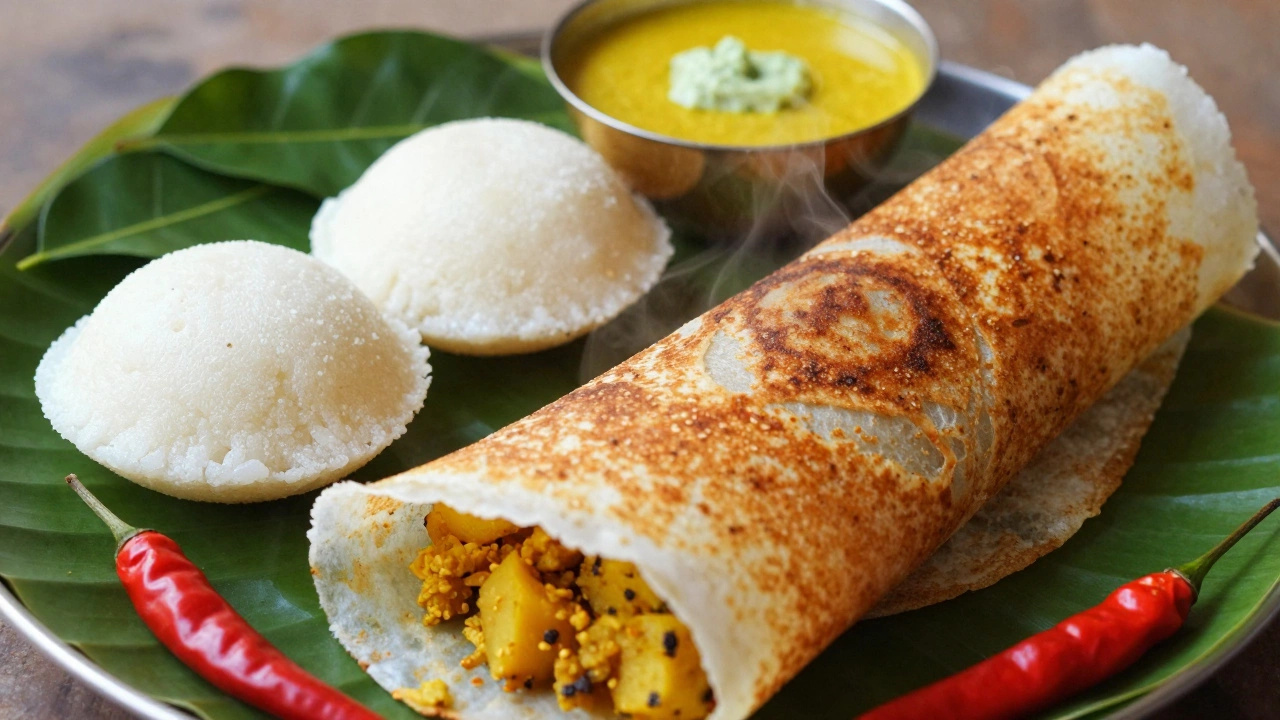
Start your day with Idli and Dosa, fermented rice and lentil cakes that are fluffy, sour, and served with spicy sambar and coconut chutney. Idlis are steamed perfection-soft as clouds. Dosas are crispy crepes made from a batter fermented for days. In Chennai, you will find thin, paper-like dosas. In Bengaluru, they might be stuffed with potato masala. The variation is endless.
Don't sleep on the street food. Try Bisi Bele Bath from Karnataka-a thick rice and lentil soup packed with vegetables and a complex spice blend. Or visit Hyderabad for Hyderabadi Biryani. This isn't your average biryani. It uses short-grain Seeraga Samba rice, slow-cooked with marinated meat and saffron in a sealed pot (dum style). The aroma alone will pull you into the shop. And if you are in Kerala, you must try Appam with Stew. The lacy, bowl-shaped rice flour pancake paired with a mild, coconut-milk-based vegetable or mutton stew is comfort food at its finest.
Kerala: God's Own Country
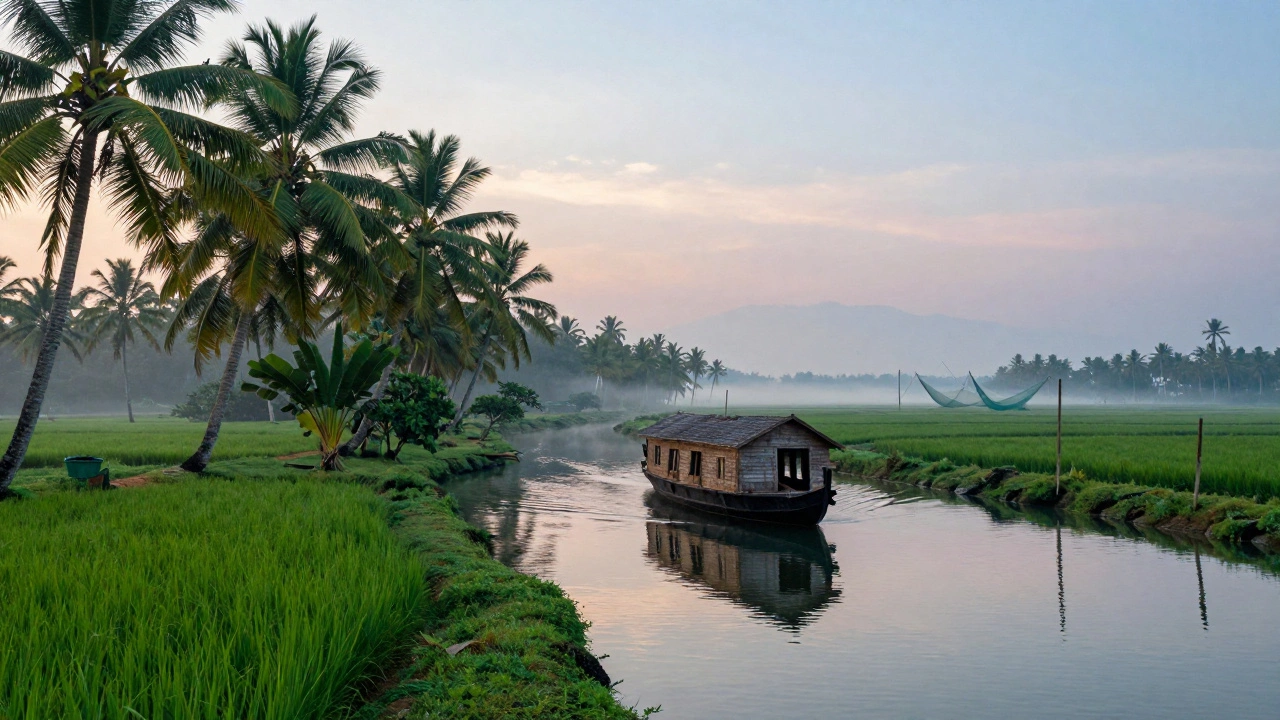
Kerala stands apart. While the rest of South India burns hot and dry for much of the year, Kerala stays lush and green thanks to the Western Ghats and heavy monsoon rains. It is famous for its Backwaters, a network of brackish lagoons, lakes, and canals parallel to the Arabian Sea coast.
Staying on a houseboat in Alleppey or Kumarakom is the quintessential Kerala experience. You drift silently past coconut palms, paddy fields, and fishing villages. Life moves slower here. You wake up to the sound of water lapping against the hull and the call of kingfishers. It is peaceful, almost meditative.
Beyond the boats, Kerala is the land of Ayurveda. This traditional system of medicine focuses on balance between mind, body, and spirit. Treatments like Abhyanga (oil massage) and Shirodhara (pouring warm oil on the forehead) are deeply relaxing. Many travelers come specifically for week-long detox retreats. Combine that with the tea plantations of Munnar, where mist rolls over rolling hills of green bushes, and you understand why it’s called "God's Own Country."
Tamil Nadu: The Cultural Heartbeat
If Kerala is about nature, Tamil Nadu is about culture. It is the oldest of the Indian states, with a history stretching back thousands of years. Chennai, the capital, is a hub of classical arts. Bharatanatyam, one of the oldest classical dance forms in India, originated here. Watching a performance is mesmerizing-the precise footwork, the expressive hand gestures (mudras), and the storytelling through facial expressions.
Mahabalipuram, located about 60 kilometers from Chennai, is an open-air museum. The Shore Temple, built in the 8th century, faces the Bay of Bengal. The Pancha Rathas look like chariots carved out of a single rock. The Arjuna's Penance relief is a massive sculpture panel depicting scenes from Hindu epics. It feels ancient, untouched by time.
Coimbatore and Tiruppur are also worth noting for their textile industries. If you like shopping for cotton sarees and lungis, this is the place. The quality is unmatched, and the prices are reasonable if you know where to look.
Karnataka: Tech Meets History
Karnataka offers a unique blend of the old and the new. Bengaluru, the state capital, is India's Silicon Valley. It is bustling, traffic-choked, and full of startups. But drive two hours east, and you enter the Kingdom of Mysore.
The Mysore Palace is a spectacle. Built in Indo-Saracenic style, it combines Hindu, Muslim, Rajput, and Gothic elements. At night, during festivals, it is illuminated with millions of light bulbs, creating a magical glow. The Dasara festival here is legendary, featuring processions with elephants adorned in gold caparisons.
Hampi, however, is the crown jewel. Once the capital of the Vijayanagara Empire, it is now a ruin-strewn landscape of boulders and temples. The Vittala Temple's Stone Chariot is iconic. You can ride horses across the plains, climb ruins for sunset views, and explore markets that look like they belong in a movie set. It was voted one of the New7Wonders of Nature. Walking among those stones, you feel the weight of empire and decay.
Andhra Pradesh and Telangana: Spice and Steel
These two states share a history but have distinct identities today. Andhra Pradesh is famous for its heat-not just the weather, but the food. Guntur chili peppers grow here, making the cuisine some of the spiciest in India. Gongura Pachadi, a chutney made from sorrel leaves, is a staple condiment that adds a tangy kick to every meal.
Telangana, carved out in 2014, brings its own flair. Hyderabad, the shared capital, is a city of contrasts. You have the Charminar, a 16th-century monument built after the victory over the Bijapur Sultanate, standing next to glass skyscrapers. Irani chai (Persian-style tea) and Osmania biscuits are local favorites. The food here is rich, aromatic, and deeply satisfying.
Puducherry: French Colonial Charm
Last but not least, Puducherry (formerly Pondicherry). This union territory was once a French colony, and you can still see it in the white-washed buildings, cobblestone streets, and bougainvillea-draped balconies. It feels like stepping into a European village, but with Indian warmth.
The French Quarter is perfect for walking. Visit the Aurobindo Ashram, a spiritual center founded by Sri Aurobindo and The Mother. The atmosphere is quiet, introspective. Then head to the beach promenade in the evening, where locals gather to watch the sunset. It’s a laid-back vibe that contrasts sharply with the intensity of Chennai or Bengaluru.
| State/Territory | Famous For | Must-Visit Place | Culinary Speciality |
|---|---|---|---|
| Kerala | Backwaters, Ayurveda, Tea Gardens | Alleppey Houseboats | Appam & Stew |
| Tamil Nadu | Dravidian Temples, Classical Dance | Meenakshi Amman Temple | Chettinad Chicken |
| Karnataka | Ruins, Tech Hub, Palaces | Hampi Ruins | Bisi Bele Bath |
| Andhra Pradesh | Spicy Cuisine, Coastal Beaches | Tirupati Temple | Gongura Pickle |
| Telangana | Hyderabadi Culture, Historic Monuments | Charminar | Hyderabadi Biryani |
| Puducherry | French Colonial Architecture | French Quarter | Croissant & Filter Coffee |
When to Go and What to Wear
Timing matters. South India is hot. From March to June, temperatures can soar above 40°C (104°F). The best time to visit is between October and February, when the weather is pleasant and dry. However, Kerala and coastal areas get heavy rain during the monsoon (June to September). If you love greenery and don't mind getting wet, the monsoon can be beautiful, but many outdoor activities are limited.
Dress modestly, especially when visiting temples. Shoulders and knees should be covered. Cotton clothes are best because they breathe. Comfortable walking shoes are essential, particularly for places like Hampi or Madurai, where you’ll be doing a lot of walking on uneven stone paths.
Why It Matters Today
South India is not just a tourist destination; it is a cultural powerhouse. It preserves traditions that are fading elsewhere. The temple festivals, the classical music concerts, the handloom weaving-it all continues with vigor. Yet, it is also modern. Bengaluru drives India's tech economy. Chennai produces a significant portion of India's automobiles. It is a region that respects its past while racing toward the future.
Whether you are chasing spices, seeking spiritual peace, or marveling at ancient engineering, South India delivers. It challenges your senses and expands your understanding of what India can be. So, pack your bags, bring an appetite, and get ready to explore.
Is South India safe for solo female travelers?
Yes, generally speaking, South India is considered safer than many other parts of India for solo female travelers. Cities like Kerala and Tamil Nadu have lower crime rates regarding harassment. However, standard precautions apply: dress modestly, avoid isolated areas at night, and use reputable transport services like Uber or Ola.
What is the best way to travel within South India?
Trains are excellent for long distances, especially the premium AC classes. For shorter trips, renting a car with a driver is affordable and convenient. Domestic flights connect major hubs like Chennai, Bengaluru, and Kochi quickly. Auto-rickshaws and app-based cabs work well for city navigation.
Do I need to learn the local language?
Not necessarily. English is widely spoken in urban areas and tourist spots. However, learning a few basic phrases in Tamil, Malayalam, Kannada, or Telugu goes a long way in building rapport with locals. It shows respect and often leads to warmer interactions.
Can I eat street food safely?
Yes, but choose wisely. Look for stalls with high turnover, meaning the food is fresh and cooked to order. Avoid raw salads or unpeeled fruits unless you can peel them yourself. Drink bottled or filtered water. Street food like idli and dosa is usually safe since it is freshly steamed or grilled.
How many days do I need for a South India trip?
A minimum of 10-14 days is recommended to cover two or three states comfortably. Trying to rush through all six states in two weeks will leave you exhausted. Focus on one region, such as Kerala and Tamil Nadu, or Karnataka and Tamil Nadu, to get a deeper experience.