What Is the Cultural Heritage of India? A Guide to Its Living Traditions and Ancient Sites
 Dec, 26 2025
Heritage Impact Calculator
How Your Choices Help Preserve India's Living Heritage
India's cultural heritage isn't frozen in time—it's a living tradition practiced daily by millions. Your choices can help protect this living legacy.
Your Impact on India's Cultural Heritage
By choosing these sustainable actions, you help maintain India's living heritage. Each choice supports thousands of artisans, teachers, and communities who keep traditions alive.
Your Contribution in Action
For example: Buying a handwoven Banarasi sari (worth ₹5,000) supports a weaver's family for 3 weeks. This helps preserve the craft passed down for generations, keeping the tradition alive and providing sustainable income for artisans.
How You're Helping
Your choices directly support communities who maintain India's living heritage. By choosing ethical tourism and fair trade, you're helping ensure that traditions like temple rituals, folk dances, and artisan crafts continue for future generations.
Why This Matters
India's heritage isn't just ancient monuments—it's in the hands of weavers, musicians, and farmers who practice traditions daily. Your support helps ensure these living traditions continue to thrive.
India’s cultural heritage isn’t locked away in museums or faded into history books. It breathes in the chants of temple bells, echoes in the rhythms of folk dances, and lives in the hands of artisans shaping clay into centuries-old forms. This isn’t just about monuments-it’s about continuity. Every street in Varanasi, every festival in Kerala, every stitch in a Banarasi silk sari carries forward a story that’s been passed down for over 5,000 years.
The Living Tapestry of India’s Heritage
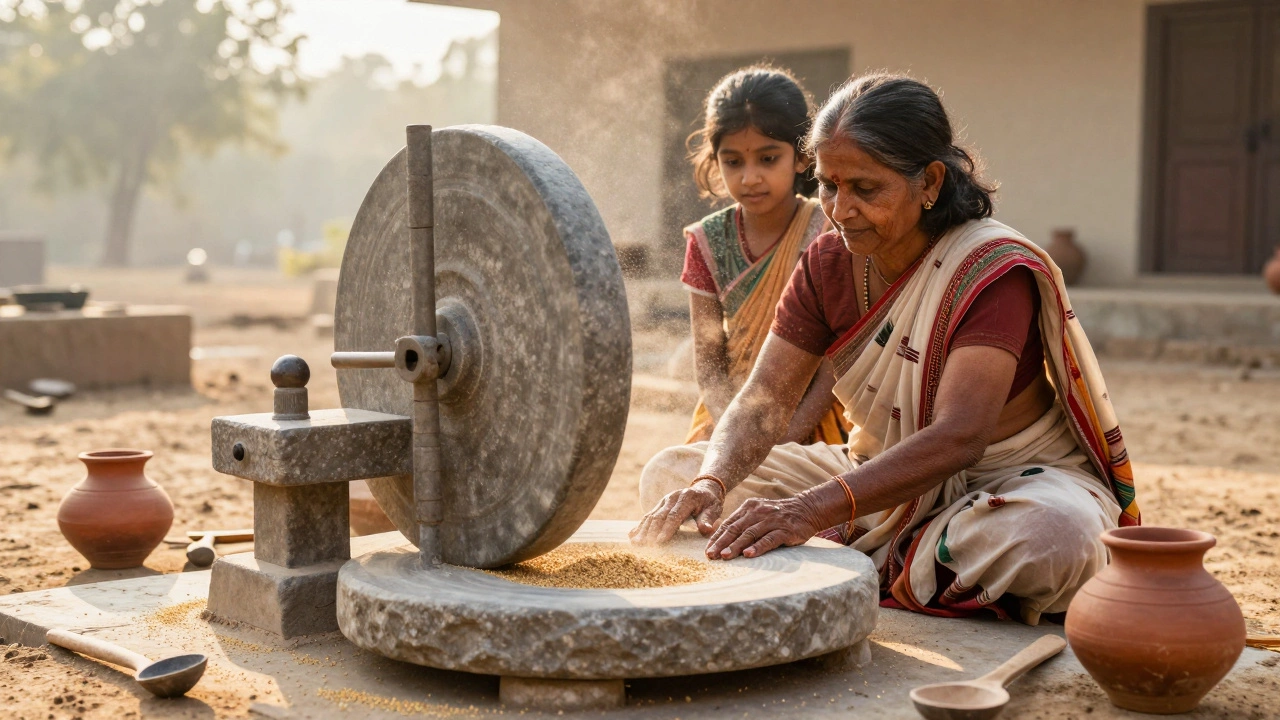
When people talk about India’s cultural heritage, they often think first of the Taj Mahal or the Ajanta Caves. But those are just the visible parts. The real depth lies in the daily practices that haven’t changed in generations. In rural Gujarat, women still grind grain on stone chakki the same way their ancestors did. In Tamil Nadu, temple musicians play ragas composed during the Chola dynasty. These aren’t performances for tourists-they’re acts of devotion, identity, and memory.
India’s heritage is layered. You can stand in the ruins of Mohenjo-Daro, built in 2500 BCE, and see urban planning so advanced it rivals ancient Rome. Walk a few miles to the Qutub Minar, built in the 12th century, and you’ll see how Islamic architecture absorbed local craftsmanship. Then visit a modern street in Mumbai where a street artist paints murals inspired by Mughal miniatures. All of it belongs together.
UNESCO World Heritage Sites: More Than Just Landmarks
India has 43 sites on the UNESCO World Heritage List. That’s more than any country in South Asia. But numbers don’t tell the full story. What makes these places powerful isn’t their age-it’s how they’re still used.
The Khajuraho temples aren’t just carved stone. They’re still visited by pilgrims who light incense and offer flowers. The Great Himalayan National Park isn’t just protected land-it’s home to communities who follow seasonal migration patterns unchanged since the 1700s. Even the Chhatrapati Shivaji Terminus in Mumbai, a 19th-century railway station, still handles over 7 million passengers a year. It’s not a relic. It’s a working heart.
Some sites, like the Sundarbans mangrove forests, are heritage because of how people live with nature-not by conquering it. The fishermen here use traditional nets and boats made from local wood. Their knowledge of tides and animal behavior has been passed down orally for centuries. That’s cultural heritage too: the wisdom of adaptation.
Art, Craft, and the Hands That Keep It Alive
India’s crafts aren’t souvenirs. They’re cultural contracts. In Pattachitra painting from Odisha, artists use natural pigments made from minerals and plants. The brushes are made from squirrel hair. The stories they paint-of Radha and Krishna, of local folk tales-are the same ones told in village squares 400 years ago.
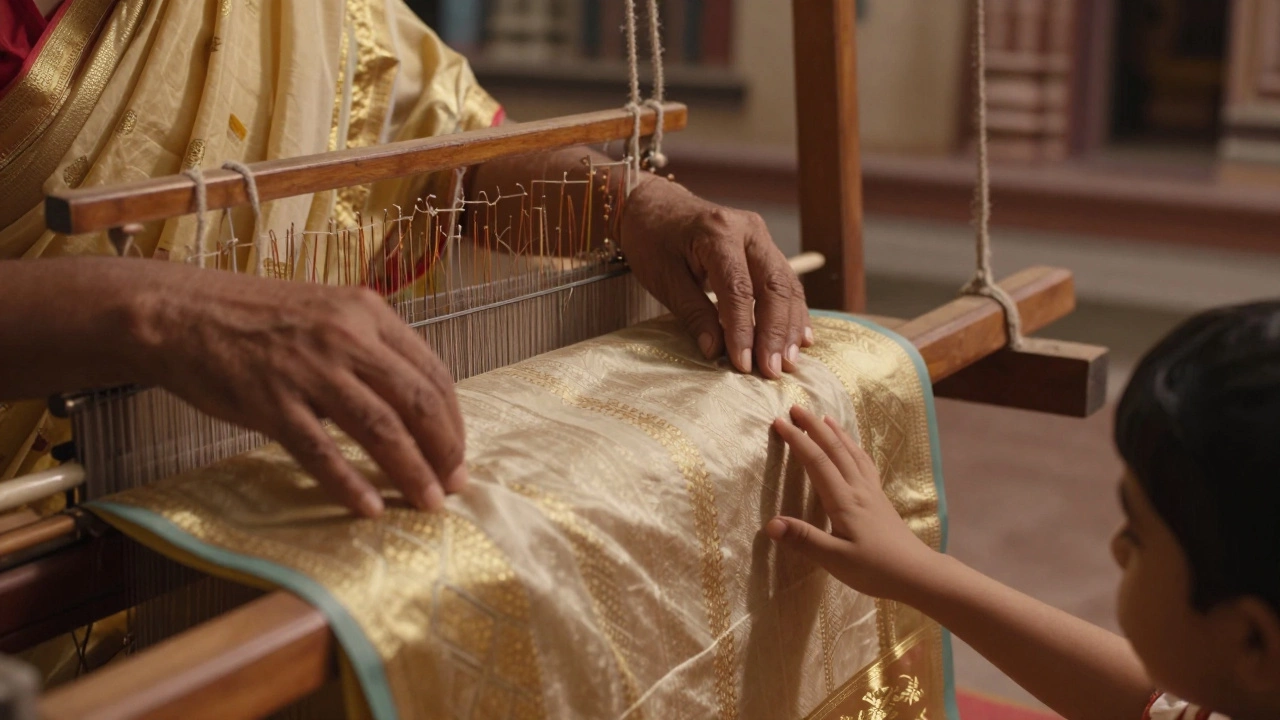
In Kanchipuram, silk weavers still use wooden handlooms to create saris with gold zari thread. It takes three weeks to weave one. A single sari can cost more than a month’s wages for a farmer. Yet families keep doing it-not because it’s profitable, but because it’s who they are. The government offers subsidies, but the real force keeping these crafts alive is pride. Grandmothers teach granddaughters. Sons learn from fathers. There’s no school curriculum for this. It’s learned at the loom, at the wheel, at the forge.
Even in cities, you’ll find this. In Delhi’s Dilli Haat, a potter from Rajasthan shows how he shapes clay without a wheel. In Jaipur, a block printer demonstrates how he carves wooden stamps to make fabrics that look like they came from the Mughal court. These aren’t tourist shows. They’re acts of survival.
Festivals: When Heritage Comes Alive
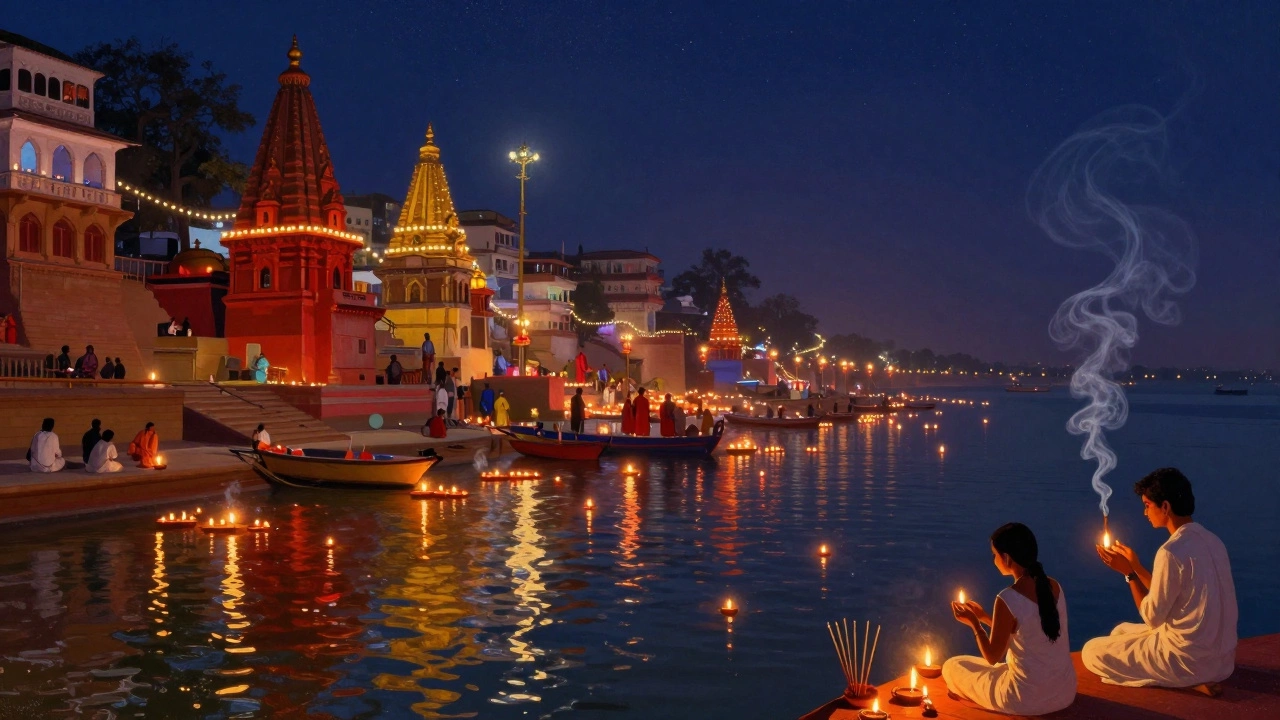
India doesn’t celebrate heritage-it lives it. Every month, somewhere, a festival turns history into movement. Diwali isn’t just lights. In Varanasi, families float thousands of diyas on the Ganges, each one honoring a loved one. In Gujarat, people build elaborate kolam patterns outside their homes, using colored powders made from rice flour and turmeric. These patterns are drawn daily, erased by foot traffic, and redrawn. It’s impermanence as ritual.
Holi in Mathura isn’t just colored powder. It’s a reenactment of Krishna’s playful childhood. People sing folk songs in Braj Bhasha, a dialect older than modern Hindi. In Assam, Bihu dancers wear traditional dhotis and gamchas, their steps matching the beat of the dhol drum that hasn’t changed in 500 years.
Even smaller festivals matter. In the Himalayas, the Losar festival marks the Tibetan New Year with masked dances that tell Buddhist parables. In Tamil Nadu, Pongal is a four-day harvest celebration where families cook rice in clay pots and offer it to the sun. These aren’t events on a calendar. They’re anchors that hold communities together across generations.
Language, Music, and the Sound of Memory
India has 22 officially recognized languages and over 19,500 dialects. That’s not just diversity-it’s cultural depth. Each language carries its own proverbs, poetry, and worldview. In Bengal, Rabindranath Tagore’s songs are still sung in homes, schools, and buses. In Punjab, Bhangra isn’t just party music-it’s a dance born from farming rituals.
Classical music isn’t performed only in concert halls. In Benares, a 12-year-old boy practices raga Yaman for two hours every morning under his guru’s watch. That’s the guru-shishya parampara-the teacher-student tradition. It’s not about grades or certificates. It’s about lineage. The same system exists in Kathak dance, in veena playing, in tabla drumming.
Even folk music survives. In the forests of Chhattisgarh, the Gond tribe sings songs about animals, spirits, and ancestors. These songs have no written records. They’re passed on through repetition, through listening, through doing. When the elders die, the songs risk vanishing. That’s why young people now record them on phones and share them online. Heritage isn’t static. It adapts to survive.
What Makes India’s Heritage Unique?
Other countries have ancient ruins. Few have them still breathing. In Egypt, the pyramids are monuments. In India, the temples are still places of worship. In Greece, the Parthenon is a ruin. In India, the Meenakshi Temple in Madurai is packed with devotees every day.
What sets India apart is that heritage isn’t preserved-it’s practiced. You don’t visit a heritage site to see something frozen in time. You visit to see something alive. A grandmother teaches her granddaughter how to tie a sari the way her mother did. A farmer recites a Sanskrit verse while plowing his field. A child learns to make rangoli before she learns to write her name.
This isn’t about tourism. It’s about belonging. The Taj Mahal matters because it’s a symbol of love. But the real heritage is in the way a widow in Varanasi still sings lullabies to her dead husband’s memory. The heritage is in the silence between the beats of a dholak. It’s in the smell of incense rising from a temple door that’s been opened every morning for 800 years.
Threats and the Fight to Protect What Matters
But this living heritage is under pressure. Urbanization is swallowing villages where crafts were born. Young people move to cities for jobs, leaving behind looms and kilns. Climate change is eroding coastal temples in Odisha. Pollution is darkening the marble of the Taj Mahal.
Some efforts are working. In Rajasthan, a community-run initiative trained 300 women to restore frescoes in 17th-century havelis. In Kerala, schools now teach traditional Kathakali makeup and dance as part of the curriculum. In Varanasi, youth groups use drones to map flood damage to ancient ghats and report it to authorities.
But real protection doesn’t come from laws alone. It comes from people choosing to keep it alive. When a mother buys a handwoven shawl instead of a factory-made scarf, she’s protecting a craft. When a student learns a folk song instead of just watching TikTok dances, they’re keeping history alive.
How to Experience India’s Heritage-The Right Way
If you want to see India’s heritage, don’t just check off sites on a map. Go slow. Sit in a temple courtyard and watch how people pray. Talk to a weaver-not to buy, but to listen. Eat at a local home during a festival, not at a restaurant with a “traditional menu.”
Ask questions. Why is this pattern used? Who taught you this song? What does this ritual mean? Most people will welcome the curiosity. They’re proud. They want you to understand.
Don’t take photos of rituals without asking. Don’t touch carvings on ancient walls. Don’t buy antiques from street vendors-they often come from looted temples. Support cooperatives that pay artisans fairly. Choose homestays over hotels. Learn a few words in the local language. Even a simple “dhanyavaad” (thank you) makes a difference.
India’s heritage isn’t something you consume. It’s something you participate in.
What are the most important cultural heritage sites in India?
India’s most significant heritage sites include the Taj Mahal in Agra, the Ajanta and Ellora Caves in Maharashtra, the Khajuraho Group of Monuments in Madhya Pradesh, the Sun Temple in Konark, and the Qutub Minar in Delhi. Each represents a different era and cultural influence-from Buddhist rock art to Mughal architecture and Hindu temple design. These aren’t just tourist spots; they’re still active religious, artistic, and historical centers.
Is Indian heritage only about ancient monuments?
No. While monuments are visible symbols, India’s heritage is mostly living. It’s in the way a weaver in Banaras hand-prints silk, how a grandmother teaches her granddaughter to make kolam patterns, or how farmers in Assam sing songs during Bihu. These daily practices, oral traditions, crafts, and rituals are the true heart of India’s heritage. They’re passed down through families, not preserved in glass cases.
How is India protecting its cultural heritage?
The Archaeological Survey of India (ASI) manages over 3,600 protected sites. UNESCO helps fund conservation for World Heritage Sites. But the most effective efforts are community-led: women restoring temple frescoes in Rajasthan, youth documenting folk songs in Chhattisgarh, schools teaching Kathakali in Kerala. Legal protection exists, but survival depends on people choosing to keep traditions alive through daily practice.
Can tourists really help preserve Indian heritage?
Yes. Tourists help by choosing ethical experiences: buying directly from artisans, staying in homestays, respecting rituals, and avoiding souvenirs made from endangered materials. Supporting cooperatives that pay fair wages ensures crafts survive. Asking questions shows respect. Not touching carvings or climbing ruins prevents damage. Tourism that values people over pictures sustains heritage.
Why do some Indian traditions seem to be disappearing?
Urbanization, economic pressure, and changing values have made many traditional jobs-like hand-weaving, block printing, or temple music-less profitable. Younger generations often move to cities for tech or service jobs. Without financial support or social recognition, these skills risk dying with the elders who practice them. But revival efforts are growing, led by local communities, NGOs, and even social media influencers sharing traditional crafts.