What Is the Largest Religion in the World? And How It Shapes Temple Tours in India
 Dec, 12 2025
More than 2.4 billion people around the world identify as Christian. That’s more than one in four people on Earth. But if you’ve ever walked through the golden spires of the Golden Temple in Amritsar or climbed the steps of the Meenakshi Temple in Madurai, you might wonder: isn’t Hinduism the biggest? The answer isn’t as simple as it seems-and it matters a lot if you’re planning a temple tour in India.
Christianity: The Global Majority
Christianity is the largest religion in the world by number of followers. That’s not a guess-it’s based on data from the Pew Research Center, the United Nations, and national censuses collected up to 2024. Roughly 31% of the global population, or about 2.4 billion people, say they are Christian. This includes Catholics, Protestants, Orthodox believers, and independent churches across every continent.
It’s not just about numbers. Christianity spread through colonization, missionary work, and migration over the last 500 years. Today, you’ll find large Christian populations in the United States, Brazil, Mexico, Nigeria, the Philippines, and even in parts of India like Kerala and Goa. In fact, India alone has over 28 million Christians, making it the fifth-largest Christian population in the world.
Islam: Fastest Growing and Deeply Rooted
The second-largest religion is Islam, with just under 2 billion followers. That’s about 25% of the world’s population. Unlike Christianity, Islam is growing faster-mainly because of higher birth rates in Muslim-majority countries like Indonesia, Pakistan, Nigeria, and Bangladesh.
Islam is not a monolith. Sunni Muslims make up about 85% of followers, while Shia Muslims are the majority in Iran, Iraq, and parts of Lebanon and Bahrain. You’ll find mosques in every Indian city, from the Jama Masjid in Delhi to the Tipu Sultan Mosque in Kolkata. In fact, India has the third-largest Muslim population in the world-over 200 million people.
That’s more than the entire population of Brazil. And while many temple tours in India focus on Hindu shrines, a visit to places like Ajmer Sharif or Dargah Hazrat Nizamuddin gives you a real sense of how deeply Islam is woven into India’s spiritual landscape.
Hinduism: The Heart of India’s Temple Culture
Hinduism is the third-largest religion in the world, with about 1.2 billion followers. That’s less than Christianity and Islam, but it’s the dominant faith in India, Nepal, and parts of Southeast Asia. More than 94% of all Hindus live in India.
This is why temple tours in India are so powerful. You’re not just visiting buildings-you’re stepping into a living tradition that’s been practiced for over 4,000 years. The Kashi Vishwanath Temple in Varanasi, the Tirupati Balaji Temple in Andhra Pradesh, and the Jagannath Temple in Puri are not just tourist spots. They’re centers of daily worship, pilgrimage, and cultural identity.
Hinduism doesn’t have a single founder or central text. It’s a collection of beliefs, rituals, and philosophies passed down through generations. You’ll find millions of devotees walking barefoot for days to reach a temple. Some carry kavadis, others chant mantras, and many offer flowers, milk, or coconuts to the deity. These aren’t performances for visitors-they’re acts of devotion.
Why This Matters for Temple Tours in India
If you’re planning a temple tour in India, understanding the religious landscape changes everything. You might think you’re there just to see ancient architecture or take photos. But you’re walking through a country where religion shapes daily life.
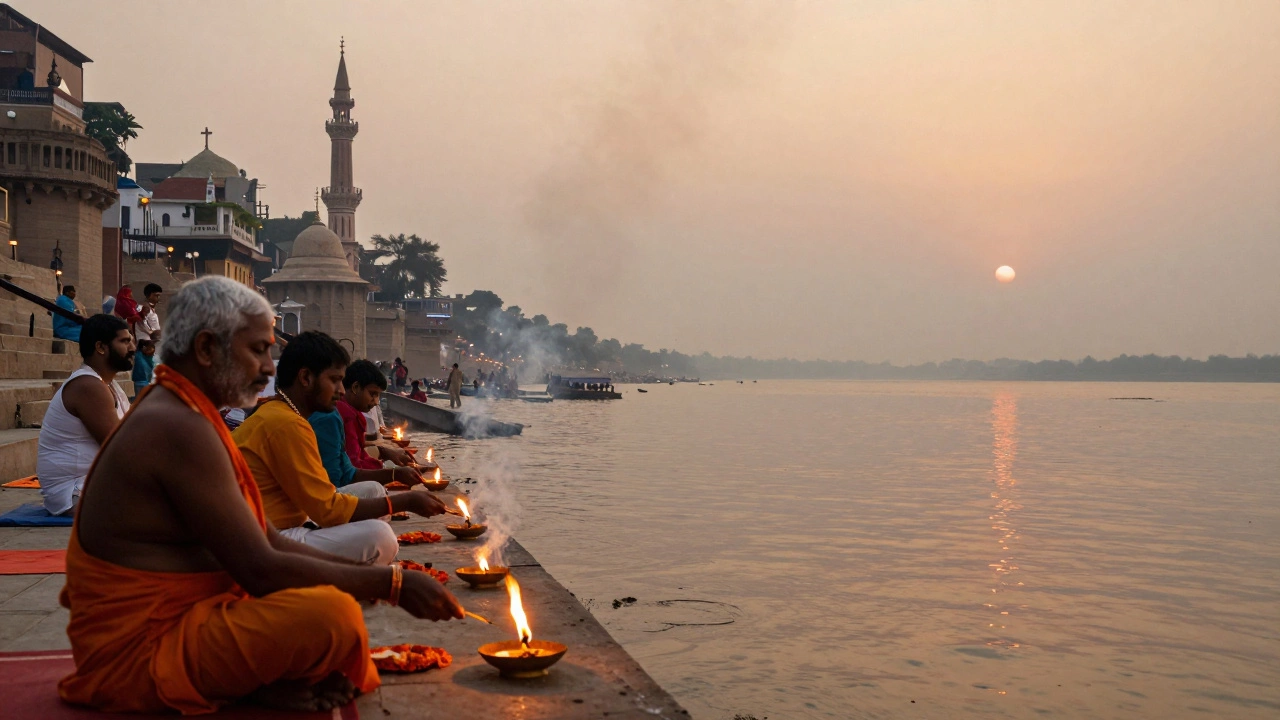
For example, in Varanasi, you’ll see Hindu priests performing aarti at the ghats at dawn. A few blocks away, you’ll pass a small mosque where Muslims are praying. In Chennai, you might visit the Kapaleeshwarar Temple, then walk to the St. Mary’s Church nearby. In Kerala, you’ll find churches built by Portuguese traders, Hindu temples with Dravidian towers, and mosques with wooden carvings that look like temple gopurams.
This isn’t just coexistence-it’s interweaving. Many Indian families have members who follow different faiths. It’s common for Hindus to visit Sufi shrines for blessings, and Muslims to celebrate Diwali with Hindu neighbors. Temple tours that only focus on one religion miss the full picture.
Other Major Religions in India
Hinduism, Christianity, and Islam aren’t the only players. India is home to millions of Sikhs, Buddhists, Jains, and followers of tribal faiths.
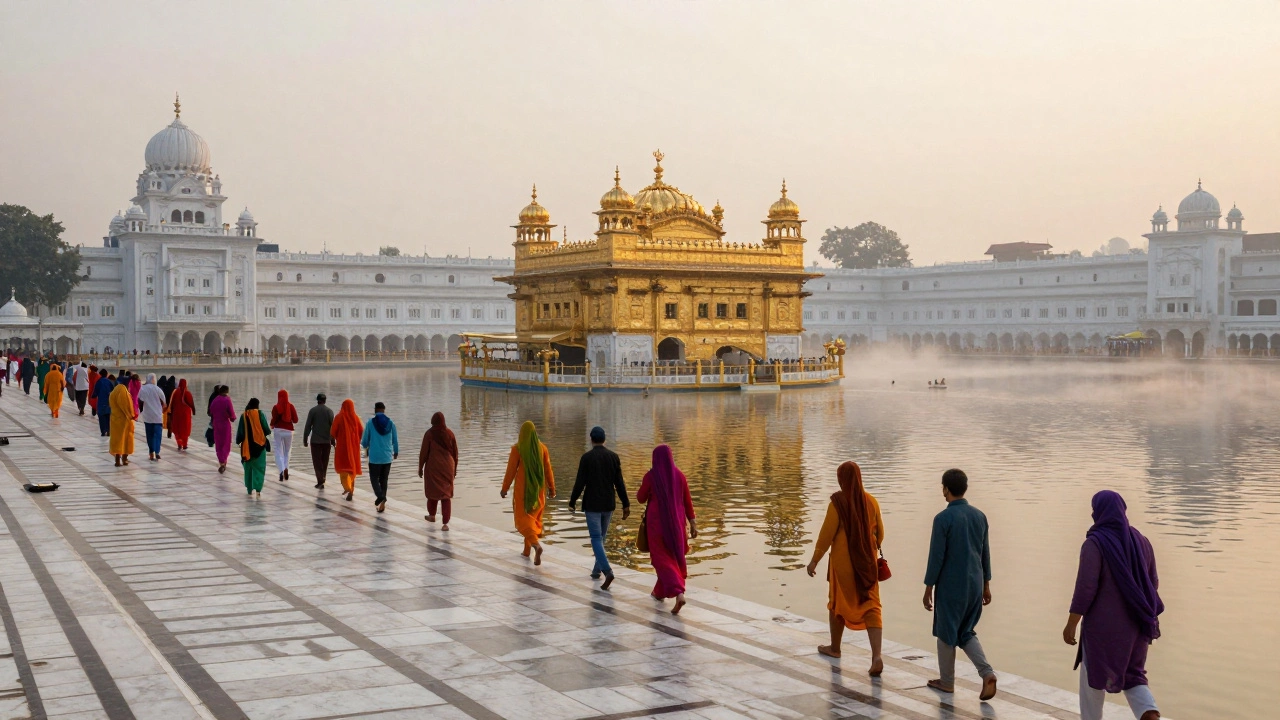
Sikhism, with about 25 million followers, is the fifth-largest religion in the world. The Golden Temple in Amritsar is the holiest site for Sikhs-and it’s open to everyone, regardless of faith. You’ll eat free langar (community meals) there, served by volunteers, day and night.
Buddhism, though smaller today, started in India. Bodh Gaya, where the Buddha attained enlightenment, draws pilgrims from Thailand, Japan, and Tibet. The Dhamek Stupa in Sarnath and the rock-cut caves of Ajanta and Ellora show how deeply Buddhist traditions shaped Indian art and architecture.
Jainism, with fewer than 5 million followers, is one of the oldest religions in India. Its temples, like the Dilwara Temples in Mount Abu, are famous for their marble carvings so fine they look like lace. Jains practice non-violence so strictly that they wear masks to avoid inhaling insects.
These faiths don’t just exist alongside Hinduism-they’ve influenced it. Many Hindu rituals, festivals, and even temple designs have roots in older traditions. Understanding this helps you see temple tours not as sightseeing, but as a journey through time.
What You’ll See on a Real Temple Tour
Forget the brochures that say “visit 10 temples in 5 days.” Real temple tours in India aren’t about checking boxes. They’re about slowing down.
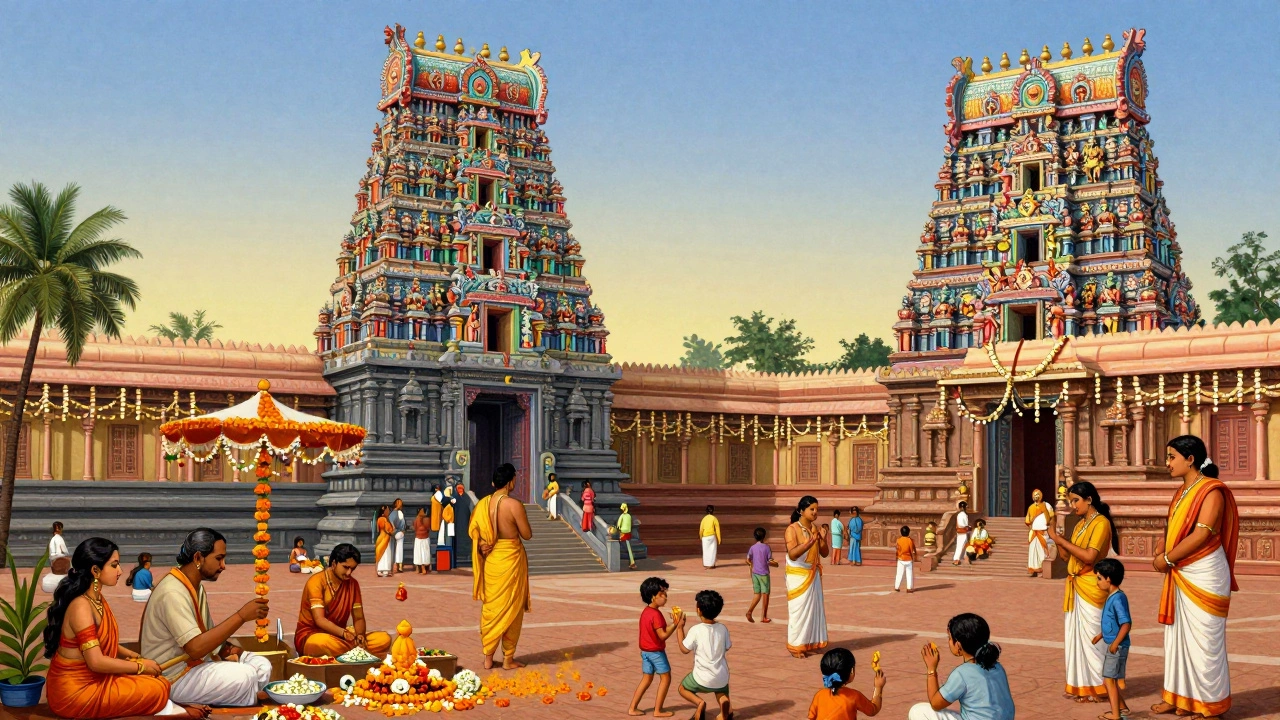
At the Meenakshi Temple in Madurai, you’ll spend hours walking through 14 towering gopurams covered in thousands of colorful statues. You’ll see women offering turmeric powder, children touching the feet of idols, and elders whispering prayers. Outside, vendors sell jasmine garlands. A priest will bless you with a drop of sacred water. No one will ask you to pay to enter. That’s how it’s always been.
In contrast, the Golden Temple in Amritsar is open 24/7. Thousands come each day to bathe in the holy sarovar, sing hymns in the hall, and eat langar. You’ll notice that no one is turned away-not because of religion, caste, or nationality. It’s just how it’s done.
On a temple tour, you’ll also see how religion adapts. In Goa, you’ll find churches with Hindu-style domes. In Rajasthan, some temples have Islamic arches. In Bengal, Durga Puja is celebrated with Muslim neighbors bringing sweets. These aren’t oddities-they’re normal.
Myth vs. Reality: What People Get Wrong
Many travelers assume India is “only Hindu.” That’s not true. India is home to the world’s largest Muslim population outside Indonesia, one of the oldest Christian communities in Asia, and the spiritual birthplace of Buddhism and Jainism.
Another myth: that religion causes division here. The truth is more complex. Yes, there are tensions. But daily life in most Indian towns is defined by shared spaces: a temple next to a mosque, a church bell ringing near a temple drum, a Sikh gurdwara feeding everyone during a flood.
On temple tours, you’ll often hear guides say, “This is the most sacred place.” But in India, there’s no single “most sacred.” Sacredness is layered. A temple might be sacred to one person, a shrine to another, a church to a third. All are real. All matter.
How to Plan a Meaningful Temple Tour
If you’re planning a temple tour in India, here’s what actually helps:
- Go slow. Don’t try to see 20 temples in a week. Pick three or four that represent different traditions and spend a full day at each.
- Dress respectfully. Cover your shoulders and knees. Remove shoes before entering any temple, mosque, or gurdwara.
- Ask before taking photos. Some rituals are private. Always check with a priest or volunteer.
- Try the food. Langar, prasad, and temple snacks are part of the experience. They’re often vegetarian, but always made with care.
- Listen more than you talk. The sounds-the bells, chants, drums, and silence-are as important as the sights.
Don’t treat temples like museums. They’re still alive. People still pray here. Families still celebrate birthdays and weddings here. The stones may be ancient, but the spirit is modern.
Final Thought: Religion Isn’t Just Numbers
Yes, Christianity is the largest religion in the world. Islam is growing fast. Hinduism is the spiritual core of India. But none of that tells you what it’s really like to stand in a temple at sunrise, surrounded by people whispering prayers in a dozen languages.
On a temple tour in India, you don’t need to believe in any of these faiths to feel something. You just need to be present. Because in the end, it’s not about who has the most followers. It’s about how people find meaning, connection, and peace-no matter what they call it.
Is Hinduism the largest religion in the world?
No, Hinduism is the third-largest religion in the world, with about 1.2 billion followers. Christianity is the largest, with over 2.4 billion followers, followed by Islam with nearly 2 billion.
Why are there so many temples in India if Hinduism isn’t the biggest religion globally?
Because over 94% of all Hindus live in India, and religion is deeply tied to daily life, culture, and identity here. Even though Christianity and Islam have larger global followings, Hinduism dominates India’s spiritual landscape, which is why temple architecture, rituals, and festivals are so visible.
Can non-Hindus visit Hindu temples in India?
Yes, most major Hindu temples welcome visitors of all faiths. However, some inner sanctums may be restricted to Hindus, especially in very traditional temples. Always follow signs or ask a temple official. The Golden Temple in Amritsar and the Meenakshi Temple in Madurai are open to everyone.
Do Muslims and Christians live near Hindu temples in India?
Yes, absolutely. India’s cities and towns are religiously mixed. You’ll often find a mosque next to a temple, or a church across from a gurdwara. In places like Varanasi, Delhi, and Kochi, multiple faiths have coexisted for centuries. This diversity is part of what makes temple tours in India so rich.
Is it safe to visit religious sites in India as a foreigner?
Yes, religious sites in India are generally very safe for tourists. Millions of foreign visitors go to temples, mosques, and churches every year without issue. The key is to be respectful: dress modestly, remove shoes where required, and avoid loud behavior. Locals appreciate when visitors show curiosity and courtesy.