What is the Meaning of a Weekend Getaway? Defining Short Breaks
 Oct, 13 2026
Weekend Getaway Validator
Is your upcoming trip a true "getaway" designed for mental reset, or just a rushed vacation? Answer these questions to find out.
Verdict:
Enter your trip details on the left and click "Validate" to see if it meets the criteria for a restorative weekend getaway.
You’re staring at your inbox. It’s Friday afternoon. The work week has been a grind, and your brain feels like scrambled eggs. You see an ad for a cabin three hours away or a boutique hotel in the next city over. A thought pops up: Is this a weekend getaway?
We use the phrase constantly. We plan them, we dream about them, and we post photos from them. But if you stopped someone on the street and asked, "What is the meaning of a weekend getaway?", they might struggle to give you a precise answer beyond "going somewhere for two days." Is it just about distance? Is it about cost? Or is it something deeper about how we decompress?
Let’s cut through the vague marketing fluff. A weekend getaway isn’t just a trip that happens on Saturday and Sunday. It’s a specific type of travel designed for mental reset, not just sightseeing. Understanding what actually qualifies as one can save you money, stress, and a lot of regret when you realize you’ve spent more time in traffic than relaxing.
The Core Definition: Time vs. Distance
At its simplest level, a weekend getaway is a short-term recreational trip taken during a standard weekend period, typically lasting between 48 and 72 hours. Unlike a vacation, which often requires significant advance planning and budgeting, a getaway is usually spontaneous or planned with minimal lead time. The defining characteristic isn't necessarily where you go, but how quickly you can get there and back without burning out.
Think about the logistics. If you have to fly across the country, spend six hours in airports, and deal with jet lag, is that really a getaway? Technically, yes, it’s a weekend trip. But practically? No. That’s a sprint. A true getaway respects the constraint of time. The goal is to maximize rest, not transit. Most experts in leisure travel suggest that for a trip to feel like a genuine escape rather than an extension of work stress, the travel time should ideally be under four hours each way.
This brings us to the concept of the "radius." In urban planning and travel psychology, there’s often talk of the "two-hour rule." This heuristic suggests that destinations within a two-hour drive or train ride offer the highest return on investment for relaxation. Why? Because you preserve energy. You arrive fresh enough to enjoy dinner, sleep well, and wake up ready to explore. When travel exceeds four hours, the fatigue of moving often outweighs the joy of arriving.
Psychological Intent: Decompression Over Exploration
Here is where the meaning shifts from logistical to psychological. A holiday is often about accumulation-accumulating memories, photos, souvenirs, and experiences. You want to see the Louvre, hike the trail, eat the famous dish. A weekend getaway is different. Its primary purpose is subtraction. You are subtracting yourself from your routine, your notifications, and your responsibilities.
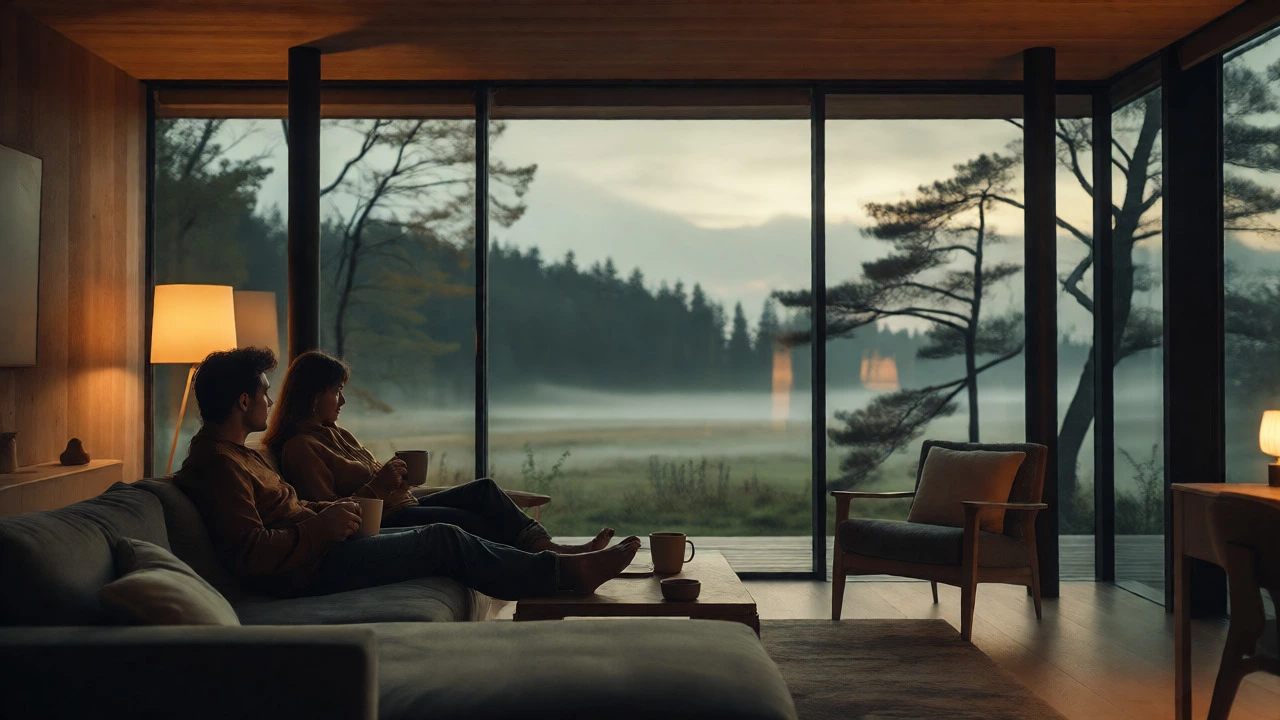
Consider the difference between a tourist and a guest. Tourists check boxes. Guests unwind. If you’re trying to visit five museums in two days, you aren’t having a getaway; you’re doing homework with better snacks. The meaning of a weekend getaway lies in the permission to do nothing. It’s the freedom to skip breakfast because you slept in, or to sit by a window watching rain instead of forcing yourself to go hiking because "it would be a waste" otherwise.
This distinction matters because many people fail at getaways by applying vacation logic to them. They pack their itinerary tight, try to optimize every hour, and come home more tired than when they left. Recognizing the intent helps you set realistic expectations. Are you going to disconnect? Then don’t book a tour group. Are you going to socialize? Then pick a spot with good bars or cafes. The meaning is defined by your desired outcome, not just the destination’s popularity.
Key Characteristics That Define a Getaway
So, what separates a quick overnight stay from a meaningful weekend getaway? It’s not just the calendar date. It’s a combination of factors that create a sense of separation from daily life. Let’s break down the essential attributes.
| Attribute | Typical Value/Constraint | Why It Matters |
|---|---|---|
| Duration | 2-3 Days (Friday evening to Sunday evening) | Long enough to disrupt routine, short enough to avoid major leave requests. |
| Travel Radius | < 4 Hours (Drive/Train) or < 1 Hour (Flight + Transit) | Minimizes travel fatigue, maximizing time available for relaxation. |
| Planning Lead Time | 1-4 Weeks (often shorter) | Allows for spontaneity; reduces the pressure of long-term budgeting. |
| Budget Scope | Low to Moderate | Affordable enough to repeat frequently; avoids financial stress post-trip. |
| Activity Level | Low to Medium | Focused on rest, dining, and casual exploration rather than rigorous sightseeing. |
Notice the emphasis on low activity levels. This doesn’t mean you can’t hike or ski. It means those activities shouldn’t feel mandatory. If you’re exhausted after a day of intense hiking, a weekend getaway allows you to collapse into a hot tub. A vacation might guilt-trip you into visiting another site the next morning.
Common Misconceptions About Short Breaks
People often confuse weekend getaways with other types of travel. Clearing these up helps refine the definition.
Misconception 1: It has to be far away.
Many believe that unless you cross a state line or national border, it doesn’t count. Wrong. Some of the best getaways are "staycations" in your own city. Booking a nice hotel downtown, ordering room service, and exploring a neighborhood you rarely visit counts. The change of environment, even if minor, triggers the psychological shift needed for a reset.
Misconception 2: It must involve luxury.
While high-end resorts are popular, a camping trip in a nearby forest is equally valid. The meaning isn’t tied to price tags. A $50 Airbnb in the countryside can provide the same mental clarity as a $500 resort, provided the environment supports disconnection. Luxury facilitates ease, but it isn’t the definition.
Misconception 3: It’s only for couples.
Solo travelers and groups of friends take weekend getaways too. In fact, solo getaways are increasingly common as people seek solitude without the commitment of a long trip. Group getaways focus on shared experiences, while couple getaways often prioritize intimacy and quiet.
How to Plan One Without Burning Out
If you buy into the idea that a weekend getaway is a tool for mental health, your planning strategy changes. You stop looking for "things to do" and start looking for "places to be." Here is a practical approach to ensuring your trip meets the definition effectively.
- Pick a base, not a route: Choose one location to stay. Avoid hopping between hotels. Moving locations fragments your time and adds stress.
- Book late, pay less (sometimes): Since getaways are flexible, last-minute deals often appear. However, book early if you need specific amenities like a pet-friendly cabin or a specific view.
- Limit digital connectivity: The biggest enemy of a getaway is the phone. Consider turning off non-essential notifications. If you’re working remotely, set strict boundaries on when you check email.
- Leave buffer time: Don’t schedule anything for the first hour after arrival or the last hour before departure. Use this time to unpack, breathe, and transition mentally.
For example, living in Auckland, I know the frustration of crossing the Harbour Bridge on a Friday night. Traffic is brutal. A smart getaway might involve taking the ferry to Waiheke Island earlier in the day, staying overnight, and returning Sunday afternoon. The ferry ride itself becomes part of the decompression, signaling to your brain that you’ve left the mainland-and the work week-behind.

The Economic and Social Impact
Understanding the meaning also touches on why these trips matter economically. Weekend getaways sustain local tourism industries in rural areas and secondary cities. Big cities rely on business travel and international tourists, but small towns survive on weekend visitors. When you choose a nearby town for your getaway, you’re supporting local cafes, artisans, and family-run B&Bs.
Socially, they serve as a pressure valve. Modern work culture blurs lines between office and home. A weekend getaway creates a hard boundary. It signals to colleagues and family that you are unavailable. This ritual of leaving-even briefly-helps prevent burnout. It reminds you that there is life outside your job title.
Final Thoughts: Finding Your Own Definition
Ultimately, the meaning of a weekend getaway is personal. For some, it’s an adrenaline rush via mountain biking. For others, it’s reading a book in silence. The common thread is intentionality. You aren’t just killing time; you are investing in your well-being.
Next time you plan a short trip, ask yourself: Am I doing this to escape, or am I doing this to perform? If you’re performing relaxation for Instagram, you might miss the point. If you’re escaping to recharge, you’ve nailed the definition. Keep it simple, keep it close, and keep it restful.
Does a weekend getaway have to be overnight?
Not strictly, though most definitions imply an overnight stay to fully break the routine. A "day trip" can serve a similar purpose, but the psychological impact of sleeping in a different bed often deepens the sense of escape. If you can’t stay overnight, a full day away from home with no work obligations still functions as a mini-getaway.
How much does a typical weekend getaway cost?
Costs vary wildly based on location and style. Budget-conscious travelers might spend under $100 USD for a campsite or hostel stay plus food. Mid-range travelers often spend $200-$500 USD covering a modest hotel and meals. Luxury getaways can exceed $1,000 USD. The key is affordability relative to your income; a getaway shouldn’t cause financial stress upon return.
Can I work during a weekend getaway?
Yes, this is known as a "workation" or remote work trip. However, to maintain the spirit of a getaway, limit work hours significantly. If you’re working full-time, it’s essentially a business trip with a nicer view. For a true reset, restrict work to checking emails once a day or not at all.
What is the ideal distance for a weekend getaway?
The general rule of thumb is to stay within a 2-to-4-hour travel radius. This ensures that travel time doesn’t consume a disproportionate amount of your limited free time. Destinations closer than 2 hours are great for very short breaks, while those up to 4 hours offer a stronger sense of being "away." Beyond 4 hours, the trip often feels rushed.
Is a staycation considered a weekend getaway?
Absolutely. A staycation involves treating your own city or region as a tourist destination. By booking a local hotel, visiting neighborhoods you ignore, and stepping out of your domestic routine, you achieve the core goal of a getaway: changing your environment and mindset without the hassle of long-distance travel.