What is the Most Eaten Food in India? A Culinary Reality Check
 Aug, 28 2026
Indian Staple Food Finder
Select a region to see what people typically eat as their main source of calories.
Primary Staple
Common Form:Key Accompaniments
You might guess biryani. Or maybe you picture a plate of chicken tikka masala, that global superstar of curry houses from London to New York. But if you walk into a typical home in Varanasi, eat at a canteen in Bangalore, or grab lunch in a village near Kolkata, you won't find those dishes as the daily bread-and-butter (or rather, grain-and-grain) of life. The truth about what Indians actually eat most often is less about exotic spices and more about two humble grains: rice and wheat.
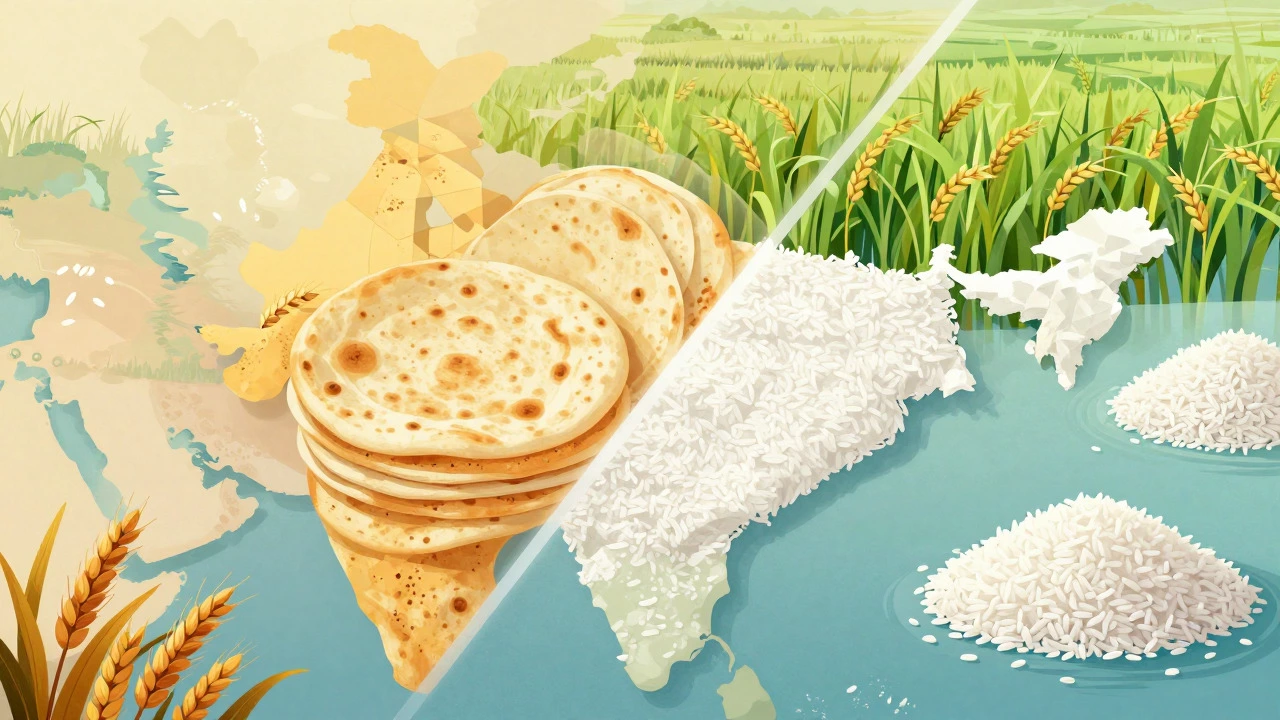
Here’s the shocker: there isn't one single "most eaten thing" for all of India because the country is too big, too diverse, and too geographically distinct for a single answer. Instead, it's a tale of two staples divided by a rough diagonal line across the map. In the north, west, and central regions, wheat is king. In the south, east, and northeast, rice rules the roost.
The Great Grain Divide: Wheat vs. Rice
If you look at national consumption data from the National Sample Survey Office (NSSO), rice and wheat together account for over 60% of total calorie intake for the average Indian household. That’s massive. But which one wins depends entirely on where you are standing.
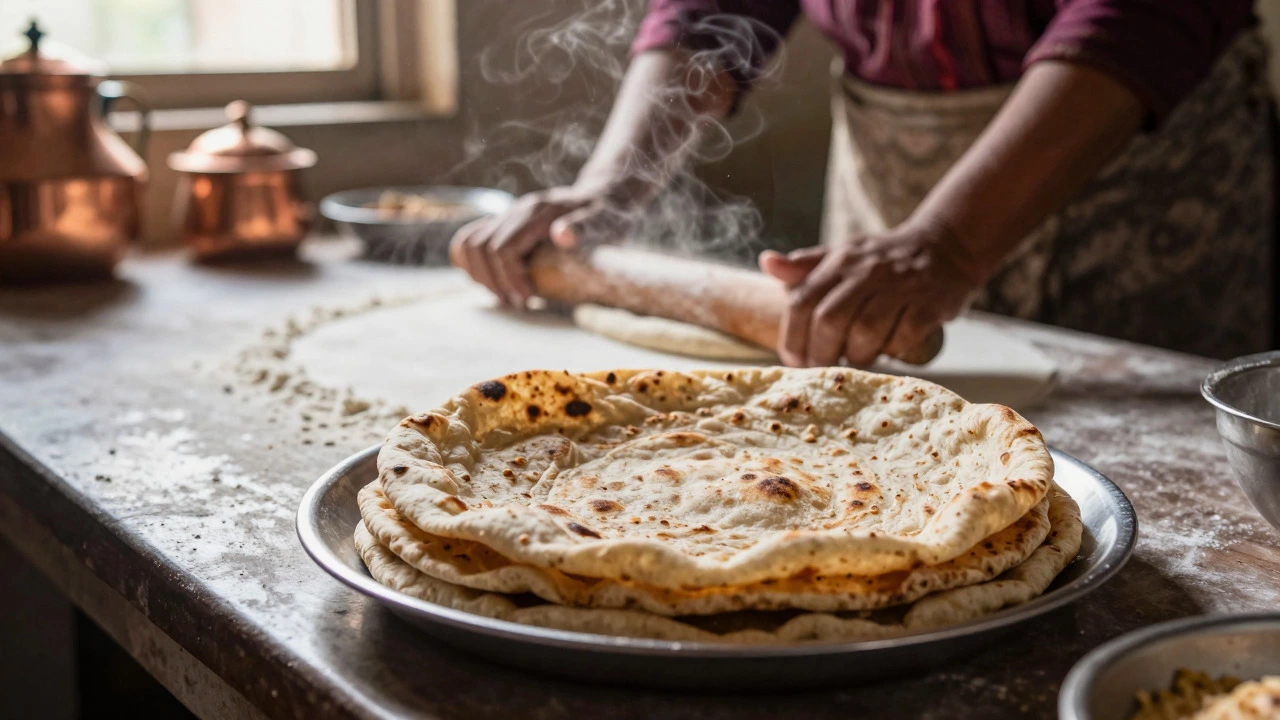
In states like Punjab, Haryana, Rajasthan, Gujarat, Madhya Pradesh, and Uttar Pradesh, chapati (also known as roti) is the undisputed champion. Made from whole wheat flour, these flatbreads are prepared fresh every day in millions of kitchens. They aren't just food; they're utensils. You use them to scoop up dal, wrap around vegetables, or mop up gravy. For many North Indians, a meal without chapatis feels incomplete, almost like eating soup with no spoon.
| Region | Primary Staple | Common Form | Key Accompaniments |
|---|---|---|---|
| North & West India | Wheat | Chapati/Roti | Dal, Sabzi, Curd |
| South & East India | Rice | Steamed Rice | Sambar, Fish, Pickles |
| Northeast India | Rice | Steamed Rice | Pork, Bamboo Shoots |
| Maharashtra/Gujarat | Jowar/Bajra/Wheat | Bhakri/Roti | Spicy Chutneys, Vada |
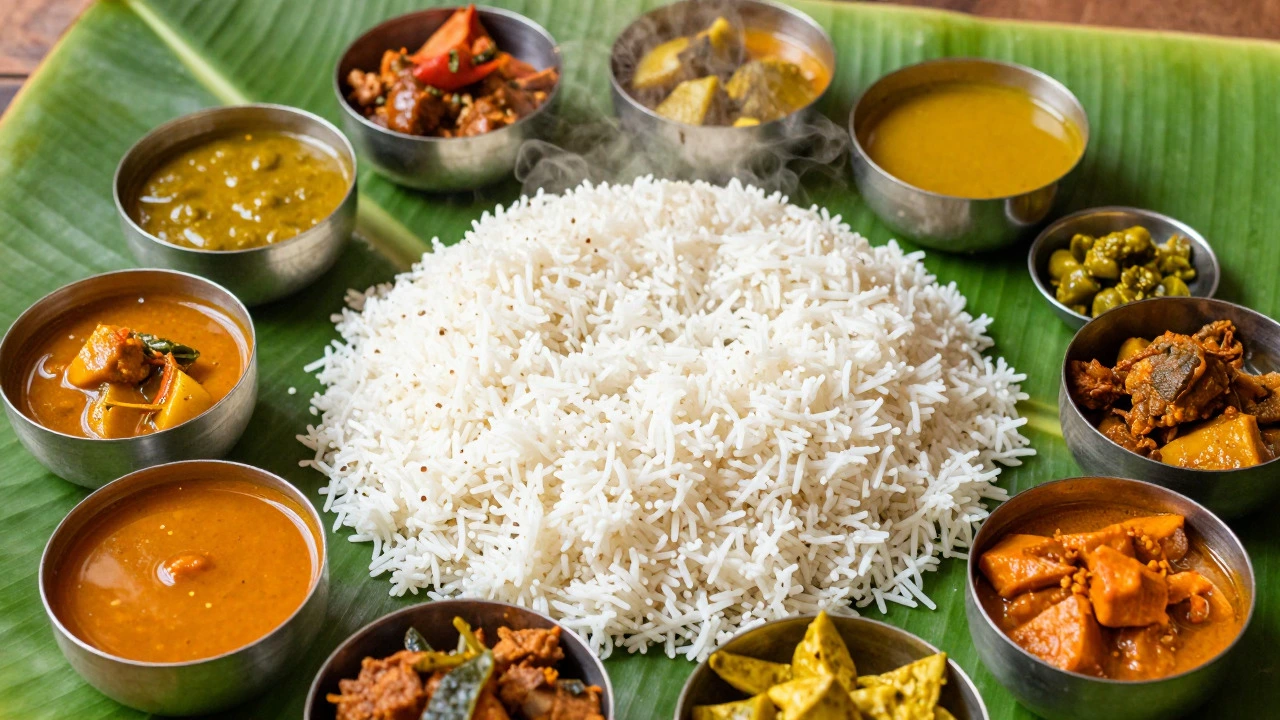
Move south of the Narmada River, and the script flips. In Tamil Nadu, Kerala, Andhra Pradesh, Telangana, Karnataka, and Odisha, steamed white rice is the foundation of every major meal. It’s served twice a day-lunch and dinner-in huge quantities. In Kerala, you’ll see sadya, a vegetarian feast served on banana leaves where rice takes center stage surrounded by dozens of small bowls of curries. In Bengal, fish and rice go together so naturally that asking for bread with your fish curry might get you a puzzled look.
Why No Single Dish Wins
People often ask, "But what about dal?" Dal, or lentil soup, is indeed the protein backbone of the Indian diet. According to government surveys, pulses constitute a significant portion of dietary intake, especially for vegetarians who make up nearly 40% of the population. However, dal rarely stands alone. It needs a vehicle. That vehicle is either rice or wheat. So while dal is ubiquitous, it’s technically a sidekick to the main star: the grain.
Consider the economics. Rice and wheat are subsidized heavily through India’s Public Distribution System (PDS). This makes them affordable for hundreds of millions of people. Exotic ingredients like paneer, prawns, or imported cheeses don’t have this universal accessibility. Even within the grain category, there are regional variations. In arid parts of Rajasthan and Gujarat, millets like bajra (pearl millet) and jowar (sorghum) were historically dominant. While wheat has taken over much of this space due to urbanization and supply chain improvements, millets are making a comeback among health-conscious urbanites.
The Role of Potatoes and Onions
If we step away from grains, what comes next? Vegetables. Specifically, potatoes and onions. These two are the workhorses of Indian cooking. Almost every sabzi (vegetable dish) starts with chopping an onion and frying it until golden. Potatoes appear in everything from samosas to aloo gobi to simple boiled potatoes with salt and pepper. They are cheap, available year-round, and versatile enough to be fried, boiled, mashed, or pickled.
Tea is another contender for the title of "most consumed thing," though it’s a beverage, not a food. India is the second-largest tea producer in the world, and chai is a ritual. From railway stations to corporate offices, breaking for chai is a national habit. But since you can’t survive on liquid alone, it doesn’t displace rice or wheat as the primary source of calories.
Regional Nuances Tourists Miss
When tourists visit India, they often stick to tourist trails where menus feature butter chicken, naan, and dosa. These are popular, yes, but they don’t represent the daily reality for the average citizen. A farmer in Bihar eats his own grown rice and lentils. A software engineer in Pune might order a thali containing jowar bhakri and misal (spiced sprouts). A student in Chennai lives on idli and vada for breakfast, rice for lunch, and rice again for dinner.
This diversity is why trying to pinpoint one "national dish" fails. Unlike France with its baguette or Japan with its sushi, India’s culinary identity is fragmented. It’s a collection of regional identities. Trying to say "India eats X" is like saying "Europe eats pizza." True in some places, misleading in others.
How This Impacts Your Travel Experience
Understanding this grain divide changes how you should plan your food experiences in India. If you’re traveling in the North, expect heavy reliance on wheat-based dishes. Don’t be surprised if you’re offered multiple types of rotis-tandoori, missi, laccha paratha. Carry digestive aids if you’re not used to high-fiber wheat diets suddenly dominating your plate.
In the South, prepare for large portions of rice. It’s served generously, often piled high. If you prefer low-carb options, you’ll need to actively seek out non-rice alternatives like ragi mudde (finger millet balls) in Karnataka or avoid the default rice-heavy meals. In the East, focus on fish and mustard oil flavors paired with soft, sticky rice.
For cultural tourists, watching the preparation of chapatis in a northern kitchen or seeing the precise fermentation of idli batter in a southern home offers deeper insight than any fancy restaurant. It shows the labor, time, and tradition embedded in these everyday staples. These aren't just calories; they're heritage.
Health Trends and Changing Habits
Is this changing? Yes, slowly. Urban middle-class families are increasingly experimenting with quinoa, oats, and gluten-free options. Younger generations in metros like Mumbai, Delhi, and Bangalore are reducing their rice/wheat intake in favor of salads, grilled proteins, and international cuisines. Yet, even in these progressive circles, when festivals arrive or family gatherings happen, the traditional staples return. Diwali sweets are made with ghee and flour; Pongal involves boiling new rice. Tradition has deep roots.
Moreover, government initiatives promoting millets under the "Shree Anna" campaign aim to diversify the diet beyond just rice and wheat. This could shift the landscape over the next decade, making millets more mainstream outside traditional regions. But for now, if you want to know what’s on the plate of the majority, keep your eyes on the two great grains.
Is rice or wheat more popular in India overall?
While both are dominant, rice is slightly more widely consumed by volume across the entire country due to the high population density in eastern and southern states. However, wheat is equally critical in the populous northern belt. There is no clear national winner; it is strictly regional.
What is the most common vegetable eaten in India?
Potatoes and onions are the most frequently used vegetables in Indian cooking. They form the base of most gravies and side dishes. Tomatoes are also extremely common, particularly in tomato-onion masalas used across North and Central India.
Do all Indians eat spicy food?
No. Spiciness varies greatly by region. South Indian and Andhra cuisine tends to be spicier, while Gujarati and Bengali cuisines often lean towards sweet or mild flavors. Many daily meals, especially for children and elders, are quite mild compared to restaurant standards.
What do poor families in India typically eat?
Low-income households primarily rely on subsidized rice or wheat from the Public Distribution System, paired with basic lentils (dal) and seasonal vegetables. Salt, chili powder, and turmeric are essential flavoring agents. Meat consumption is limited to special occasions due to cost.
Is milk commonly consumed in India?
Yes, India is the largest producer of milk in the world. Milk is consumed daily in many forms: plain, in tea/coffee, as yogurt (curd), and in sweets. Dairy is a crucial part of the diet for many communities, especially in North and Western India.