Which City Has the Most Beautiful Architecture in India? A Visual Guide
 Sep, 8 2026
Indian Architecture Matcher
Ask ten travelers which city has the most beautiful architecture in India, and you will get ten different answers. Use this tool to find the style that grabs your heart.
Your Preferences
City Name
Architectural Style
Description goes here...
Key Landmarks:
Why Choose This City:
Ask ten travelers which city has the most beautiful architecture in India, and you will get ten different answers. That is because India does not have a single architectural capital. It has dozens of them, each speaking a completely different visual language. You are not looking for one winner here; you are looking for the style that grabs your heart.
Some people fall in love with the pastel-colored symmetry of Rajasthan. Others lose their minds over the intricate stone carvings of South Indian temples. Then there are those who prefer the chaotic, organic beauty of colonial-era cities or the raw, unfinished grandeur of ancient ruins. This guide breaks down the top contenders so you can decide which aesthetic speaks to you before you book your ticket.
The Case for Jaipur: Symmetry and Color
If you define beauty as harmony, order, and vibrant color, Jaipur is likely your answer. Known globally as the Pink City, Jaipur was designed by Vidyadhar Bhattacharya in the early 18th century based on the Shilpa Shastra, an ancient Hindu treatise on architecture. Unlike most Indian cities that grew organically and chaotically, Jaipur was planned. The streets run straight, the blocks are rectangular, and the buildings adhere to a strict code.
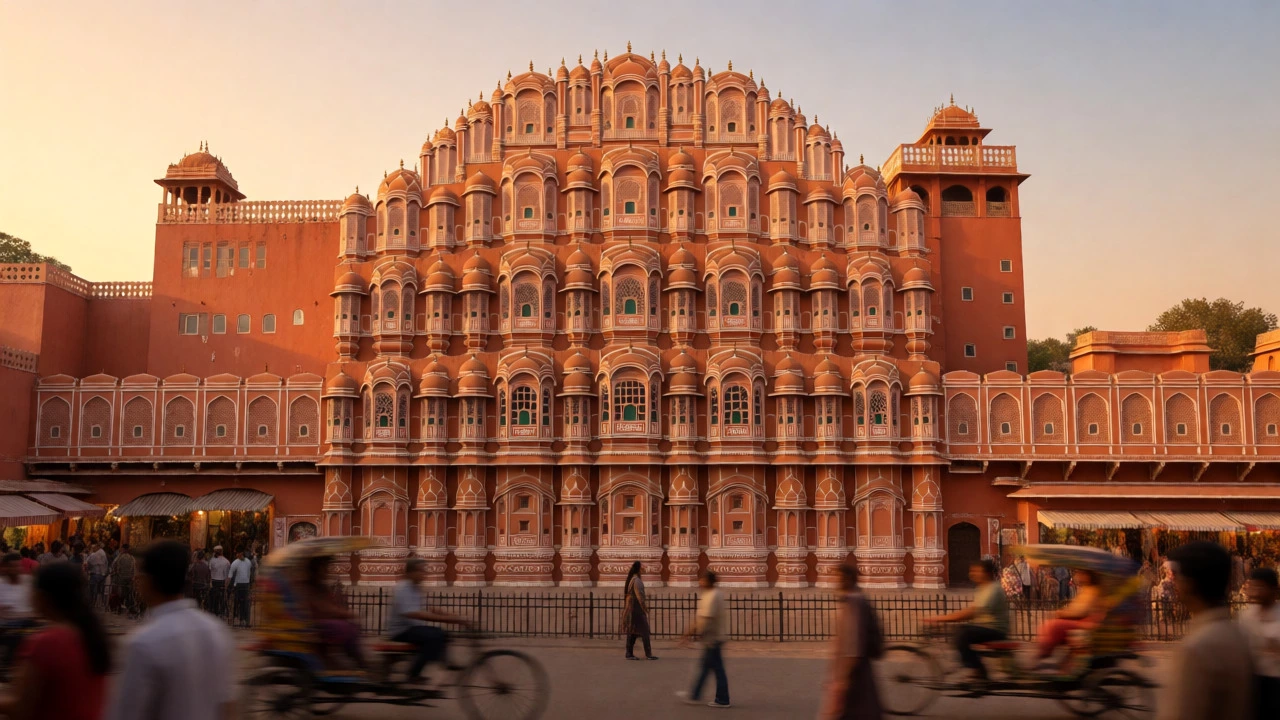
The defining feature here is the terracotta pink paint mandated in 1876 to welcome Prince Albert. Today, maintaining this color is a legal requirement for homeowners in the old walled city. Walking through the Johari Bazaar feels like stepping into a watercolor painting. The Hawa Mahal (Palace of Winds) is the crown jewel, a five-story structure with 953 small windows called jharokhas, designed so royal women could watch street festivals without being seen. The lattice work is delicate, almost lace-like, contrasting sharply with the solid sandstone base.
Why choose Jaipur? If you love photography, symmetry, and a clean, walkable historic center. The light hits the pink walls at sunset in a way that makes every photo look professionally edited.
The Case for Varanasi: Layered History and Spiritual Texture
Varanasi offers a different kind of beauty. It is not about clean lines or perfect preservation. It is about layers. The Ghats of Varanasi along the Ganges River represent thousands of years of continuous habitation. Here, architecture serves ritual. The steps leading down to the water are worn smooth by millions of feet. Temples rise abruptly from narrow lanes, their spires cluttered with marigold garlands and pigeon droppings.
The Kashi Vishwanath Temple dominates the skyline, its gold-plated domes gleaming against the gray stone. But the real architectural story is in the havelis (mansions) tucked away in the alleyways. Many are crumbling, yes, but they reveal the craftsmanship of centuries past-wooden balconies, carved pillars, and hidden courtyards. Varanasi’s beauty is raw and unpolished. It smells of incense and wet earth. It sounds like bells and chanting. It challenges you to find beauty in decay and devotion rather than just pristine marble.
Why choose Varanasi? If you appreciate texture, history, and spiritual intensity over polished aesthetics. It is visually overwhelming in the best possible way.
The Case for Hampi: Dramatic Ruins and Natural Integration
Move south to Karnataka, and the definition of beauty shifts again. Hampi is not a city in the traditional sense; it is a landscape of boulders and ruins. Once the capital of the Vijayanagara Empire, it was sacked in 1565 and left to the jungle. What remains is a UNESCO World Heritage Site that looks like a fantasy novel illustration come to life.
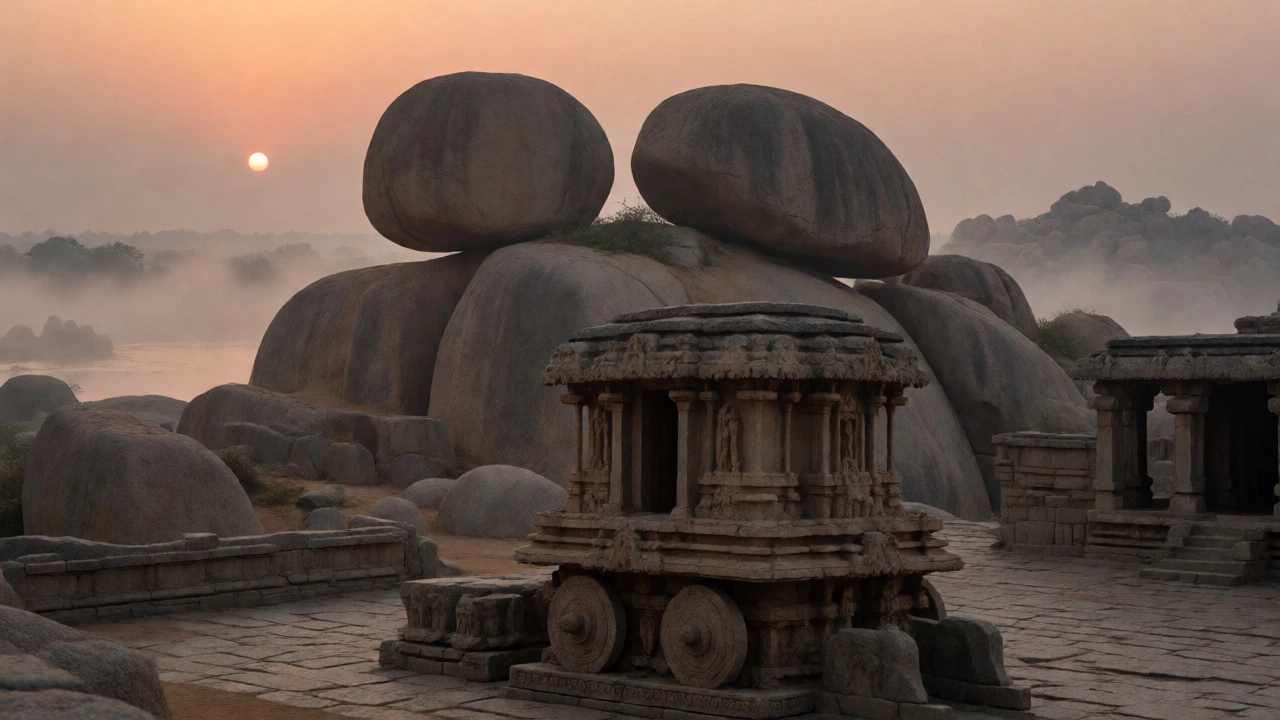
The architecture here is Dravidian, characterized by towering gopurams (gateway towers) and pillared halls. The Virupaksha Temple still functions today, its main gopuram standing 49 meters tall. But the Vittala Temple complex is the showstopper. Its stone chariot, though no longer movable, showcases the incredible skill of artisans who carved granite to mimic wood. The musical pillars, when tapped, produce distinct notes-a feat of acoustic engineering that still baffles engineers.
What makes Hampi unique is how the architecture integrates with nature. The temples sit among massive granite boulders that seem to defy gravity. At sunrise, the mist rolling off the Tungabhadra River creates an ethereal atmosphere that no other site in India can match.
Why choose Hampi? If you prefer dramatic, open-air ruins and natural landscapes over enclosed museums. It is ideal for hikers and photographers who want epic, wide-angle shots.
The Case for Kolkata: Colonial Gothic and Art Deco Mix
While northern and southern India dominate the conversation, Kolkata holds a secret weapon: its colonial heritage. Formerly Calcutta, the British Raj’s capital until 1911, the city is filled with Indo-Saracenic, Gothic, and Neoclassical buildings that rival anything in Europe.
The Victoria Memorial is the obvious postcard shot, a white marble masterpiece set in manicured gardens. But dig deeper into North Kolkata, and you will find the Marble Palace, a private residence built in 1835 with imported Italian marble and Belgian glass. The Howrah Bridge, completed in 1943, is a marvel of steel cantilever construction with no nuts or bolts used in its main span. Walking through the Maidan area feels like touring London or Paris, yet the chaos of street vendors and trams keeps it distinctly Indian.
Why choose Kolkata? If you enjoy European-style facades, intellectual history, and a slower, more contemplative pace. The architecture tells the story of the British Empire’s rise and fall.
The Case for Madurai: Intricate Dravidian Detailing
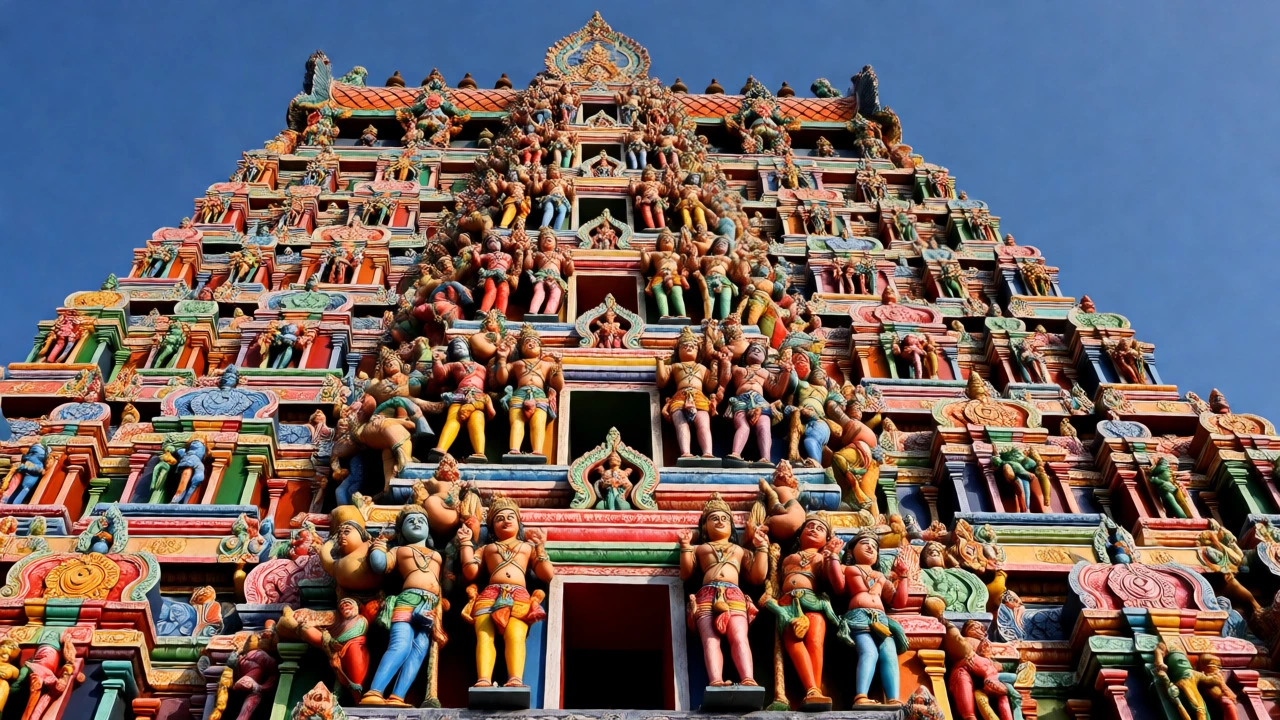
If Jaipur is about color and Hampi about scale, Madurai is about density of detail. The Meenakshi Amman Temple is not just a building; it is a city within a city. The temple complex covers 14 acres and features 14 gopurams, some reaching 50 meters high. These towers are covered in thousands of brightly colored stucco figures depicting gods, demons, and animals.
The interior hypostyle hall contains 985 carved pillars, each unique. Some depict mythological scenes, others geometric patterns. The precision is staggering. Unlike the weathered stone of Hampi, Madurai’s colors are maintained actively, repainted every few years to keep the vibrancy alive. The energy inside is palpable, with pilgrims circling the sanctum sanctorum while priests chant mantras.
Why choose Madurai? If you are fascinated by craftsmanship, religious iconography, and immersive sensory experiences. It is a feast for the eyes, literally saturated with color and detail.
Comparing the Contenders
To help you decide, here is a quick breakdown of what each city offers architecturally.
| City | Primary Style | Key Landmark | Best For |
|---|---|---|---|
| Jaipur | Rajput / Mughal Fusion | Hawa Mahal | Symmetry, Color, Photography |
| Varanasi | Ancient Hindu / Organic | Kashi Vishwanath | Spiritual Atmosphere, Texture |
| Hampi | Vijayanagara / Dravidian | Vittala Temple | Ruins, Landscape, Hiking |
| Kolkata | Colonial / Gothic / Art Deco | Victoria Memorial | European Facades, History |
| Madurai | Dravidian Temple | Meenakshi Temple | Intricate Detail, Religious Art |
Hidden Gems Worth Considering
Beyond the big names, two smaller cities deserve a spot on your list if you want something less crowded.
Pondicherry: The French Quarter here is a slice of Europe transplanted to India. Yellow villas with green shutters line tree-lined boulevards. The architecture is simple but elegant, focusing on verandas and high ceilings to combat the heat. It is peaceful, walkable, and visually soothing compared to the hustle of larger metros.
Chettinad: Located in Tamil Nadu, this region is known for its palatial mansions built by wealthy spice merchants in the 19th and early 20th centuries. These homes blend Indian spatial planning with European materials like teak, marble, and wrought iron. The courtyards are vast, designed for ventilation, and the facades are often understated until you step inside.
How to Choose Your Destination
Deciding which city has the "most beautiful" architecture depends entirely on what moves you emotionally.
- Choose Jaipur if you want Instagram-perfect shots, easy navigation, and a clear narrative of royal power.
- Choose Varanasi if you want to feel the weight of history and don’t mind getting dirty. The beauty is in the chaos.
- Choose Hampi if you love adventure, hiking, and surreal landscapes. The architecture is part of the geology here.
- Choose Kolkata if you prefer colonial elegance and intellectual charm over religious fervor.
- Choose Madurai if you are drawn to religious art, intricate carving, and vibrant cultural rituals.
There is no wrong answer. Each city offers a masterclass in human creativity under different constraints-climate, religion, politics, and available materials. Start with the style that resonates with you, and let the rest of India surprise you.
Is Jaipur really all pink?
Only the buildings within the old walled city are required to be painted terracotta pink. Outside the walls, modern constructions follow standard colors. The pink hue is achieved using a specific type of plaster mixed with red soil.
Can you visit Hampi in a day?
Technically yes, but it is rushed. The site is huge, covering over 4,000 hectares. To appreciate the major temples and climb the Matanga Hill for views, you need at least two full days. Hiring a local guide helps navigate the scattered ruins efficiently.
Which city is best for architecture beginners?
Jaipur is the most accessible. The landmarks are close together, signage is good, and the architectural styles (Rajput and Mughal) are well-documented and easy to understand. Varanasi can be overwhelming for first-timers due to crowds and lack of clear sightlines.
Are these sites UNESCO World Heritage listed?
Yes. Hampi, the Hill Forts of Rajasthan (including Jaipur), and the Mountain Railways of India (which pass through various scenic areas) are listed. Varanasi and Madurai are tentative lists candidates, recognized for their outstanding universal value.
What is the best time of year to photograph these buildings?
October to March is ideal for most of India. The light is softer, skies are clearer, and temperatures are manageable. Avoid April to June, especially in Rajasthan and South India, where heat haze distorts photos and midday sun washes out colors.