Which Country Has the Oldest Heritage? Exploring India's Ancient Sites
 Aug, 11 2026
Interactive Heritage Timeline Explorer
When you ask which country has the oldest heritage, the answer isn't just a single date on a calendar. It’s about continuous civilization, unbroken traditions, and stone structures that have survived millennia of war, weather, and time itself. While nations like Egypt and China boast incredibly ancient roots, India stands out for a unique reason: its heritage is not just old; it is living. The rituals performed in temples today are often the same ones started thousands of years ago. The texts studied by scholars were written when Europe was still in its prehistoric phases.
If you are looking to trace the deepest human history, India offers a landscape where the past is never truly buried. From the brick ruins of the Indus Valley to the towering rock-cut caves of Ellora, the subcontinent holds some of the world's most significant archaeological treasures. This article breaks down why India claims this title and highlights the specific sites you need to know.
The Cradle of Continuous Civilization
To understand why India is considered to have one of the oldest heritages, we have to look at the timeline. Most historians agree that the Indus Valley Civilization, also known as the Harappan Civilization, emerged around 3300 BCE. This places it roughly on par with the civilizations of Mesopotamia and Egypt. However, what sets India apart is the continuity of culture. When the Indus cities declined, the Vedic period followed, leading into the great empires of Maurya, Gupta, and Mughal rule. Each layer added to the foundation rather than erasing it completely.
Consider the concept of Sanatana Dharma, or the eternal order. Many religious practices in India today can be traced back to these early periods. You don't just see statues in museums; you see active worship at sites that have been sacred for over 2,500 years. This living connection makes the heritage feel immediate and real, rather than distant and academic.
Top Ancient Heritage Sites in India
India is home to forty-two UNESCO World Heritage Sites. Among them, several stand out for their sheer age and architectural brilliance. If you want to witness the oldest heritage firsthand, these are the places you should prioritize.
| Site Name | Approximate Age | Key Feature | Location |
|---|---|---|---|
| Sanchi Stupa | 3rd Century BCE | Oldest stone structure in India | Madhya Pradesh |
| Ajanta Caves | 2nd Century BCE | Buddhist rock-cut paintings | Maharashtra |
| Hampi Ruins | 14th Century CE | Vijayanagara Empire capital | Karnataka |
| Taj Mahal | 17th Century CE | Mughal marble mausoleum | Uttar Pradesh |
Sanchi: The Stone Witness
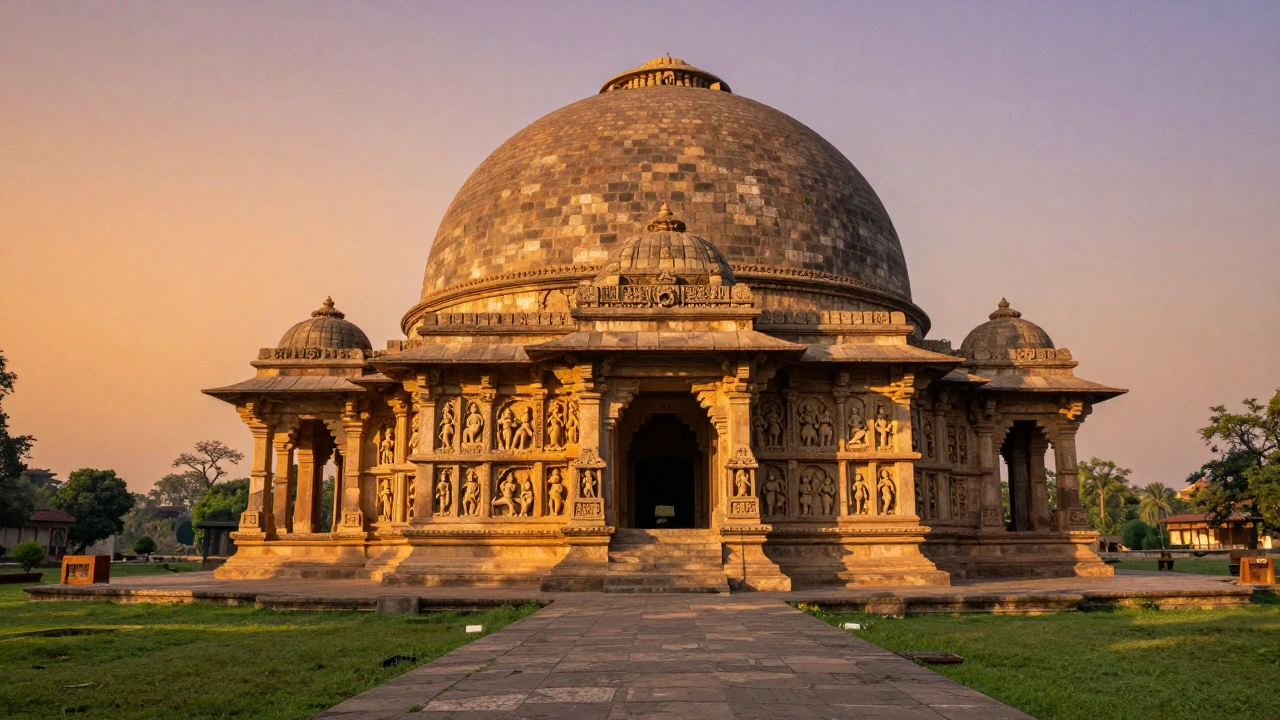
Often cited as the oldest surviving monument in India, the Sanchi Stupa in Madhya Pradesh dates back to the reign of Emperor Ashoka in the 3rd century BCE. Originally built as a simple hemispherical dome to house relics of the Buddha, it was later expanded with elaborate gateways (toranas) carved with intricate scenes from Buddhist life. Walking through Sanchi feels like stepping into a frozen moment of history. The carvings tell stories without words, depicting the daily lives, beliefs, and artistry of people who lived two thousand years ago.
Ajanta and Ellora: Carved in Rock
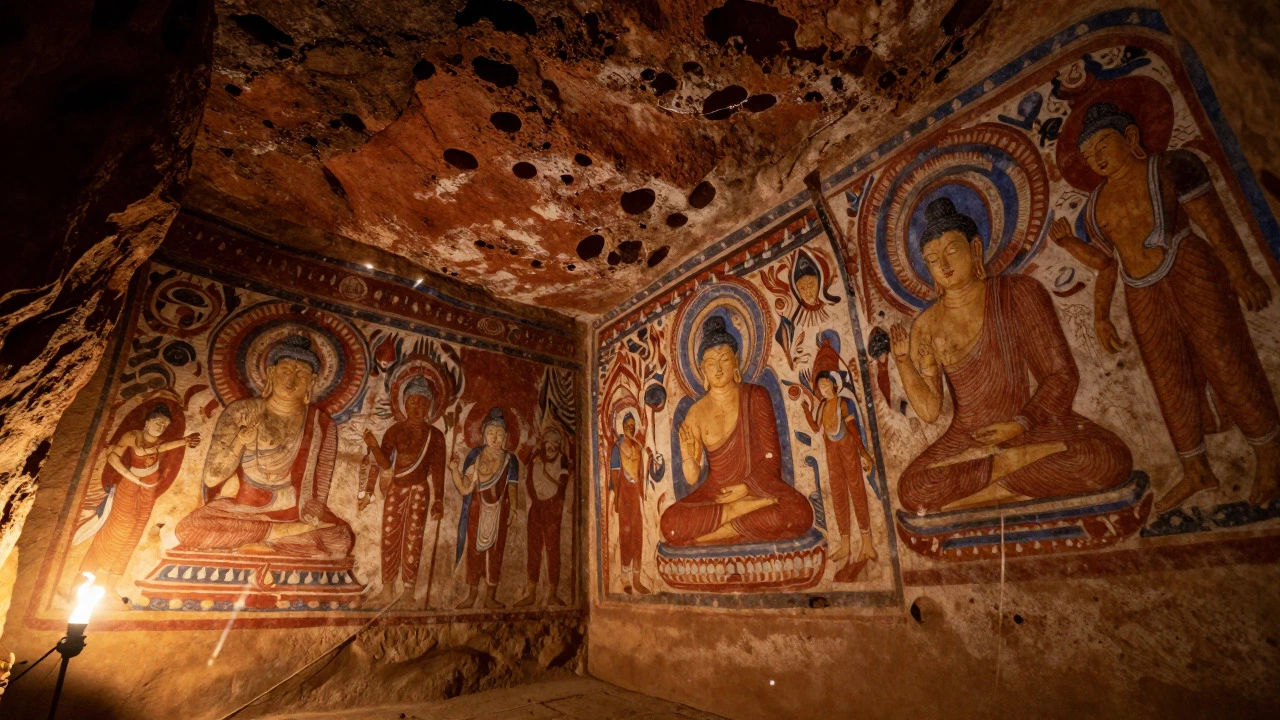
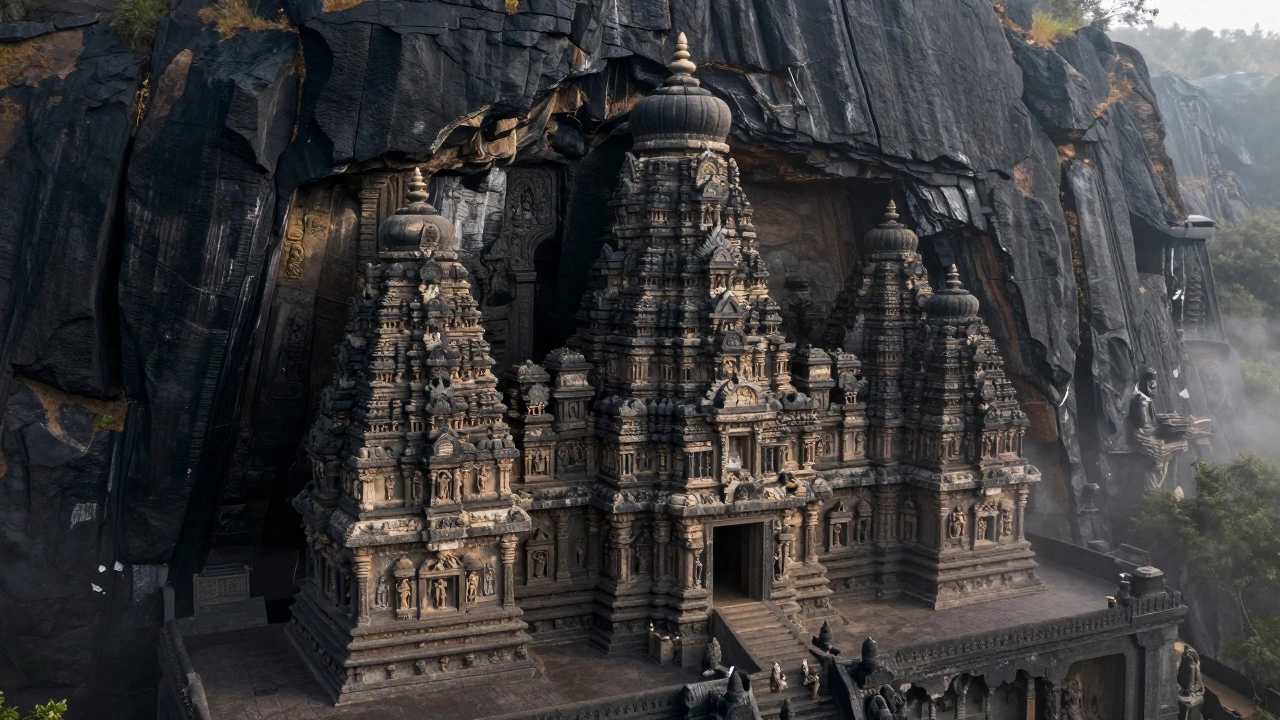
In Maharashtra, the Ajanta Caves and Ellora Caves showcase engineering marvels that defy belief. Ajanta, dating back to the 2nd century BCE, contains thirty-six cave monuments dedicated to Buddhism. The frescoes inside are remarkably preserved, showing vibrant colors that hint at the sophistication of ancient Indian painting techniques. Just a few kilometers away, Ellora features the Kailasa Temple, which was carved top-down from a single volcanic rock cliff. Imagine chiseling an entire mountain into a temple without using mortar or bricks. That is the scale of ambition and skill found here.
Hampi: The Lost City
While younger than Sanchi or Ajanta, the ruins of Hampi in Karnataka offer a different kind of ancient experience. Once the capital of the Vijayanagara Empire in the 14th century, Hampi was a bustling metropolis before it was sacked and abandoned. Today, it is a sprawling landscape of boulders and broken pillars. The Vittala Temple, with its musical pillars that produce notes when tapped, demonstrates advanced acoustic knowledge. Exploring Hampi is less about viewing a single monument and more about wandering through the skeleton of a once-great civilization.
Why India's Heritage Matters Globally
You might wonder why this matters if you aren't a historian. The preservation of these sites provides a window into human innovation. For instance, the water management systems in the stepwells of Gujarat, like the Rani Ki Vav, show how ancient engineers solved resource scarcity long before modern technology. These structures are not just pretty stones; they are textbooks on sustainable living, astronomy, mathematics, and architecture.
Furthermore, India's heritage influences global culture. Yoga, Ayurveda, and various philosophical concepts originated here and have spread worldwide. Visiting the birthplace of these ideas adds depth to your understanding of them. It transforms abstract concepts into tangible experiences. Standing in a temple where meditation has been practiced for centuries changes your perspective on the practice itself.
Challenges in Preserving Ancient Sites
Despite its richness, India faces significant challenges in maintaining its heritage. Rapid urbanization often threatens archaeological sites. Pollution affects the integrity of stone structures, particularly in cities like Delhi and Agra. Climate change brings extreme weather events that can damage fragile ruins. The Archaeological Survey of India (ASI) works tirelessly to protect these sites, but resources are limited.
Tourism itself is a double-edged sword. While it brings revenue for conservation, overcrowding can wear down pathways and degrade delicate artworks. Responsible travel is crucial. Visitors are encouraged to follow designated paths, avoid touching ancient surfaces, and support local conservation efforts. By being mindful travelers, you help ensure that these sites remain intact for future generations.
Planning Your Heritage Journey
If you decide to explore India's oldest heritage, timing is everything. The best time to visit most heritage sites is between October and March, when the weather is cool and pleasant. Summers can be brutally hot, making outdoor exploration exhausting. Monsoons bring lush greenery but also rain disruptions.
Start with a manageable itinerary. Trying to see everything in one trip is impossible and exhausting. Focus on one region, such as the Golden Triangle (Delhi, Agra, Jaipur) for Mughal and Rajput heritage, or the Deccan plateau for cave temples and empire ruins. Hire local guides who can provide context beyond what guidebooks offer. They often share oral histories and lesser-known anecdotes that enrich the experience.
Frequently Asked Questions
Is India older than Egypt?
Both civilizations have roots dating back to around 3000 BCE. The Indus Valley Civilization in India and Ancient Egypt emerged roughly simultaneously. However, India's cultural and religious traditions have remained continuously practiced to this day, whereas Egyptian pharaonic culture ended with the rise of other empires. So, while the start dates are similar, the continuity differs.
What is the oldest building in India?
The Sanchi Stupa is widely considered the oldest surviving stone structure in India, dating back to the 3rd century BCE during the Mauryan Empire. While there may be older wooden or mud structures, they have not survived. Sanchi represents the earliest major architectural achievement that remains visible today.
Are the Ajanta Caves open to tourists?
Yes, the Ajanta Caves are open to tourists year-round, except on Mondays and national holidays. Due to humidity control measures, visitor numbers are capped per slot. It is highly recommended to book tickets online in advance, especially during peak season from November to February.
How many UNESCO World Heritage Sites does India have?
As of 2026, India has 42 UNESCO World Heritage Sites. This includes both cultural sites, like the Taj Mahal and Qutub Minar, and natural sites, like the Western Ghats and Kaziranga National Park. This number makes India one of the countries with the highest count of such protected sites globally.
Is it safe to travel to remote heritage sites in India?
Generally, yes. Most major heritage sites are well-connected and frequented by tourists. However, some remote sites may require additional planning regarding transportation and accommodation. It is advisable to check current travel advisories, hire reputable local guides, and keep digital copies of important documents. Standard precautions against petty theft apply everywhere.
What is the significance of the Kailasa Temple at Ellora?
The Kailasa Temple is unique because it was carved monolithically from the top down from a single basalt rock cliff. It took approximately 100 years to complete and involved removing millions of tons of rock. It is considered one of the largest monolithic rock-cut structures in the world and showcases exceptional Dravidian architectural style.
Can I see Indus Valley Civilization ruins?
Yes, you can visit excavated sites like Harappa in Pakistan and Mohenjo-Daro in Pakistan, as well as sites in India such as Dholavira in Gujarat and Rakhigarhi in Haryana. Dholavira is particularly accessible and offers insights into urban planning and water management systems of the ancient era.
Do I need a visa to visit heritage sites in India?
Most foreign nationals require a visa to enter India. India offers e-Visas for citizens of many countries, which can be applied for online before travel. Ensure your passport is valid for at least six months from the date of arrival. Check the official government immigration website for the latest requirements based on your nationality.