Which is the best religious festival in the world? A guide for temple tour travelers
 Feb, 27 2026
Religious Festival Comparison Tool
Compare Major Religious Festivals
Select which festivals you want to compare and see how they stack up against key spiritual attributes.
Select Festivals to Compare
Comparison Criteria
Kumbh Mela
Hajj
Christmas
Vesak
What Does This Mean?
Each festival is scored on three key attributes mentioned in the article:
- Physical Journey: How far must you travel to participate?
- Collective Surrender: How much does the festival require you to let go of your individual identity?
- Unbroken Tradition: How long has the tradition been practiced without interruption?
Higher percentages indicate stronger alignment with the attributes that make a festival "best" for temple tour travelers according to the article.
The question isn’t just about scale or spectacle-it’s about transformation. When millions gather in one place, not to shop, not to party, but to pray, bathe, and surrender, something deeper happens. The best religious festival in the world isn’t the loudest or the most photographed. It’s the one that moves people beyond the surface, into something ancient, quiet, and undeniable. For travelers on temple tours in India, the answer often starts with the Kumbh Mela.
The Kumbh Mela: Where rivers become prayer
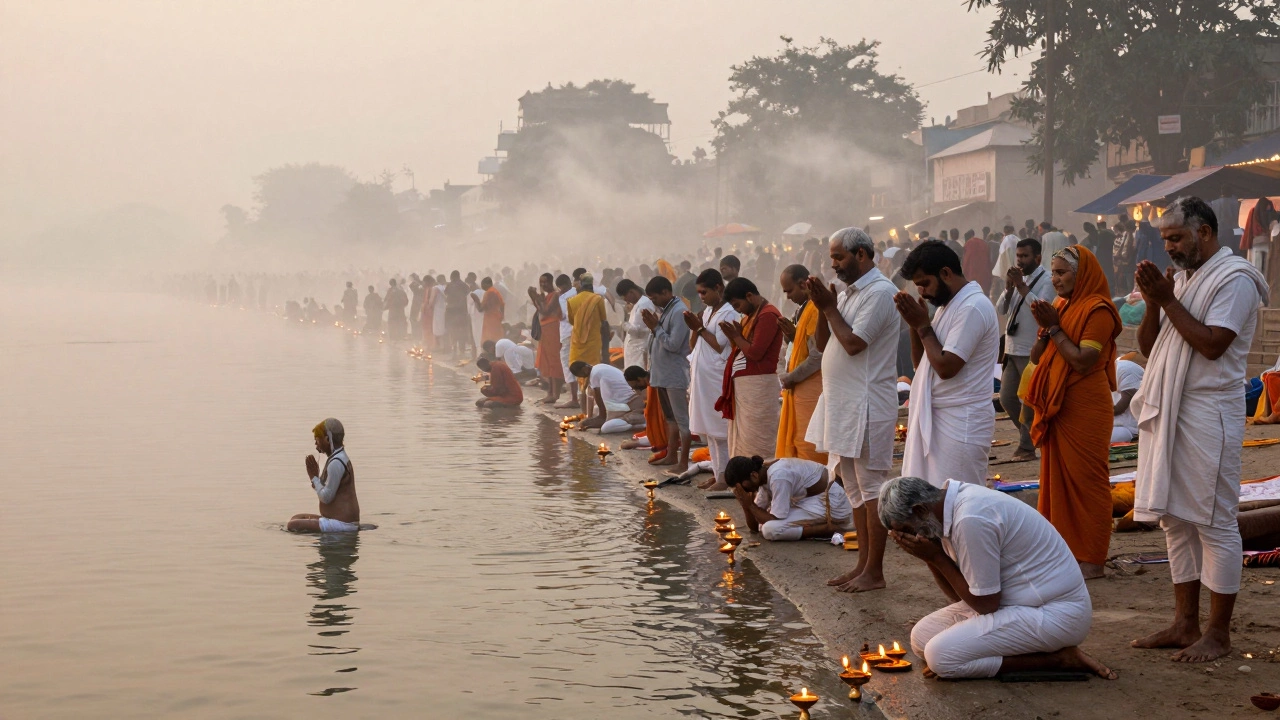
In 2025, over 200 million people gathered along the banks of the Ganges in Prayagraj. That’s more than the entire population of Brazil. They didn’t come for selfies. They came to bathe in the confluence of three sacred rivers-the Ganges, Yamuna, and the invisible Saraswati. Hindu tradition says that a single dip during the Kumbh Mela washes away seven lifetimes of sin. That’s why sadhus, families, farmers, and CEOs all line up at 3 a.m., wrapped in blankets, waiting for the astrologically perfect moment.
This isn’t a one-time event. The Kumbh Mela rotates between four cities every three years: Prayagraj, Haridwar, Ujjain, and Nashik. The full Maha Kumbh, which happens once every 144 years, draws even more. In 2013, the last Maha Kumbh, authorities estimated 120 million people came in 55 days. No concert, no World Cup, no Olympics comes close to that kind of human convergence.
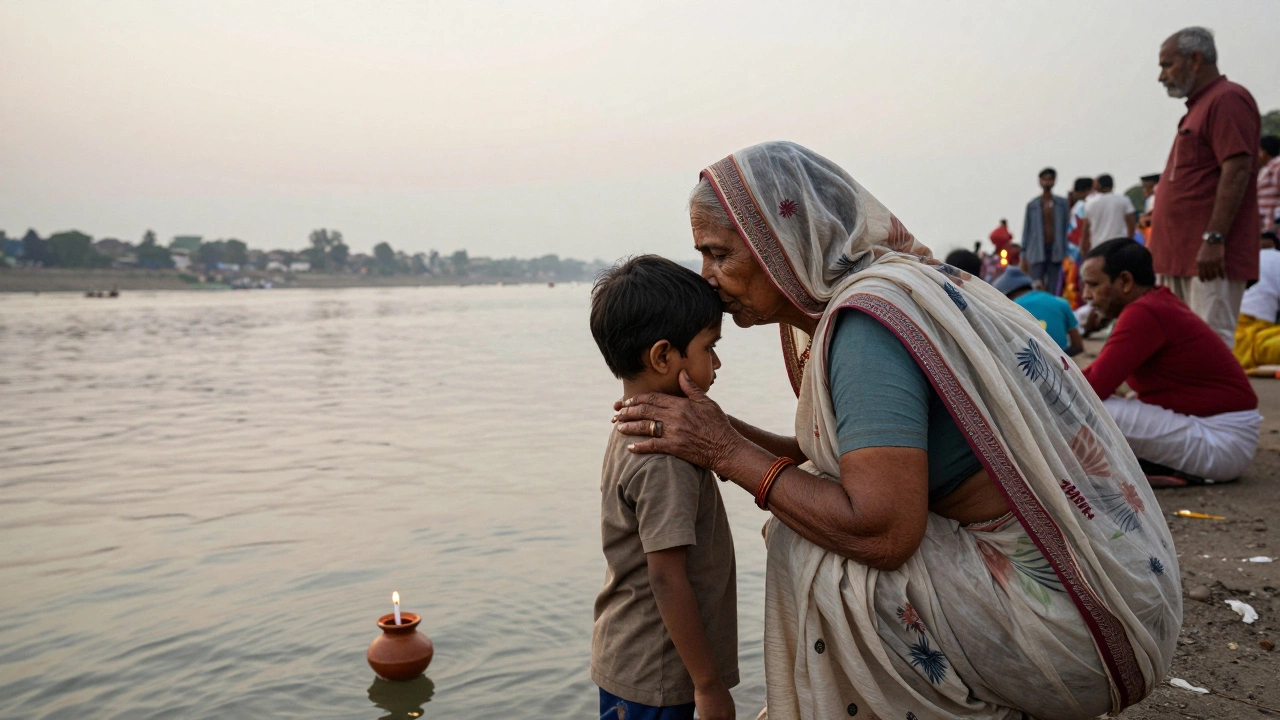
What makes it unforgettable isn’t the crowd. It’s the silence between chants. The old man who walks barefoot for 400 miles. The mother who brings her child to the water, whispering a prayer she’s said every year since her husband died. The way the smoke from thousands of cooking fires rises into the dawn sky, mixing with incense and the scent of wet earth.
Other global giants: Hajj, Christmas, Vesak
If you think Kumbh Mela is overwhelming, try Hajj. Every year, more than two million Muslims from every corner of the globe converge on Mecca. They don’t carry backpacks. They carry white garments-simple, identical, unmarked by nationality or wealth. They circle the Kaaba seven times. They run between two hills, reenacting Hagar’s search for water. They stand on the plains of Arafat, barefoot, praying for forgiveness. No ticket. No reservation. Just faith.
Christmas, by contrast, is quiet in its scale but massive in reach. Over two billion people worldwide observe it, even if not all are Christian. Cities from Rome to Rio light up. Families gather. Churches fill. But it’s personal. A child in a village in the Philippines lights a single candle. A family in New York opens a gift they’ve saved for all year. The magic isn’t in the numbers-it’s in the intimacy.
Then there’s Vesak, the Buddhist celebration of the Buddha’s birth, enlightenment, and death. In Sri Lanka, temples glow with lanterns. In Thailand, monks chant through the night. In Nepal, pilgrims walk the trails to Lumbini, the Buddha’s birthplace, barefoot and silent. Unlike Kumbh or Hajj, Vesak doesn’t require travel to one spot. It’s lived everywhere-home altars, street shrines, meditation halls. It’s a quiet revolution of mindfulness.
Why Diwali doesn’t make the top-but still matters
Diwali, the Festival of Lights, is dazzling. Millions light oil lamps. Fireworks explode over Jaipur, Varanasi, and Mumbai. Homes are cleaned, sweets are shared, new clothes are worn. But Diwali is more cultural than spiritual. For many, it’s about renewal, wealth, and family. It’s not a pilgrimage. You don’t have to go anywhere specific. You can celebrate it in your living room.
That’s why, for temple tour travelers, Diwali is powerful but not the same as Kumbh Mela. You don’t need to travel to a holy site. You don’t need to bathe in a river or stand in a desert. You just need to turn on a lamp.
What makes a religious festival ‘best’?
There’s no official ranking. But if you’re on a temple tour and you want to feel the weight of centuries, look for these three things:
- Physical journey-Do you have to travel far, often on foot, to reach it? Kumbh Mela and Hajj demand it.
- Collective surrender-Are people there not just to watch, but to let go? In Kumbh, people give up their homes for weeks. In Hajj, they give up their identity.
- Unbroken tradition-Has this been done the same way for 1,000 years? Kumbh Mela traces back to at least the 4th century CE. Hajj goes back 1,400 years.
Christmas has tradition. Vesak has mindfulness. But only Kumbh Mela and Hajj combine all three.
What travelers should know before going
If you’re planning a temple tour around Kumbh Mela or Hajj, here’s what actually matters:
- Timing matters more than you think. Kumbh Mela has specific bathing dates based on planetary positions. Missing the main day means waiting years.
- Bring nothing heavy. You’ll walk miles. You’ll sleep on the ground. A small backpack, a water bottle, and a towel are enough.
- Respect the silence. Loud phones, camera flashes, and selfies disrupt the flow. Many pilgrims pray with closed eyes, hands folded. Don’t interrupt.
- Don’t expect comfort. There are no hotels. No AC. No private bathrooms. You’ll eat from community kitchens. You’ll bathe in shared lines. That’s the point.
- Go with a guide who knows the rituals. A local priest or temple attendant can explain what’s happening. You won’t understand it from a guidebook.
The real answer: It depends on what you’re looking for
Is the best religious festival the one with the most people? Then it’s Kumbh Mela. Is it the one with the deepest spiritual discipline? Then it’s Hajj. Is it the one that touches the most hearts across cultures? Then it’s Christmas. Is it the one that asks you to sit still and breathe? Then it’s Vesak.
For temple tour travelers who’ve walked through the stone corridors of Khajuraho, meditated in Bodh Gaya, and stood before the golden towers of Meenakshi Temple-the Kumbh Mela stands apart. It doesn’t just honor the divine. It makes you part of something bigger than religion. Bigger than nationality. Bigger than time.
You don’t go to Kumbh Mela to see a festival. You go to remember who you are when you’re not trying to be anything at all.
Is Kumbh Mela open to non-Hindus?
Yes. Kumbh Mela is not restricted by religion. Thousands of foreigners attend every year, including Buddhists, Christians, Muslims, and atheists. What matters is respect-not belief. Many come to witness, to meditate, or to simply be among the crowd. There are no gates, no tickets, no ID checks. You just walk in.
How safe is it to attend Kumbh Mela?
It’s one of the safest large gatherings on Earth. Despite the numbers, crime rates are extremely low. Police and volunteers are everywhere. Medical tents are set up every 500 meters. The real challenge isn’t danger-it’s the chaos. Crowds move fast. Dust is thick. Water is cold. Bring warm clothes, a hat, and a water purifier. Don’t carry valuables. Trust the system-it’s designed for this.
Can I attend Hajj if I’m not Muslim?
No. Hajj is a religious obligation for Muslims only. Non-Muslims are not permitted to enter the city of Mecca. Even the surrounding areas are restricted. This is strictly enforced. If you’re interested in experiencing the scale of Hajj, you can watch documentaries or visit the Hajj Museum in Jeddah, which offers detailed exhibits and immersive simulations.
What’s the best time of year to visit Kumbh Mela?
The main bathing days are determined by Hindu astrology and change each cycle. The most crowded and spiritually significant day is the Shahi Snan-the royal bath-usually on the full moon of the Hindu month of Magha. In 2025, this was February 10. The festival lasts for weeks, but if you want the full experience, arrive at least 7-10 days before the main day. The atmosphere builds slowly, and the final days are the most powerful.
Do I need to be religious to benefit from attending?
No. Many people who attend Kumbh Mela, Vesak, or even Christmas do so not out of faith, but out of curiosity, grief, or a need for stillness. The energy of mass devotion is contagious. You don’t need to believe in God to feel something shift inside you when thousands kneel together at dawn. You just need to be present.